
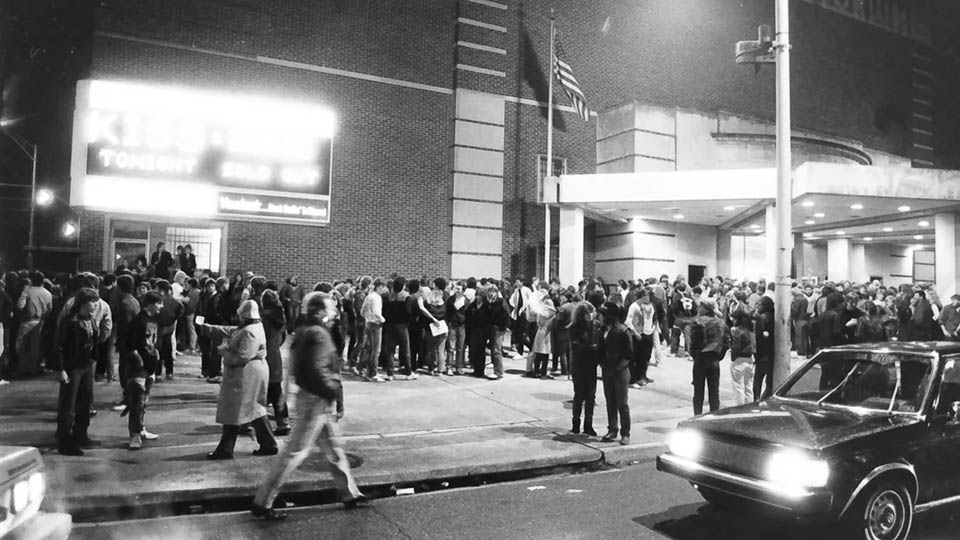
Rock and roll never forgets. Neither does David Sims of Greenville Music Preservation.
Several years ago, David Sims decided he wanted to learn more about his forebears’ long-ago bakery, which dated back to mid-1800s Greenville; the city’s oldest park bears the family name: McPherson. So, he started looking for any tasty historical tidbits he could find.
“And sure enough, in the newspaper, I found an advertisement for the bakery. And then the next page over, I saw an advertisement for an opera house,” he says, “and I was like, ‘What are you talking about? An opera house?’ So that started my whole thing.”
That whole thing is now Greenville Music Preservation, a nonprofit he started in 2021 and serves as president and producer.
Greenville’s live music scene took off in 1880 with the Gilreath Opera House, though it was torn down the following decade. In May 1901, the Grand Opera House opened downtown. The 900-capacity theater, complete with electricity, steam heating, and 300 incandescent lights, sat just off the corner of Laurens Road and West Coffee Street—roads that aren’t there anymore, either; the Bank of America tower is. Sims imparts all these details with a time-machine pointillism that has become the hallmark of GMP’s mission.
The first traveling performer to appear in the venue was a hypnotist, with tickets ranging from 10 cents to 30 cents, he notes. But the hall also booked a broad range of orchestras, musicians, minstrels, and vaudeville acts. The hall closed in 1923, those marquee acts long since forgotten, too.
But rock ‘n’ roll never forgets. Neither does David Sims.
Spreading the gospel about Greenville Music Preservation
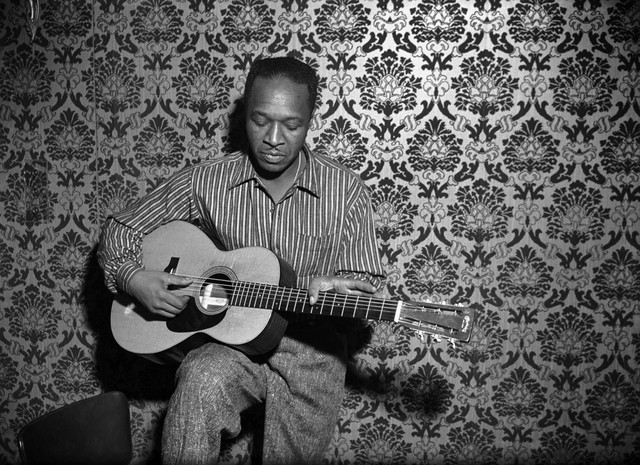 When he’s not busy working as executive director of the Sigal Music Museum, he Hoovers volumes of Greenville’s live music history. Most of it exists on GMP’s jam-packed website; in Sims’ capacious, intently curious mind; and in the organization’s small office in Sit-N-Spin Recording Studios a 5,000-square-foot building off White Horse Road.
The building once housed Mark V Recording Studios, which opened in 1961 and was originally located next to what is now Unity Park—on the very site Greenville Music Preservation will finally have its own place this summer in Unity Park’s new PKL Park pickleball complex.
Until Mark V closed in the 1990s, Greenville’s “Sound of the South” studios’ 30-some employees cranked out thousands of records. “They were just slam-packed,” Sims says. “Their main ticket was gospel, but they did everything.”
That’s the ticket for Sims, too, doing everything he can to spread the gospel about what was once a robust music scene here—at least, in the first half of the 20th century. “For the most part you don’t know much about it, there’s not a whole lot written about the culture of this area before the ’80s or the ’60s, really. I felt this responsibility.”
To bring that history to life, to revive music as a cultural force in Greenville, he shares what he’s curated in person, in his well-written, lengthy, and richly detailed articles on GMP’s website, and in the 14 podcasts he has produced so far.
“Any kind of memory of a town, in terms of its own history, has to be relevant,” he says, “and if people don’t know about the history, then there’s no relevance.”
Find archives, podcasts, and more at greenvillemusicpreservation.org.


