

Bon Secours’ online tool can assess heart disease risks
The August heat can be brutal.
The month’s sweltering temperatures can lead to heat exhaustion, heat stroke, or sunstroke. For people with heart conditions and age- and weight-related risk factors, it also can increase the stress placed on the heart.
“The heart and the circulatory system are what your body uses to cool itself. When you’re in really extreme heat, your blood vessels dilate and your heart rate increases to help cool off your body,” says Dr. Daniel Green, an interventional cardiologist with Bon Secours Upstate Cardiology. “For those who have heart disease, the heat can be particularly dangerous because the heart might not be able to keep up with what the body is demanding.”
People with heart failure are at the greatest risk for heat-related issues, Green adds, but “with any heart condition, you ought to be cognizant of this.”
 Yet you might not be aware of how heat is overworking your heart.
That’s because many heart conditions come with varying signs. Chest pain, shortness of breath, and extreme weakness are symptomatic of coronary artery disease, but sometimes there are no symptoms before a heart attack. Women’s symptoms can differ from men’s and often are atypical, like nausea, vomiting, and back pain. Fatigue and leg swelling could signal heart failure, while value issues might not surface until you undergo testing or routine screenings.
Bon Secours now offers an online assessment tool to provide insight into your heart health and empower you to make changes based on suggested lifestyle goals.

Available to anyone at no cost, it asks a few simple questions about age, activity levels, family history, and other risk factors.
“As people become more aware of the risks of heart disease, which is the number one killer of adults in America, they are looking for ways to find out if intervention or therapy would be of benefit to them,” Green says. “This online tool is available so people can understand their risk.”
After completing the quick assessment, you can share its results with your primary care provider. You also have the option to email Upstate Cardiology directly if you get a high-risk report. “You don’t need a referral to see one of the cardiologists,” Green says. “If you are at high risk, sometimes just sitting down, talking with a physician, and understanding what things you can do from a lifestyle standpoint is helpful.”
Visit bonsecours.com for more information on heart health or take the Heart Risk Assessment at bonsecours.com/GreenvilleHeartQuiz.
You can keep your heart healthy in the heat by following some simple steps:
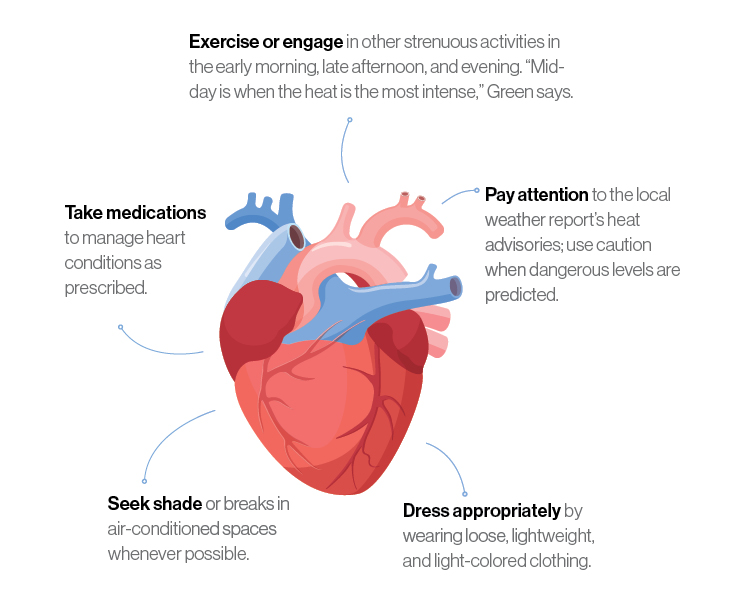
- Pay attention to the local weather report’s heat advisories; use caution when dangerous levels are predicted.
- Exercise or engage in other strenuous activities in the early morning, late afternoon, and evening. “Mid-day is when the heat is the most intense,” Green says.
- Drink plenty of water.
- Dress appropriately by wearing loose, lightweight, and light-colored clothing.
- Seek shade or breaks in air-conditioned spaces whenever possible.
- Get to a cool place and seek medical attention if “you find yourself with a headache, feeling flushed or dizzy, or feeling like you’re going to pass out when you’re in the heat,” Green says.
- Maintain a heart-healthy lifestyle. That includes 150 to 200 minutes of moderate-intensity exercise each week; seven to eight hours of sleep each night; and a healthy diet full of fresh fruits and vegetables, lean meats, and fewer carbohydrates.
- Take medications to manage heart conditions as prescribed.
- See your doctor if you have any questions or concerns about how the heat will affect your heart.



