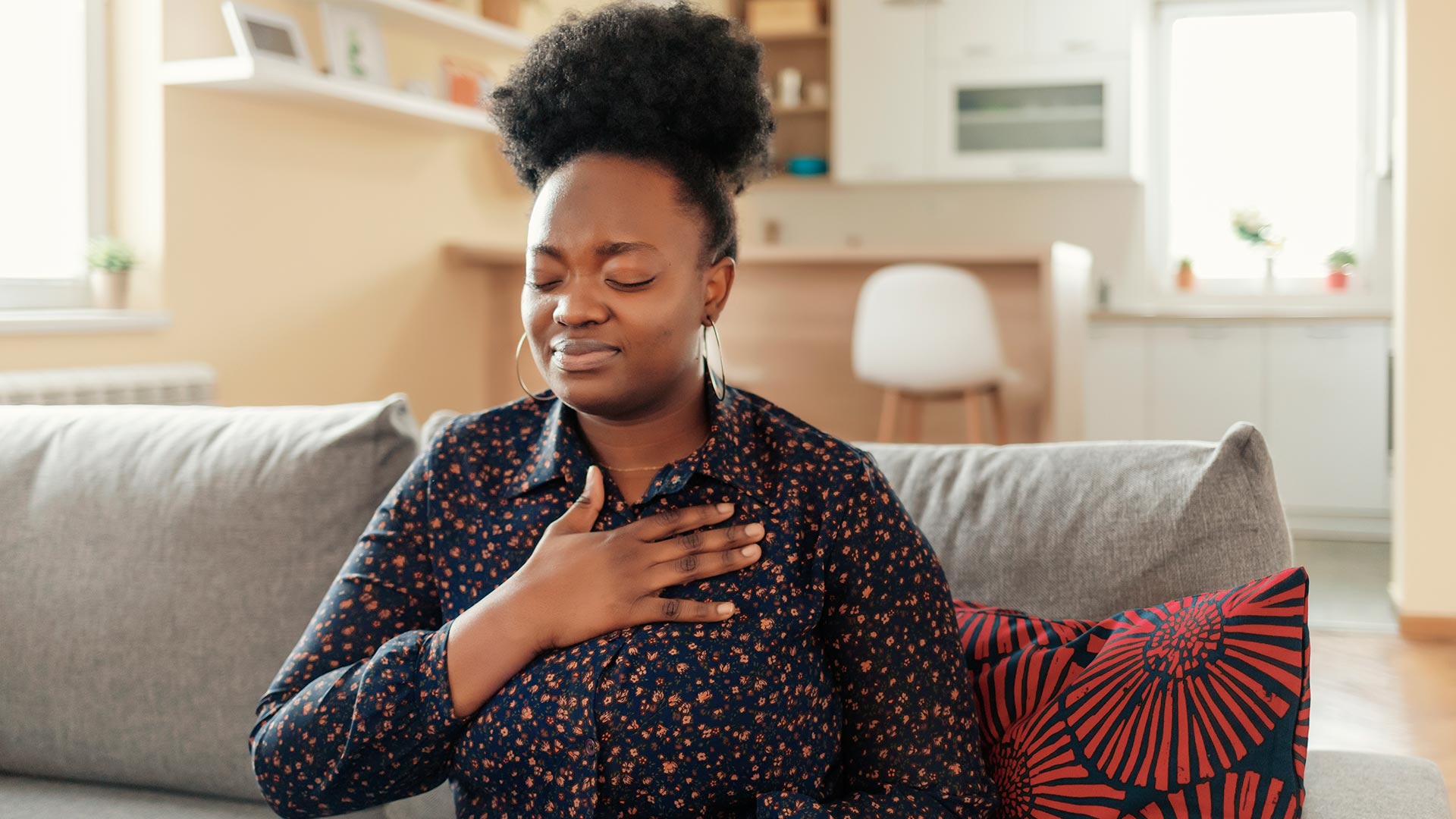
It may not be a heart attack
With the country’s heart attack statistics–about 800,000 people have one each year–having chest pain can be concerning. But how do you know if your pain is heart-related or something else?

The answer often depends on the pain’s intensity and frequency, your age, and your risk factors, important reasons to see your doctor when you experience any kind of chest pain.
“We can assess and say ‘Is this your heart or is it something else?’ And there are so many other things that it could be,” said Gretchen C. Kaneb, MD, a primary care physician at Bon Secours Powdersville Family Practice in Easley.
Because your chest contains many vital organs, several conditions can cause pain. Among them are:
- Angina – Exercise-induced pain that stops after activity could indicate there’s reduced blood flow to the heart and could be a sign of heart disease. “You don’t need to call 911, but you do need to get in to see your doctor,” Kaneb said, adding that overexertion during exercise can cause musculoskeletal chest pain.
- Myocarditis – Stabbing pain could be a sign an inflammation of the heart muscle (myocardium). “That (can) emulate a heart attack,” Kaneb said.
- Panic Attack – Often seen in younger age groups with increased stress, this is “a different kind of pain where you could be breathing very rapidly. Your heart may be racing,” Kaneb said.
- Pleurisy – An inflammation in the lungs’ lining, pleurisy can cause pain “when you take a deep breath in,” Kaneb said, adding that it can “stem from a bacterial or viral infection or an autoimmune disease.”
- Pulmonary Embolism – Pain or swelling in the legs could be a clot, which can travel into the lungs and cause a blockage and chest pain. “That is life-threatening,” Kaneb said.
- Respiratory Illnesses – The coughing associated with the flu, COVID-19, or pneumonia could cause dull pain. “Those chest wall muscles get sore because you are using them all the time,” Kaneb said, adding that pain also can come from asthma attacks.
- Reflux or Esophageal Spasms – Eating spicy foods, or large and heavy meals can cause burning chest pain or spasms. “It’s not consistent,” Kaneb said. “It comes and goes, and it’s relieved by antacid.”
Being as descriptive as possible about your pain and when it started will help your doctor determine its cause. “It depends on a lot of things as to whether this is cardiac, and whether we need to do more testing,” Kaneb said.
To find a doctor who can treat your pain, visit Bon Secours’ Find a Doctor website: https://www.bonsecours.com/find-a-doctor. You can narrow your search by zip code, accepted insurance plans, specialized care, and more.