
A Clemson University study could lead to new immunotherapy for breast cancer. The study, according to the university, provides the foundation of using cells in our bodies to target cancer cells.
Clemson researchers have used the immune system’s natural killer cells — which the body uses to fight off certain types of infections — to go after the breast cancer cells by bridging the two cells with a fusion of proteins the researchers developed.
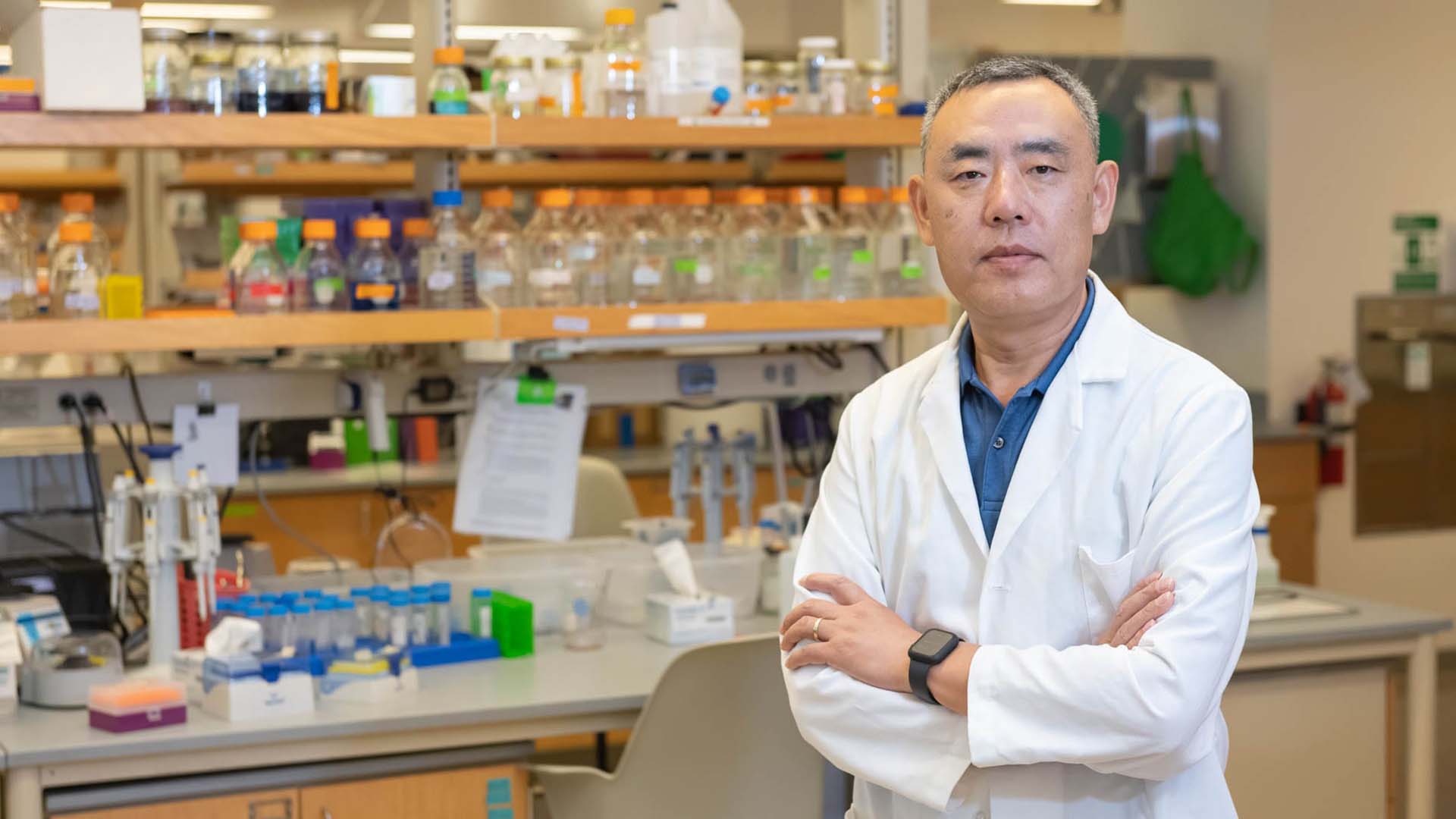
“The idea is to use this bifunctional protein to bridge the natural killer cells and breast cancer tumor cells,” said Yanzhang “Charlie” Wei, a professor in the College of Science’s Department of Biological Sciences. “If the two cells are brought close enough together through this receptor ligand connection, the natural killer cells can release what I call killing machinery to have the tumor cells killed.”
Breast cancer kills 43,000 women each year in the U.S., according to the American Cancer Society and one in eight women and one in 1,000 men will develop invasive breast cancer.
“Very simply, cancer is uncontrolled cell growth. Some cells will become abnormal and have the potential to become cancer,” Wei explained. “The immune system can recognize these abnormal cells and destroy them before they become cancer cells. Unfortunately for those who develop cancer, the immune system is not working very well because of gene mutations and environmental factors. The result is that the cancer cells won the fight between the immune system and the tumors.”
Clemson’s researchers focused on triple-negative breast cancer, the most lethal type of breast cancer, and prolactin receptors.
“Prolactin is a natural hormone in the body and plays a role in breast growth and milk production during breastfeeding. Breast cancer cells overexpress prolactin receptors,” the press release stated.

Since 90% of breast cancer cells express prolactin receptors, researchers developed a sort of mutated form of prolactin. The mutated protein activates the natural killer cells.
“One of the things tumor cells do is to inhibit natural killer cell activation, so we use these artificial bifunctional proteins to connect natural killer cells and activate them to enhance the killing of the breast cancer cells without increased cytotoxicity,” Wei said.
The research has recently been published in PLOS One. Clemson doctoral graduate Hui Ding is the paper’s lead author. Other authors include Clemson doctoral student Garrett Buzzard; Clemson research assistant Sisi Huang; Michael Sehorn, associate professor in Clemson’s Department of Genetics and Biochemistry; and Ken Marcus, a Clemson chemistry professor.
Wei and his colleagues are now exploring funds for an animal model to confirm their findings. If animal studies are successful, human trials will follow. Afterward, targeting other cancers would also be on the table.
“It is my dream that someday we can create a group of these bifunctional proteins that could be used for other cancers by shifting the target molecule. We’d have the one part of the bifunctional protein that targets natural killer cells. The other part would target other cancer types that have unique markers,” Wei said.


