
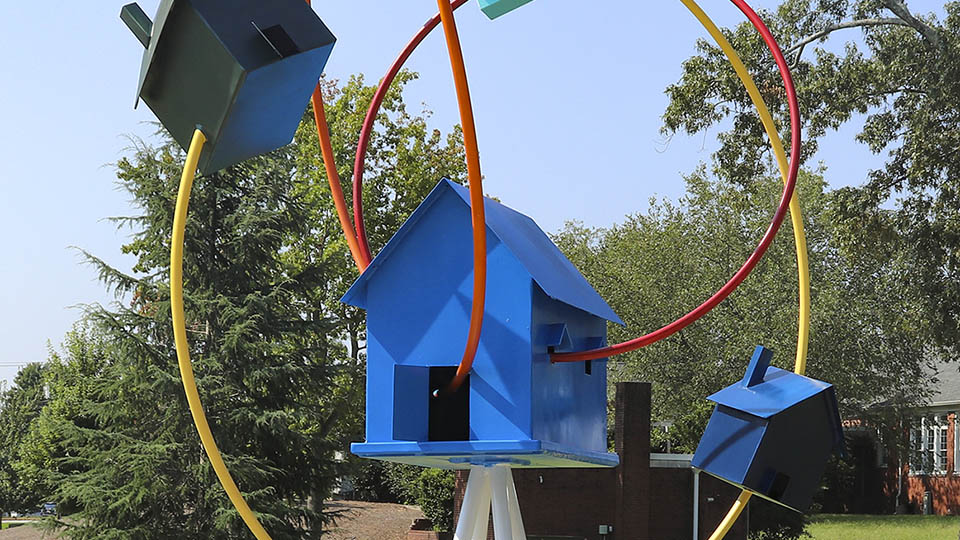
A walk through the prize-winning sculptures on the Public Art Trail
The azure sky this afternoon looks straight out of a Monet painting. In the small park, late winter paints the grass a cashew brown. Large stones sit in semicircles around a small stage. On this stunning Monday in the cultural heart of Mauldin, Pat Bjune sits on a bench along with her dog, Scooter. Soon, a few visitors stop by. They point out what they came here to see: the city’s Public Art Trail and its towering sculptures.
Bjune looks at several stately works, and with an eye-twinkling smile, she says, “It’s cultural! I do like it, I’m not joking with you.”
She chuckles and explains that she and her husband, Russell, a Marine Corps veteran, lived in New York City for nearly 50 years. Back then, she says, public art typically meant (illegal) street art spray-painted on canvases like subway trains, bridges, walls, buildings.
Nodding toward one of the art walk’s eight pieces, she says, “Sitting here, I think, I have bad days, but somewhere along the line, there’s a person who made that—or any of these sculptures. That’s art today. That’s not graffiti. That’s art!”
Mauldin’s Robust Arts Portfolio
Since 2015, the Public Art Trail behind the city’s Cultural Center has served as just one part of Mauldin’s robust arts portfolio, which also includes painting, pottery, music, theater, the whole palette. And City Council’s annual budget allocates $18,000 for a statewide sculpture competition, exclusively for the trail.
Christine Faust, the city’s cultural affairs manager who oversees the grant award, issues requests for proposal. Artists submit a sketch based on the year’s theme; 2024’s is “Soaring Energy.” Selected semifinalists then build and deliver 3D scale models to her Cultural Center office.
Then two of those 3- or 4-foot models make the rounds through a couple of straw polls among resident artists and the city’s 13 department heads. Finally, council members select the $15,000 prizewinner. Of the remaining line-item funds, $1,000 goes to each of the top three artists; in other words, none incurs a dime of out-of-pocket costs to create and submit a model.
After the winner is unveiled on the trail, the city, which owns each piece, moves an older piece to a part of town that needs more public art.
Which brings us back to that glorious art-worthy afternoon.
Walking along the trail, Faust explains that while the Cultural Center’s offerings indoors continue to thrive, she’s increasing the number of events in the backyard. The park there includes, among other amenities, a concert venue, playground, and, yes, soaring works of three-dimensional art.
“You can’t look at each individual element. What you’re doing is creating a whole backdrop,” she says, “I think that’s what our Public Art Trail does, it puts the Cultural Center’s focus on the arts outside.”
Faust’s office, notably, is part of the city’s Economic Development Department, whose director, J.R. Charles, echoes Mauldin’s cultural affairs manager.
“It’s to bring the inside out to the people,” he says of the walkway, adding, “The trail combines all of that visually outside. And people can get an idea of what we’re about.”
Digging into the Public Art Trail
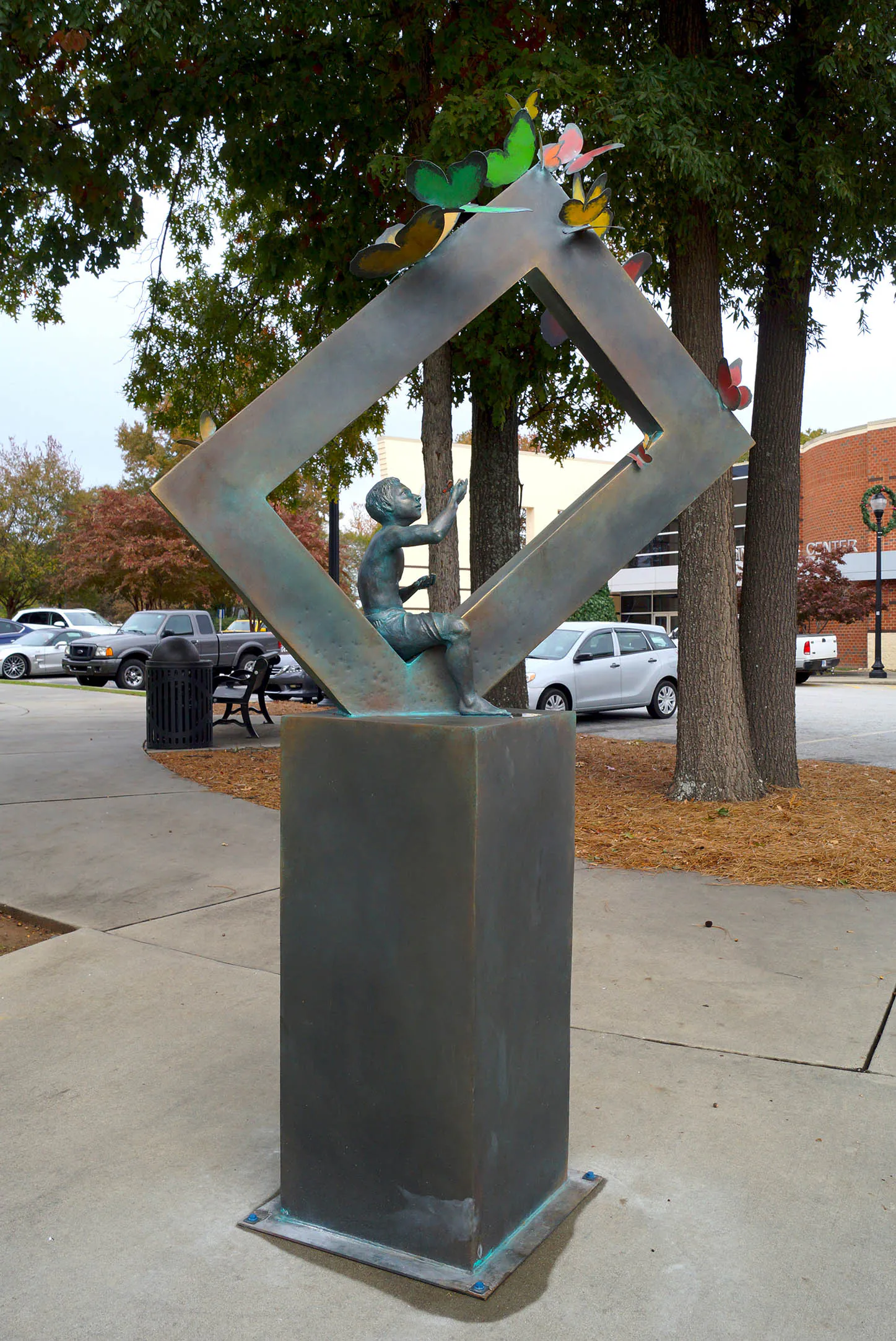
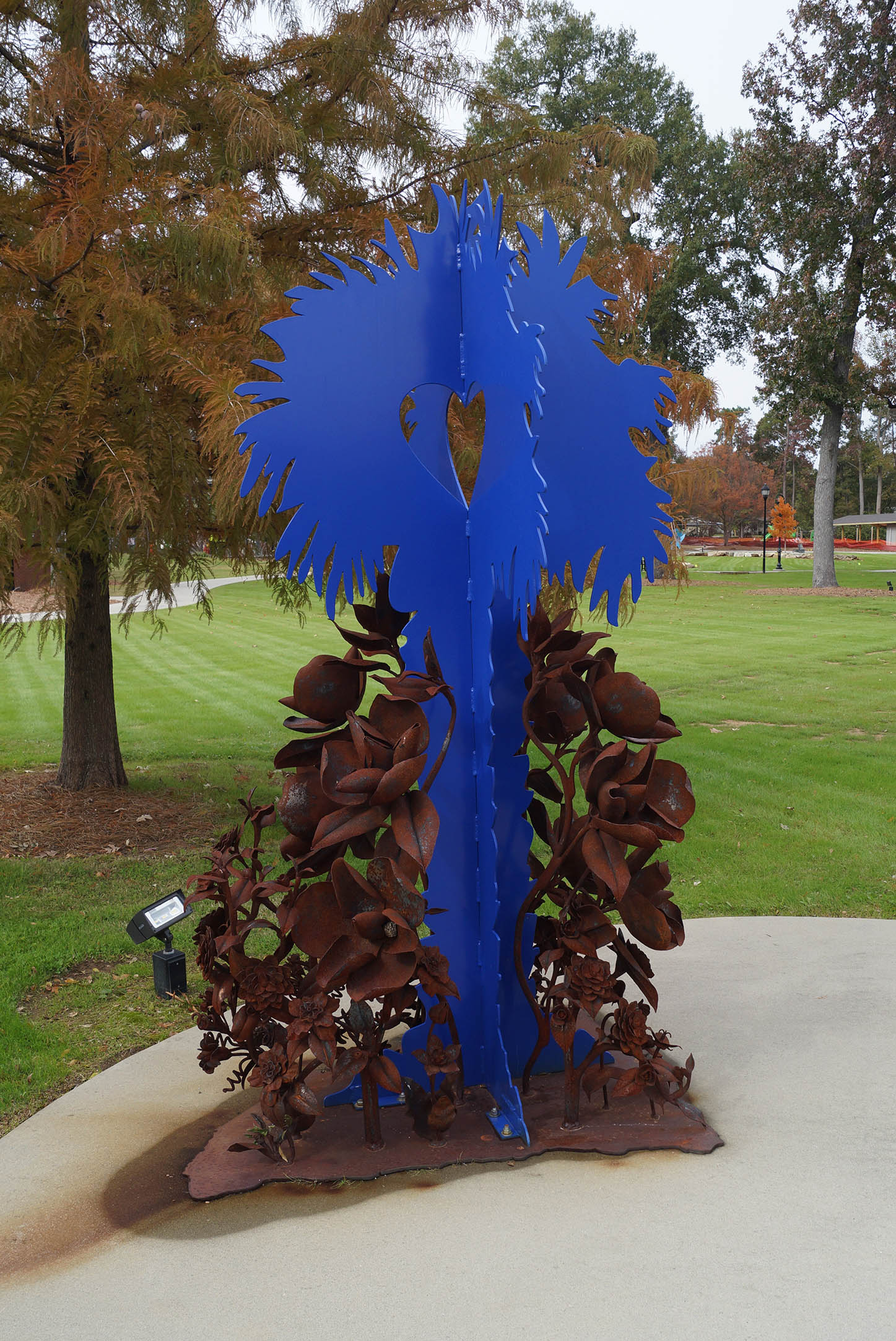
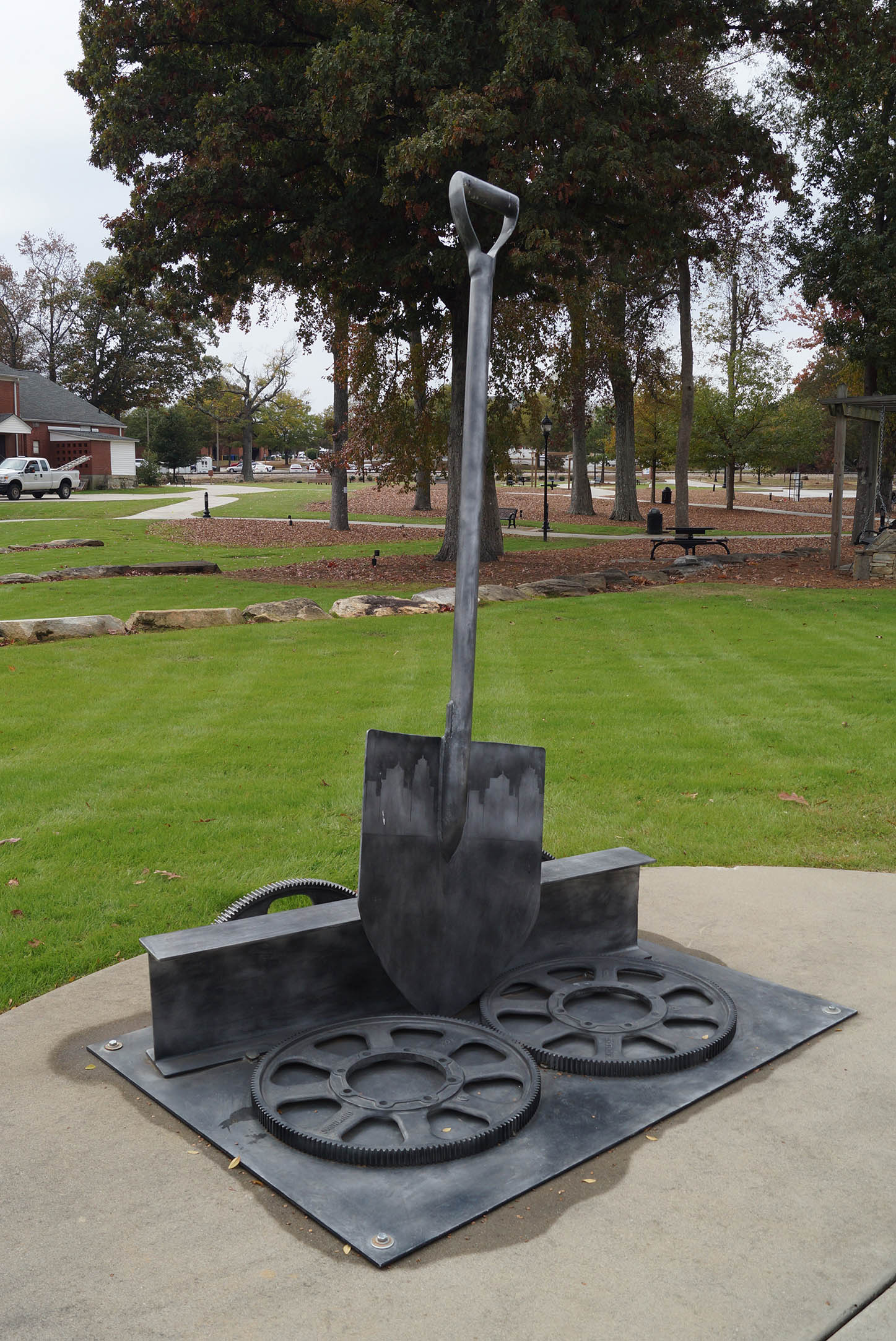
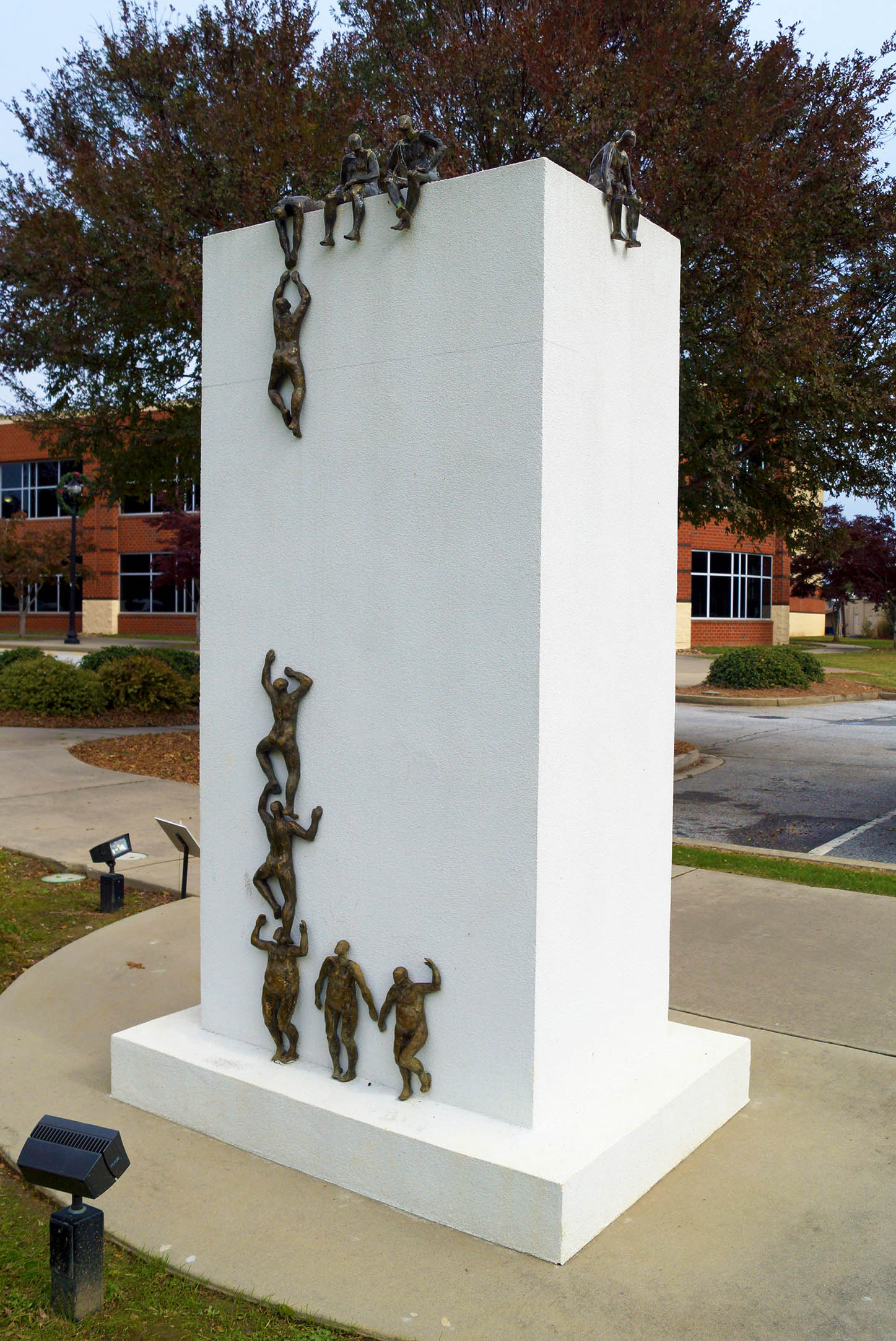
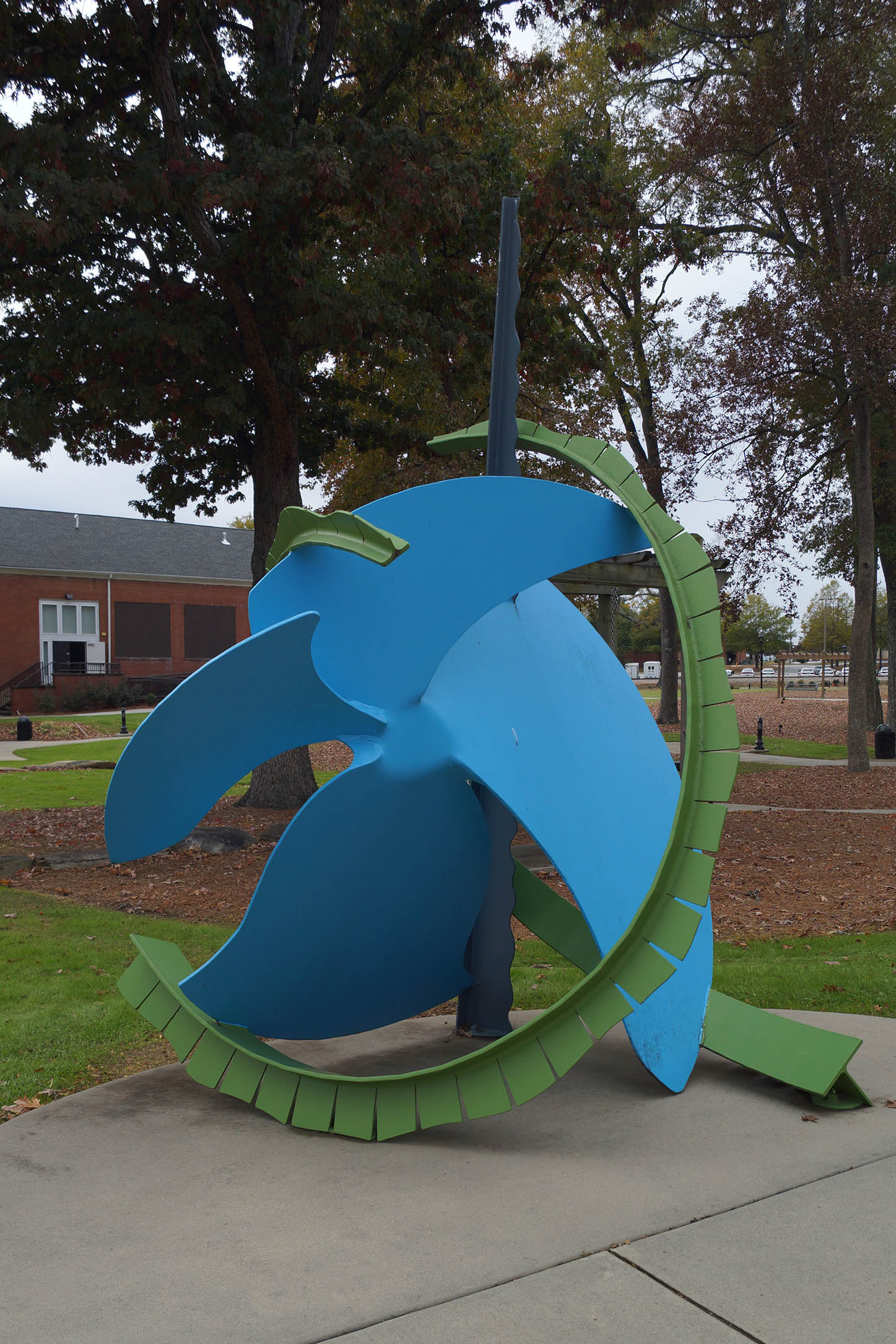
Arrin Matthews had to dig a little deeper into his professional metalworking toolkit to enter his first-ever art competition. And so he crafted a steel shovel that still towers 9 feet over Mauldin’s Public Art Trail—alongside seven other winners of the city’s annual $15,000 sculptural arts grant.
In 2018, he responded to Mauldin Cultural Center’s request for proposal for the contest whose theme that year was “Industry of the Upstate.” His award-winning piece, “The Groundbreaking,” according to the city’s website, “reminds us that Mauldin is continually changing and growing, or breaking ground, in new ways.”
That, of course, has been the Public Art Trail’s mission since the 2014 groundbreaking at Mauldin’s cultural hub at 101 E. Butler Road.
“There’s a lot of other public art trails that get zero recognition,” he notes, adding: “The Mauldin one is right there at the center.” And that gives artists what their work sorely needs: exposure. Lacking that publicity—and a venue like Mauldin’s art trail—he says, “With our creative minds, we’re stuck and looking at a black-and-white world.”


