
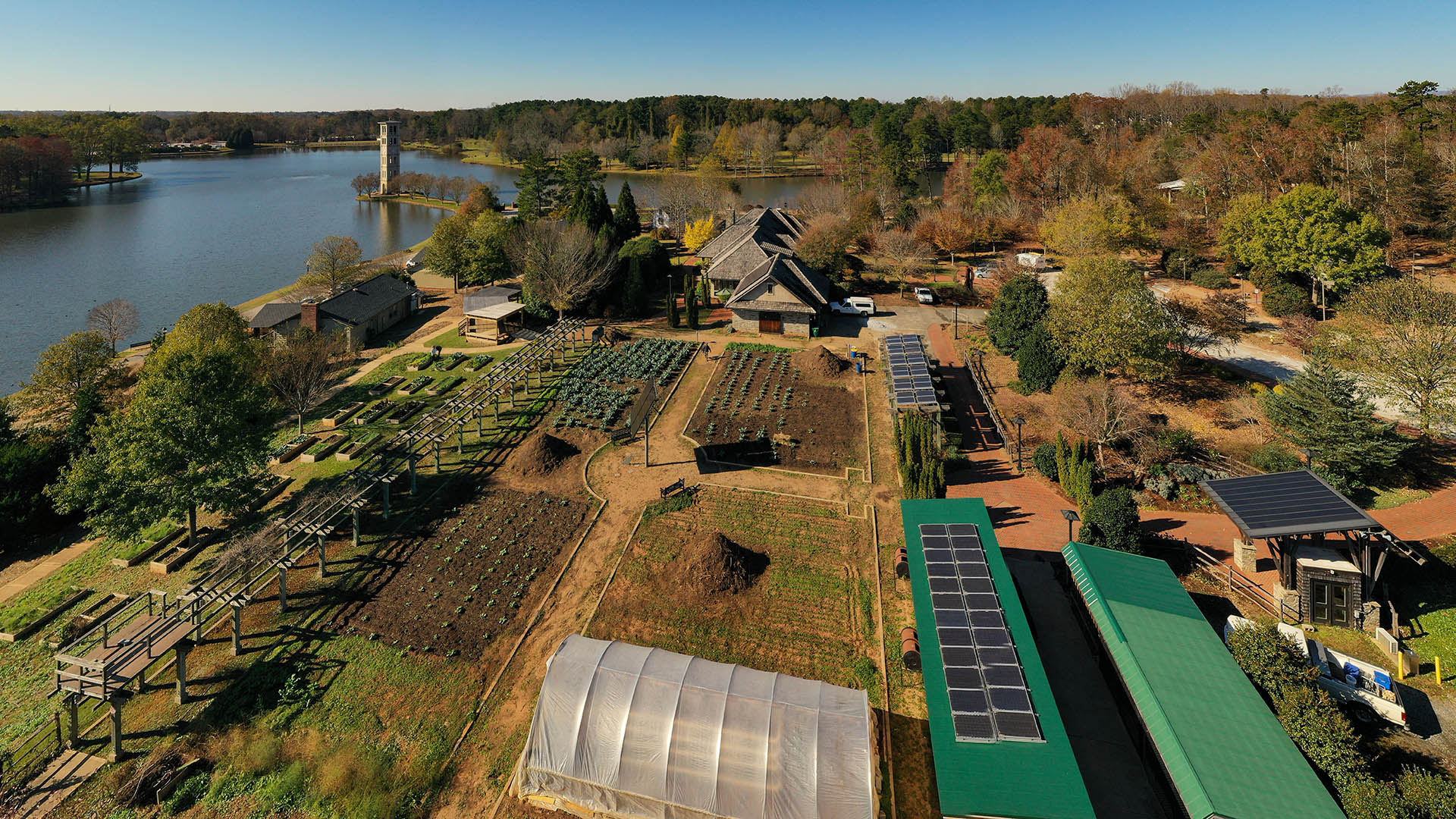
Furman’s Joy Baker goes behind the buzzwords to create change
Joy Baker keeps a close watch on two climates.
First and foremost, there is the natural climate of the earth, an ever-changing map of heat waves and cold fronts, of rising ocean temperatures and eroding coastlines, of the acute destruction of natural disasters and the chronic malaise of depleting ecosystems.
But there is also another climate, which holds just as much sway for Baker: the political climate.
“I think it’s not shocking for me to say that the political climate toward sustainability work can be somewhat difficult here in the Southeast,” says Baker, who works as the associate director of sustainability programs at Furman University’s Shi Institute for Sustainable Communities. “But working with young people and undergraduates every day gives me a lot of hope, because they’re so engaged and energized around solutions-oriented work.”
What Baker tries to stress, both to her students and to the community at large, is that sustainability need not be a political buzzword, nor a divisive topic. Rather, it simply means “we’re meeting all the needs of the current people on our planet without compromising our ability to meet the needs of future generations,” Baker says.
“There is a misconception that sustainability is the more expensive and inconvenient route to take, but that’s simply not true,” she continues. “Just look at the damage of Hurricane Helene ($59.6 billion in damage and needs, according to the North Carolina Office of State Budget and Management) and you see it’s actually financially irresponsible not to make the sustainable and proactive choice at this point to prevent future cost. Using fewer resources, and therefore reducing consumption and cost, is absolutely at the heart of sustainability.”
The work Baker does at the Shi Institute, a regional hub for sustainability education, research, and leadership, is focused on a broad range of interdisciplinary initiatives, which collectively present a much more diverse and, frankly, more interesting view of what sustainability is in practice.
Sustainability education at Furman
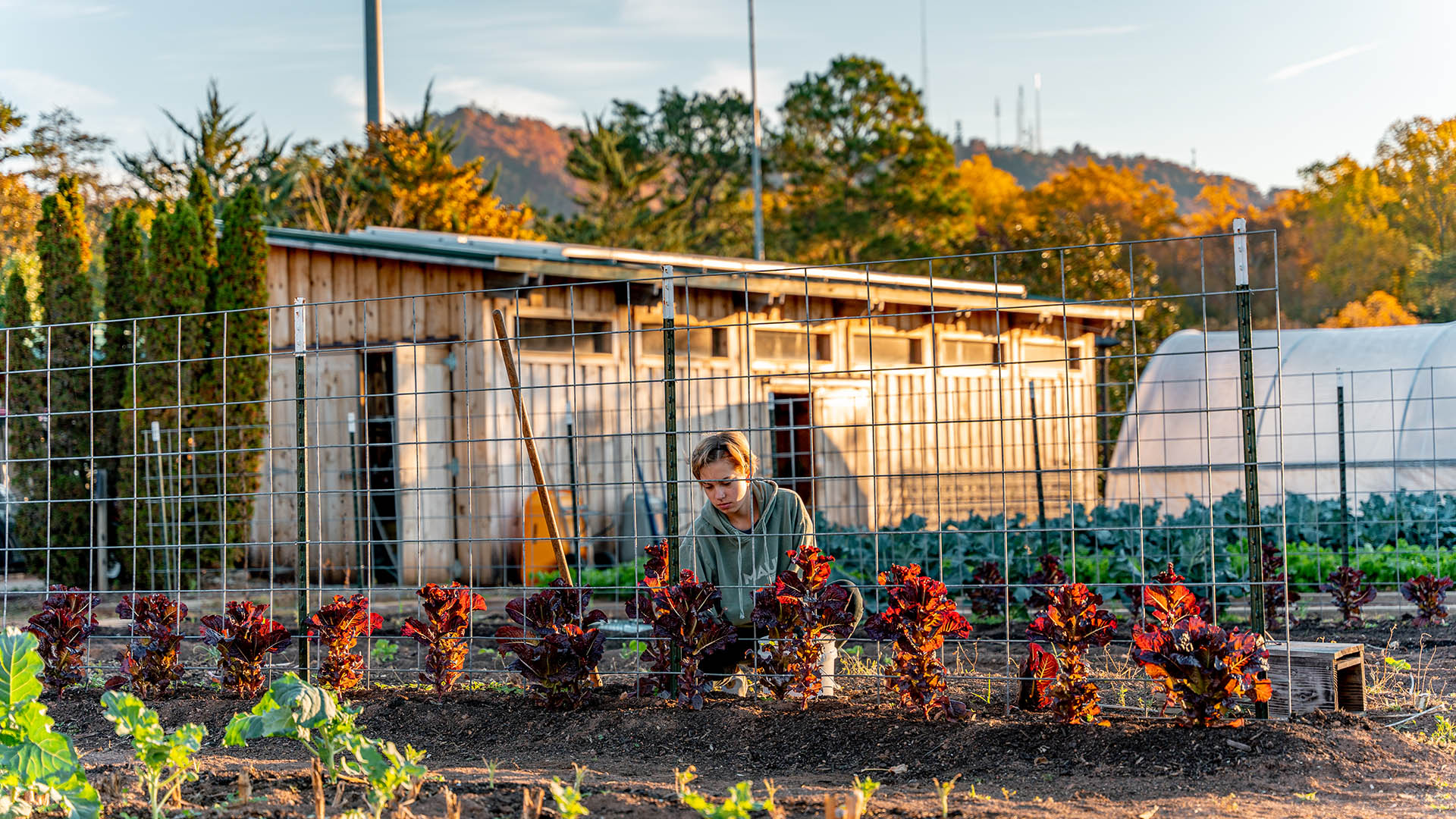 This effort is not merely going out and planting trees or convincing people to recycle. Rather, it is a community-centered approach that finds real needs and attempts to solve them.
“People think that just means we’re talking about environmental protection,” Baker says, “but it also means we’re meeting people’s needs for affordable and safe housing, health care, and education, ensuring we have enough resources locally for that, and really just meeting basic needs.”
What does that look like on the ground? Here’s one example you may not have considered.
Let’s say the Upstate is in the grips of a heat wave. When you turn on the local TV news, you might see mention of cooling stations, those public places where people can gather inside to cool off, get fresh water and food, and ensure they do not suffer from heatstroke. For those of us with air-conditioned homes, it can be easy to gloss right over such factors.
But have you ever considered how health authorities decide where to place those cooling stations?
These and similar health and safety initiatives are based on heat-mapping programs that track which towns and localities experience the highest degree of heat, based on a number of geographical and meteorological metrics. Those maps are then compared to socioeconomic data to hone in on areas with the highest degree of social vulnerability. That duality is crucial, because not all areas see the same amount of risk. If a heat wave were to hover over Beverly Hills in California, land of mansions and sports cars, it would be a waste of resources to pop up cooling stations there. But when heat waves hover over communities with a prevalence of low-income folks, senior citizens, and people with young children, it becomes a literal matter of life and death.
This is a small example, but it illustrates the overlap between environmental factors (areas with high heat) and social factors (areas where people are most socially vulnerable), and how both are needed to properly address sustainability as a whole.
Students at the Shi Institute’s Student Fellowship Program, led by Baker, are conducting exactly that kind of holistic heat-mapping research now, in addition to dozens of other programs. Those include conservation efforts on Lake Conestee, education programs at the Grenville Zoo, urban planning, and innovative recycling and reuse techniques to ensure local landfills are not overloaded with useful resources.
Working under Baker in the fellowship program, students come from a broad range of backgrounds—those majoring in environmental sciences as well as business, the arts, engineering and more—and are developing practical skills that carve through the abstract fog of “sustainability” and reveal the on-the-ground actualities behind the buzzwords.
“One of my big dreams for the fellowship program is to really see it expand across the state and the Southeast,” Baker says. “My selling point is that if we give students the training and experience in our region and show them it is possible to make change in the Upstate, we’re much more likely to retain them and their talent in this state. But we have to show them there’s opportunity right here, all around us.”
Programs at the Shi Institute
 Sustainability Education
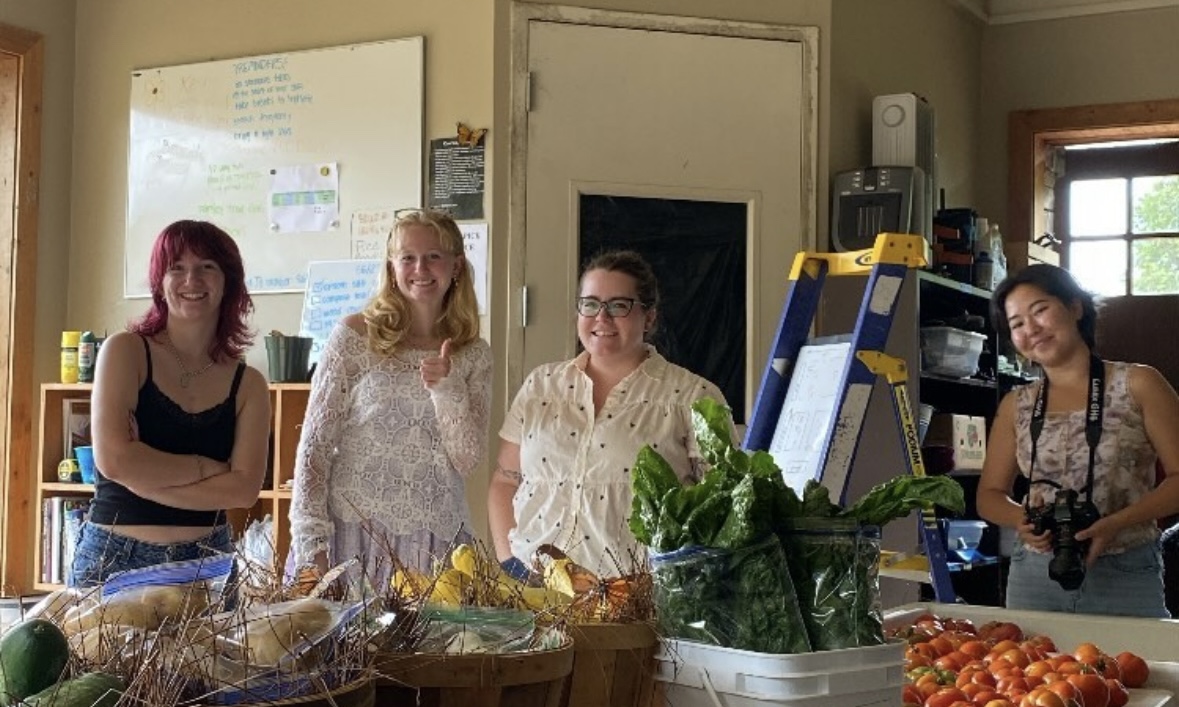
The Shi Institute supports innovative sustainability education programs aimed at empowering faculty, staff, students, and community leaders to promote sustainable communities. This includes the Student Fellowship Program, the Furman Farm, the Greenbelt community, Eco Rep programming, and more.
Applied Sustainability Research
The Shi Institute supports and conducts applied systems research projects aimed at coming up with creative solutions for promoting more sustainable communities. In addition to environmental areas, topics of past projects include public transportation, gentrification, and affordable housing.
Sustainability Leadership
The Shi Institute serves as a central source for conversation and dialogue among corporate, community, and educational leaders, as well as a catalyst for systemic change.
Student Fellowship Program
This program engages students in real-world, campus, and community sustainability fellowships, with offerings during the summer and the academic year. All current Furman students are eligible to apply. Fellows earn $12 an hour for their sustainability research and service work, gaining leadership and practical skills. For more information on how to apply, visit www.furman.edu/shi-institute.


