
Between 1917 and 1919, on 2,000 acres along the slopes of Paris Mountain, an estimated 100,000 men trained for World War I at Camp Sevier, drilling on artillery and honing machine gun skills. Some of these men went on to break through the Hindenburg Line in 1918, helping turn the tide of the war.
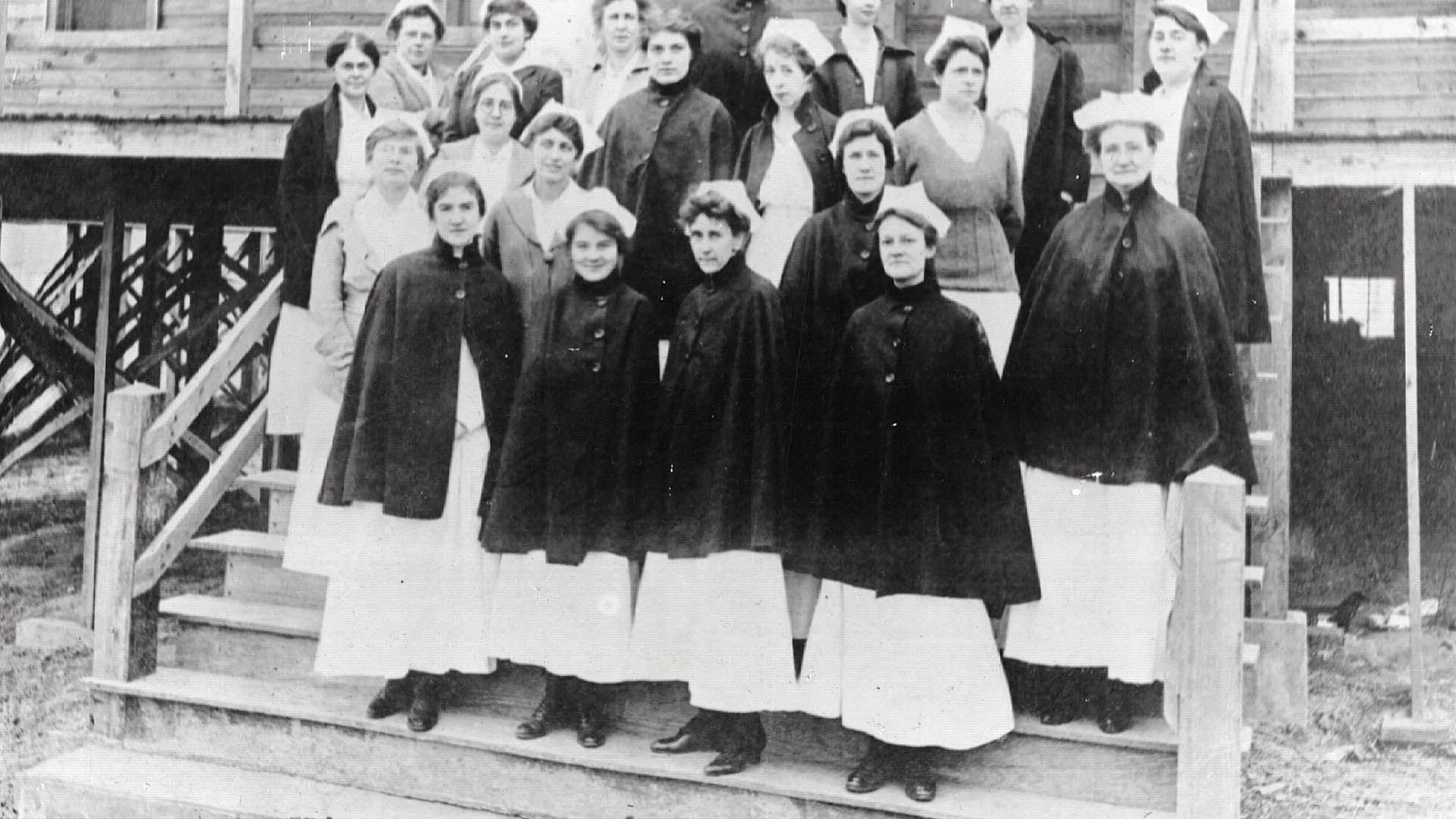
Less mentioned are the World War I nurses who staffed the facility’s four medical buildings. At Base Hospital No. 128, a designated U.S. Army medical unit, the nurses of Camp Sevier treated the injuries and illnesses common to military training in addition to dealing with the Spanish flu pandemic, which killed more than 50 million people worldwide in 1918.
Military camps were hit hard, but the nurses’ commitment to keeping soldiers healthy became another battlefield, one that helped evolve medical practices that are still used today—in a different century but as challenging as one hundred years ago.


