
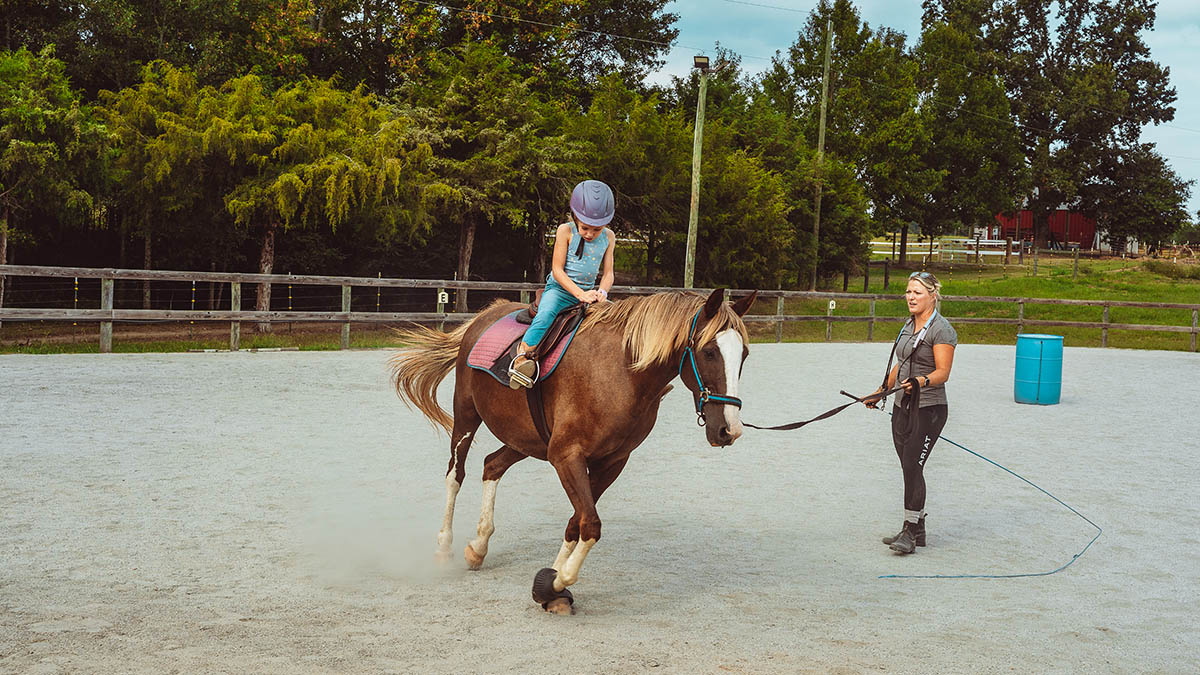
Tinsley Aughtry, age 8, already has her cowgirl boots on when she gets to the stable, and soon she has her saddle pad picked out (purple, to go with her riding helmet). Before long, she’s in the corral and astride Bourbon, a brown-and-white pony, with the help of Lakin Khamis, certified therapeutic riding instructor and founder of Breaking Free Horsemanship.
“The minute she gets on top of that horse, she has the biggest smile,” says Tinsley’s mom, Jennifer Aughtry. “And she feels so confident in herself, which is really great to see as a parent.”
Today’s equine-assisted therapy (EAT) session with Khamis and Bourbon at Hillside Boarding Stable in Fountain Inn is one of several activities Tinsley does each week to address the challenges of developmental delays. The physical exercise component of EAT improves her balance, motor skills, and strength, and the hand signals she has developed during her visits to the farm have given the non-verbal girl new tools to communicate.
Unique Advantages
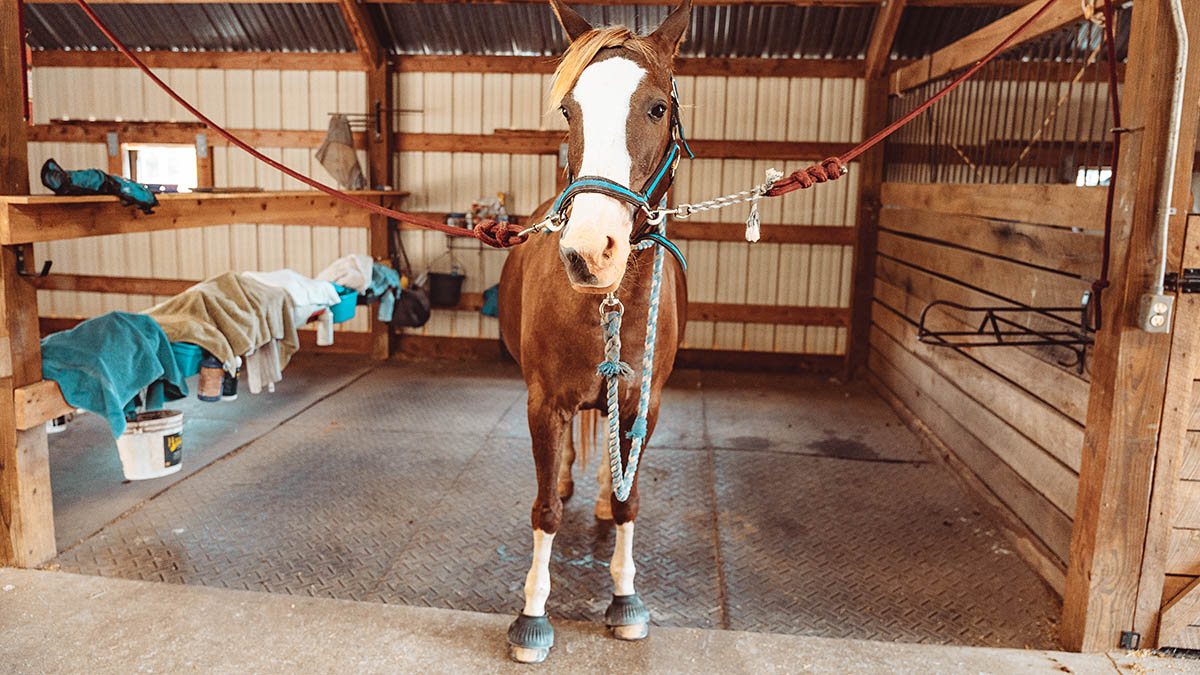 “Mostly we’ll work on physical ability,” says Khanis, who sees about a dozen young clients at facilities around the Upstate. “A lot of times, I’ll have kids who have a weaker core and a weaker trunk, so it’s a lot of energy for them to hold the horse or hold themselves up.”
Khamis gets help from several volunteers and sidewalkers from Brashier Middle College Charter High School in Simpsonville.
Horses have unique advantages as therapy animals, Khamis says. “Their side-to-side and forward-to-backward motion mimics the way we walk,” she says. “That releases endorphins in your brain, and the stress hormone cortisol decreases. And socially, they get to create a relationship with an animal.”
That relationship—the connection between human and horse—is a key to EAT’s effectiveness in mental health, says Julia Gentry, manager of the Clemson University Equine Center.
“So much of how horses communicate is based on comfort and respect,” she says. “It has nothing to do with how you look or how you act or how you talk. There’s a lot of focus on body language and working through the quieter senses like smell and touch—horses are very in tune to that.”
Equine Therapy at Clemson
 The Clemson Equine Assisted Therapy (CLEAT) program helps Clemson students with physical and cognitive disabilities through mounted and un-mounted lessons, Gentry says. The equine center has also been essential for some research being done at the school, including one current study investigating the possible biomechanical benefits of riding for post-stroke recovery in elderly patients.
“There’s so much about the horse that is useful to the human,” says Gentry. “The more you work at the connection, the better it gets.”
For Tinsley, who started EAT at age two, the calmness and confidence of being on horseback has not only translated to more success in occupational therapy, physical therapy, and speech therapy sessions, it has also given her “a sense of purpose,” her mother says.
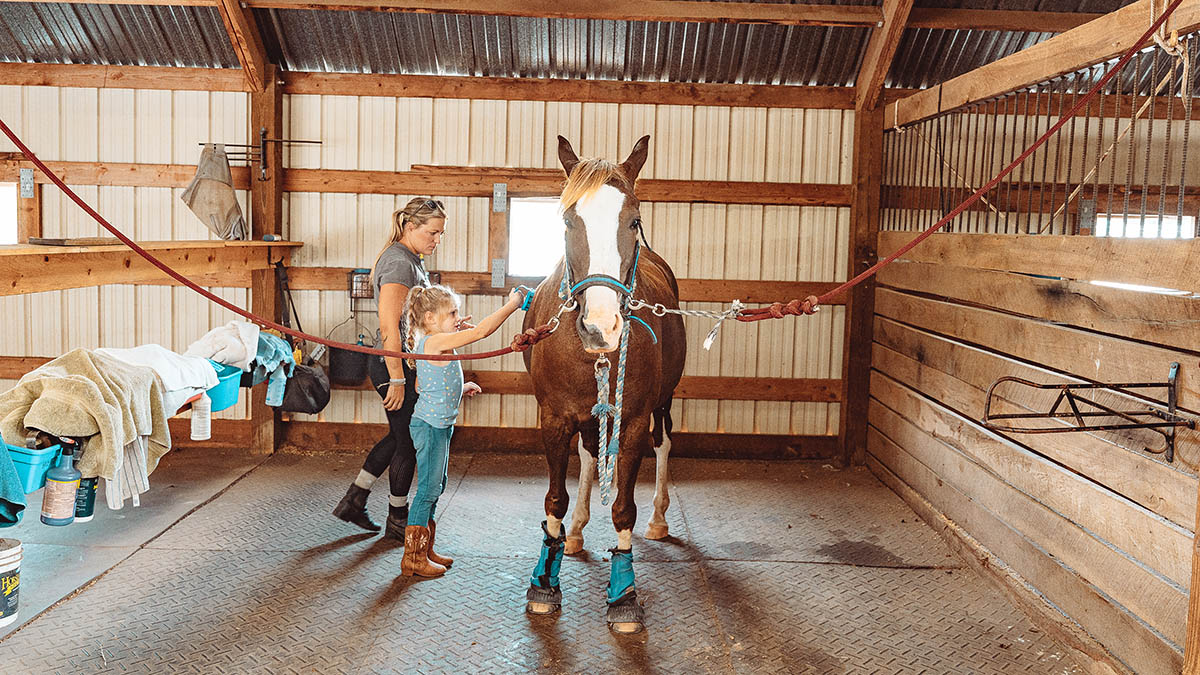
“It’s not just about riding,” she says, watching as Tinsley practices her stance and hand signals while Khamis leads the pony around the corral. “She helps care for and groom the horses. She’s learning life skills, care skills, building relationships.”
It’s a significant commitment for her family—there’s the 30-minute drive each way to the stable, plus “riding is not cheap,” Aughtry says— but there are no plans for their cowgirl to get down from the saddle anytime soon.
“It’s worth it, 1,000 percent,” says Aughtry. “It’s something she loves. And it’s so encouraging that she’s getting to do something so beyond typical, especially when she struggles in a lot of areas where other kids don’t. You see your kid doing this really cool thing, which gives me a sense of awe.”
A Big Stable of Horse Therapy Methods
 Horses have been used to help treat humans since the time of Hippocrates and the ancient Greeks. Today, the broad term of equine-assisted therapy (EAT) can encompass many different approaches.
- Therapeutic riding is used by disabled individuals for relaxation and developing muscle tone, coordination, confidence, and well-being.
- Hippotherapy is one treatment strategy used by a licensed physical therapist, recreational therapist, occupational therapist, or speech language pathologist working in tandem with a horse handler.
- Equine-assisted psychotherapy is the use of equines to treat psychological problems through riding as well as grooming, feeding, and ground exercises, with the goal of helping clients in social, emotional, cognitive, or behavioral ways.
- Therapeutic driving involves controlling a horse from a specially designed carriage seat or modified wheelchair.
Professionals and centers in the US are accredited by the Professional Association of Therapeutic Horsemanship (PATH). To learn more and search for providers, visit pathintl.org.


