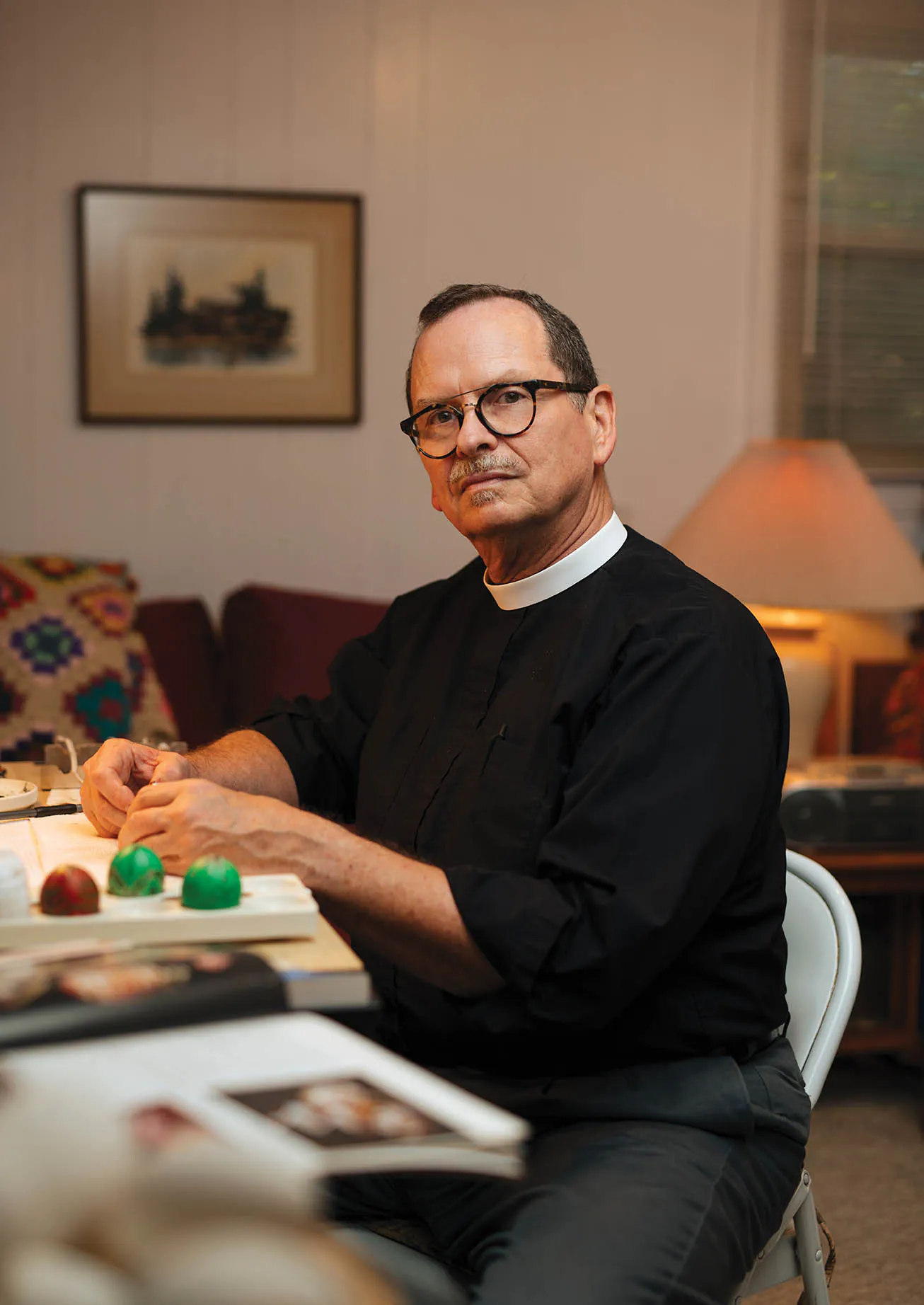
Senior pastor at the Lutheran Church of The Good Shepherd in Greenville, Steve became fascinated with pysanky after he and his wife took a workshop on how to make the eggs in 2001. The instructor singled the pastor out for his obvious skill at the craft, and that motivated Pastor Steve to keep at it. Two decades later, the part-time artisan reckons he has produced thousands of pysanky. “Doing the craft helps me to center my thoughts and quiet my brain,” he says. “I call it ‘art therapy.’”

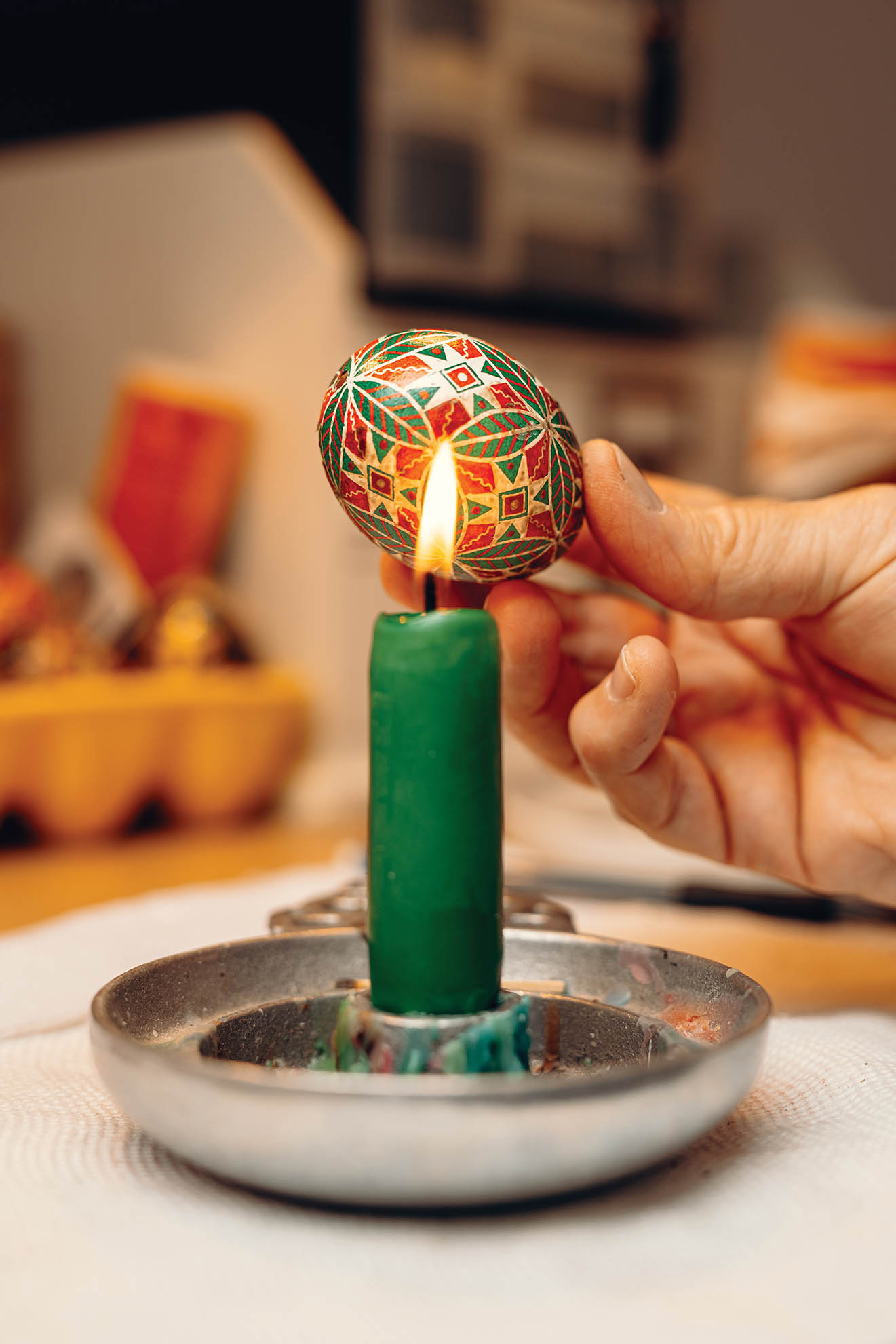
The process of making pysanky is a tedious one, based on a batik or wax-resist method. He begins by drilling a hole in egg and blowing the insides out. After the egg is clean and dry, he seals the hole and divides the egg into 8 or 16 sections with a pencil as the base for his design, which he draws without the aid of stencils or templates. He employs an electric stylus called a kistka to apply beeswax in lines, ribbons, or dots, in one of the hundreds of different patterns before coloring the eggs with commercial aniline dyes. “It’s a successive process of applying wax, dyeing, and drying,” Pastor Steve says. “When I’m done with my pattern, I take a candle and a paper towel, and hold the egg into the side of the flame to melt the beeswax so all the colors can be seen.” He finishes by applying a patina of polyurethane to lend shine and make the egg more durable.
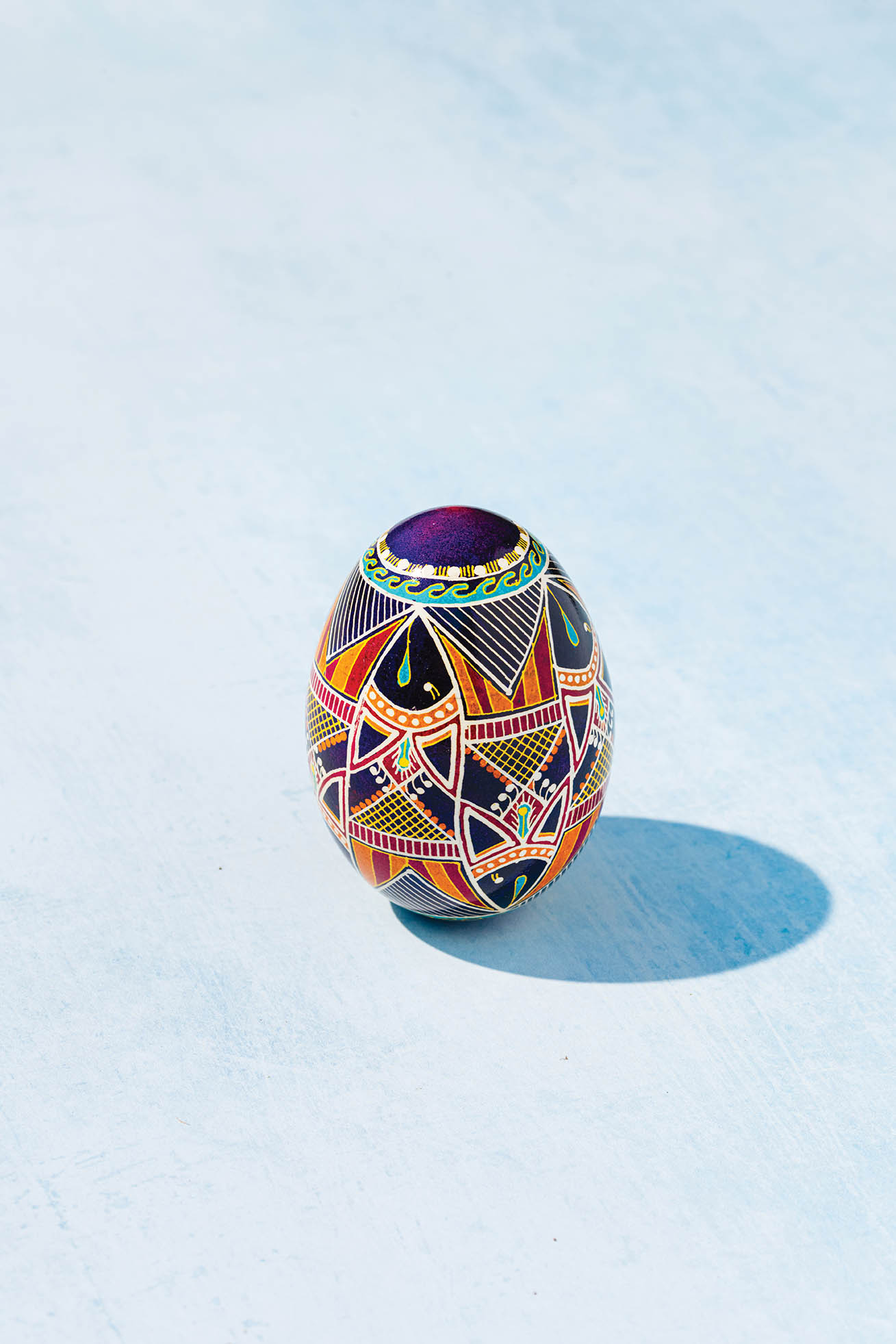
Colors vary, from two to a total of six or seven, the latter taking considerably longer to create. Originally, white, yellow, red, orange, and black were the only colors used, but modern commercial dyes have expanded that palette. Traditional designs, many of which have survived since ancient times and been assigned new meaning with the advent of Christianity, have religious significance. “The most commonly used symbol is an eight-sided cross,” explains the pastor, who finds inspiration in books he purchases from the Ukrainian Gift Shop in Minneapolis. “For the ancients, the number 8 represented infinity. I use a lot of eight-pointed crosses, as well as flowers and animals.” The fish symbolizes Jesus Christ, while nets refer to fishers of men. A triangle represents the Holy Trinity, and dots replicate the tears of Mary, the mother of God.
“I see pysanky as a sacred art form,” Pastor Steve shares. “I believe it has sacramental import, in that the egg is a visible object that communicates an invisible, uncreated reality. In pysanky, nature and grace are joined. The eggs are pointers towards a truth that’s bigger than us.”
Breaking with Tradition
Although pysanky have long been associated with Easter, Pastor Steve breaks with tradition in the eggs he designs as Christmas tree ornaments. Dyed primarily red and green, these eggs display his own original designs. Many have a background of royal blue (rather than the traditional black), which stands out better when hanging on a tree. Find Pastor Steve’s eggs at Pysanky by Pastor at the TD Holiday Market on December 4 and 11. Prices range from $20 to $90, depending on the size of the egg and the intricacy of the design. You can also contact him through his Facebook page: facebook.com/Pysanky-By-Pastor-1709140252669771.
Photography by Will Crooks