
The Upstate offers a trove of uncommon plants that are worth a short drive
Sometimes we don’t appreciate what is right at our doorstep. The Piedmont and mountain regions of South Carolina are home to a number of rare, threatened, and endangered plants, some of which occur nowhere else in the world. And you can go see them right now.
South Carolina Plants
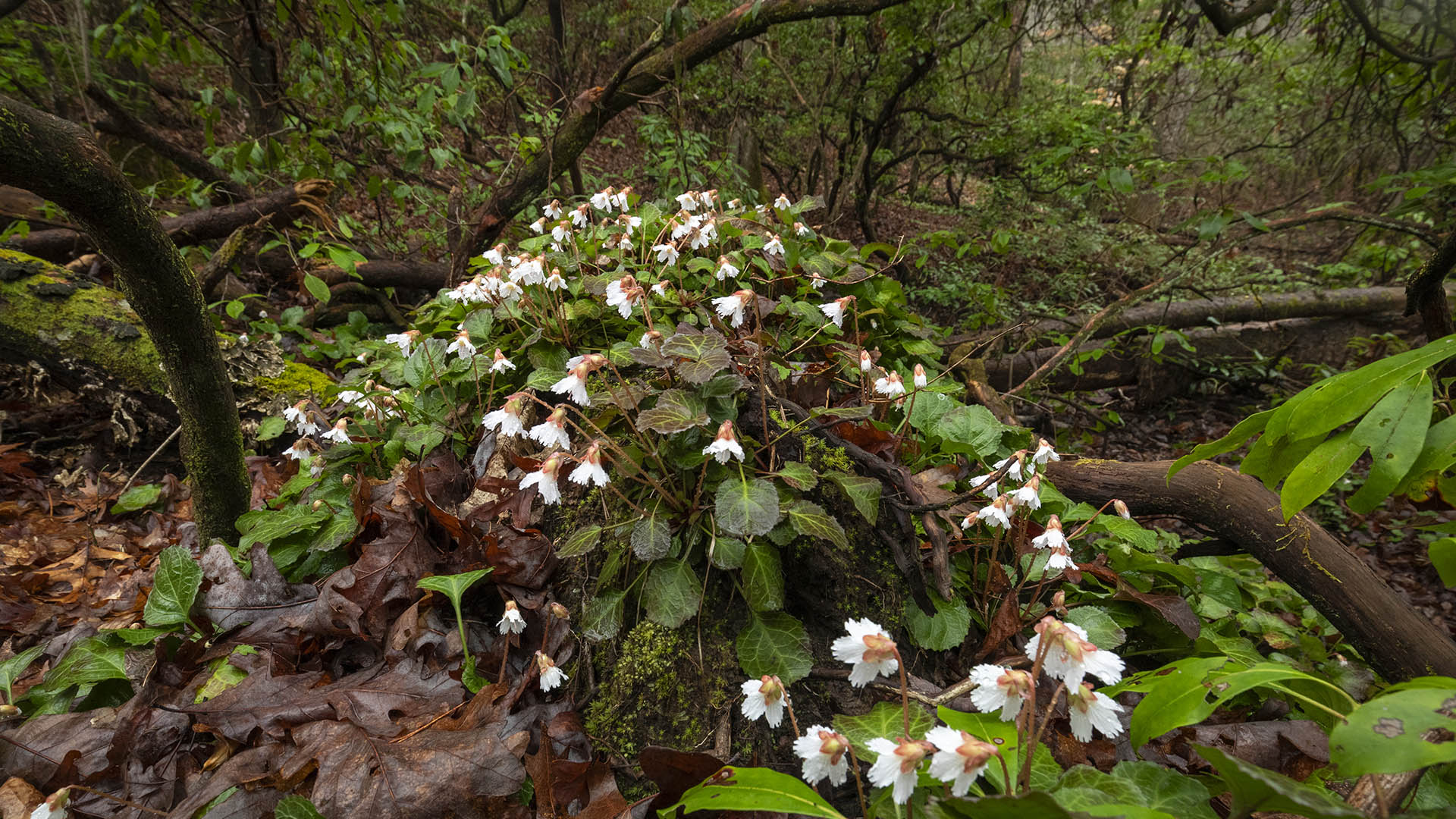
Oconee Bell
This exceedingly rare plant was first described by French botanist André Michaux in 1787, but botanists could not find it again for nearly one hundred years. Once described as “the most interesting plant in North America,” it can be seen today along the Oconee Bell Trail at Devil’s Fork State Park on Lake Jocassee in Oconee County.
The Oconee Bell (Shortia galacifolia) is rare, but locally abundant. That means the low-growing plants with delicate, stark white, bell-shaped flowers are only found in the area around Lake Jocassee and a couple of other small, isolated colonies in North Carolina, but there are plenty of them. Oconee Bell plants are evergreen, so you can go see them anytime; they flower between mid-March and early April.
Bunched Arrowhead
In a little boggy stream near Travelers Rest, one of the rarest plants in the Southeast is flourishing in a 176-acre preserve permanently set aside to protect the imperiled plant from development.
The bunched arrowhead (Sagittaria fasciculata), a small plant with tiny white flowers that bloom from late April through July, is found only in Greenville County, South Carolina, and Henderson County, North Carolina. In the Upstate, it was saved from the blade of a bulldozer by a coalition of conservationists in one of the great conservation success stories of our time.
When it was discovered that a parcel of wetlands bordering the Enoree River in Travelers Rest was slated for residential development, local organizations banded together to save one of the last remaining habitats of this federally endangered species. Upstate Forever, Naturaland Trust, the Southern Environmental Law Center, the US Fish & Wildlife Service, and the SC Department of Natural Resources, along with others, marshaled their resources and saved the critical wetland from destruction by establishing the Blackwell Heritage Preserve, which can be accessed by a 1.2-mile loop trail.
Dwarf-Flower Heartleaf
Another federally designated endangered species, the dwarf-flower heartleaf (Hexastylis naniflora) is found in only a few counties in the Piedmont of both Carolinas, and nowhere else in the world. Recognized by its evergreen heart-shaped leaves and tiny jug-shaped brown flowers, the plant is the featured species at the 160-acre Peters Creek Heritage Trust Preserve in Spartanburg County—a natural wonder in itself. One of only a few remaining undisturbed riverine hardwood forests in the Piedmont, Peters Creek is home to more than forty species of native wildflowers. The preserve is the result of two decades of dedicated research and conservation efforts by now-retired biology professor Dr. Gill Newberry.
When Dr. Newberry discovered a colony of the imperiled dwarf-flower heartleaf plants near her home, she bought three acres to preserve them in perpetuity. She later found that the colony extended nearly a quarter-mile farther up Peters Creek, so she enlisted the assistance of Dr. Terry Ferguson, a professor at nearby Wofford College, to help find funding to enlarge the preserve. They convinced the SC Heritage Trust Advisory Board to acquire the remaining acres of rare habitat, and today we are all heirs of Dr. Gill Newberry’s legacy.
Venus Flytrap
While this remarkable plant gets most of its energy from photosynthesis, like all green plants, it also supplements its diet by trapping and consuming insects. The Venus flytrap (Dionaea muscipula) features two clasping, partially folded leaves with two types of hairs. The trigger hairs trip the trap when an insect ventures inside the hinged leaves, and the other hairs secrete enzymes that digest the insects—a true marvel of nature.
Now restricted to boggy habitats along the coastal areas of North and South Carolina, the plants may have once been much more widespread, according to tantalizing evidence. In the 1800s, there was a thriving town on the Savannah River (now partially covered by Lake Hartwell) called Andersonville, where tourists reportedly came just to see the Venus flytraps in the area.
You can find the Venus flytrap, along with dozens of other native wildflowers, at the South Carolina Botanical Garden adjacent to the Clemson University campus. Look closely for the little Venus flytrap in the garden’s carnivorous plant ecosystem; they are smaller than you might think from looking at photographs.
Dennis Chastain is a Pickens County naturalist, historian, and former tour guide. He has been writing feature articles for South Carolina Wildlife magazine and other outdoor publications since 1989, and is the Field Notes columnist for the Greenville Journal.


