

Master felting and fiber artist Cecilia Ho talks history, fashion, and a legacy of teaching
For celebrated fiber artist Cecilia Ho, it’s important to keep traditions—like her family heritage, native language, and the centuries-old, global art of working with wool—alive.
“Felting is an ancient textile technique dating back to before Christ, even before the loom was created,” reveals Ho. “The wet felting technique that I use, where you mix wool with soap and water, is how the first people created their own fabric to stay warm and protected—so it’s multicultural, multi-functional.”
A prolific creator, Ho has transformed wool into countless works of art, from contemporary textile pieces designed to hang in galleries and museums to high-end fashion in the form of scarves and dresses. Throughout her studio, you’ll spot influences from her heritage, such as koi fish or traditional Chinese script. Themes of swimming against the current, overcoming adversity, and adapting to learn new things—all ideas that tie into her experience of immigrating from Hong Kong to Canada at 16 years old—are also prominent. Her work is vibrant and colorful, radiating intentional joy.
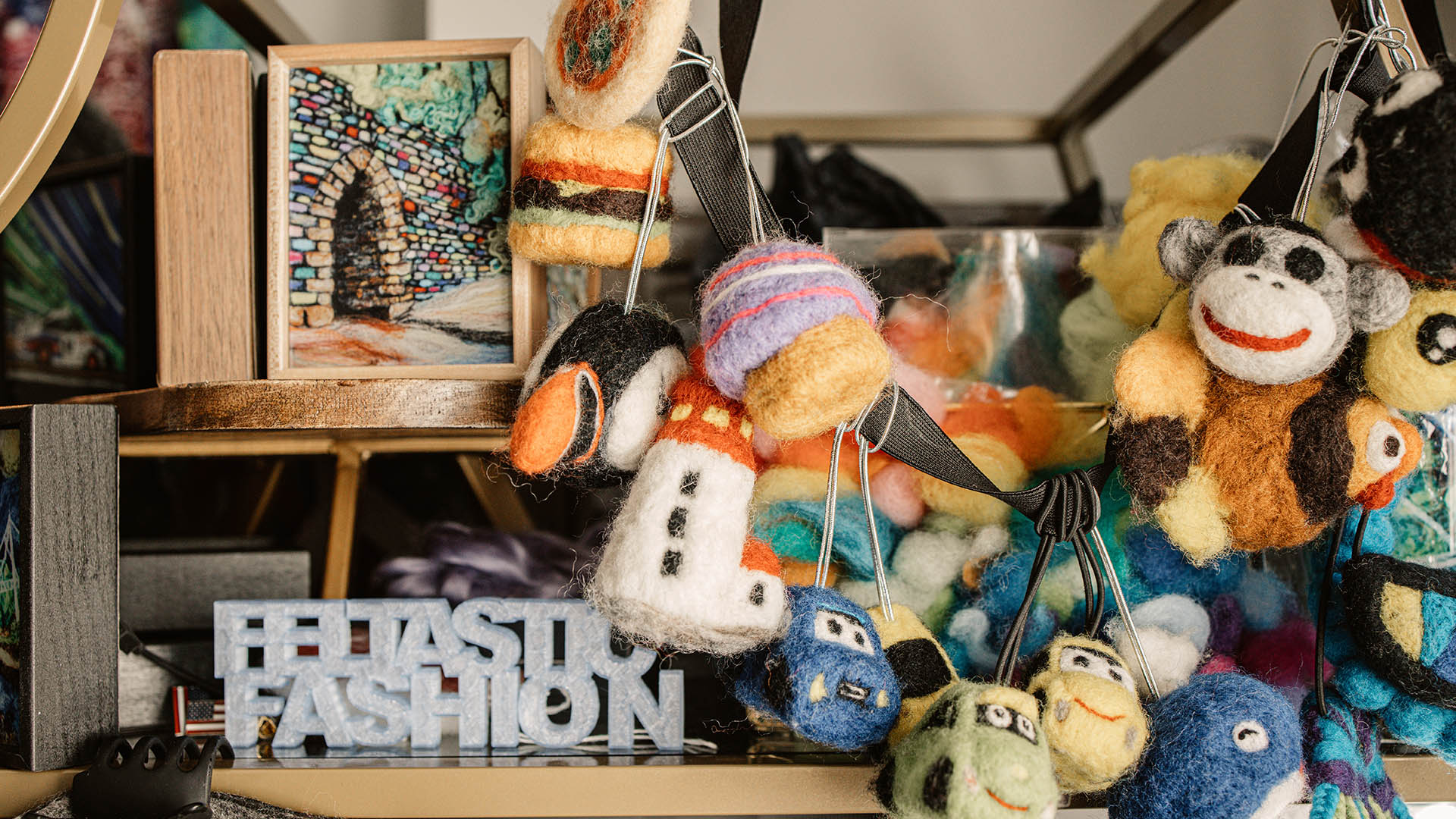

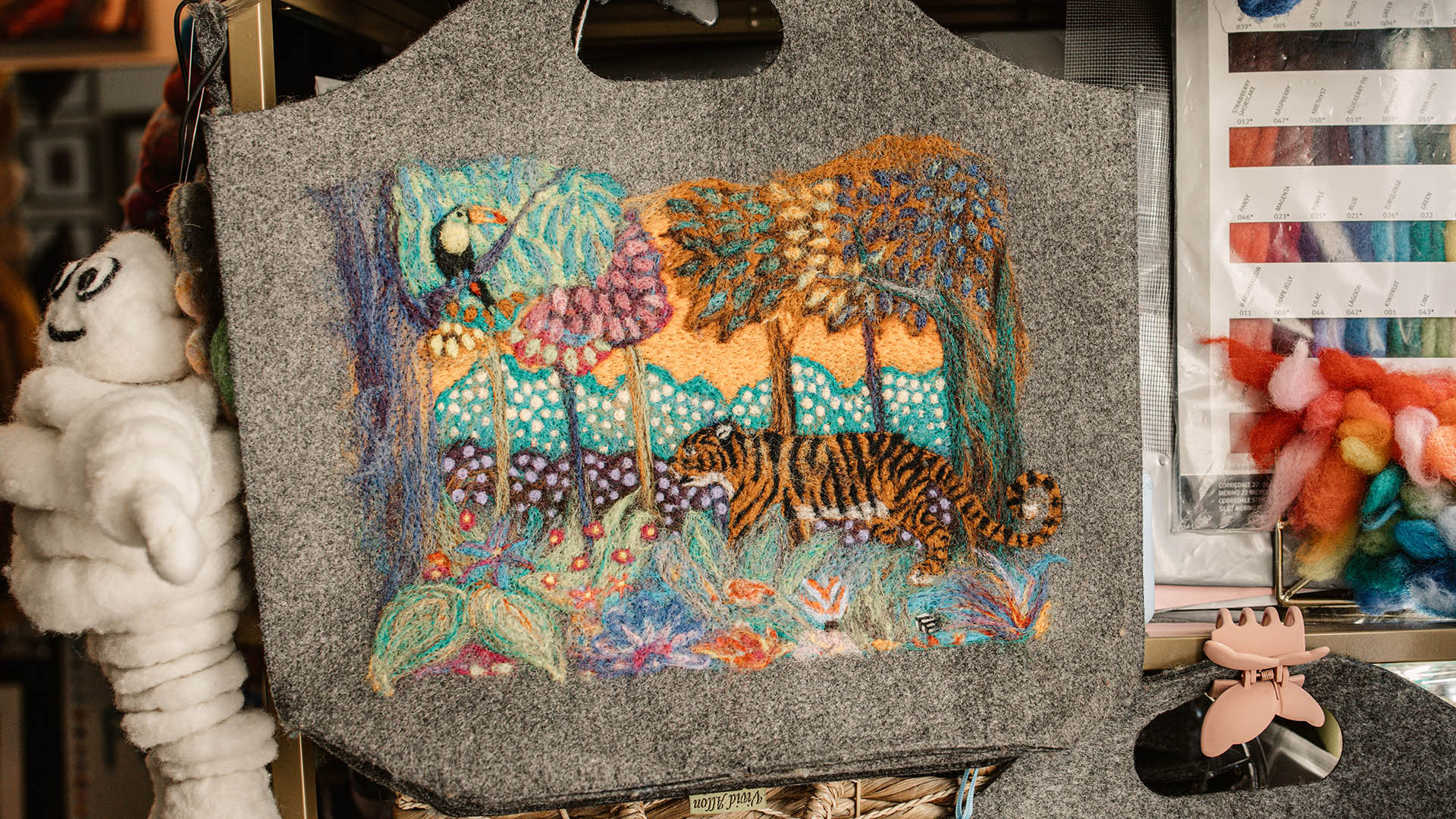
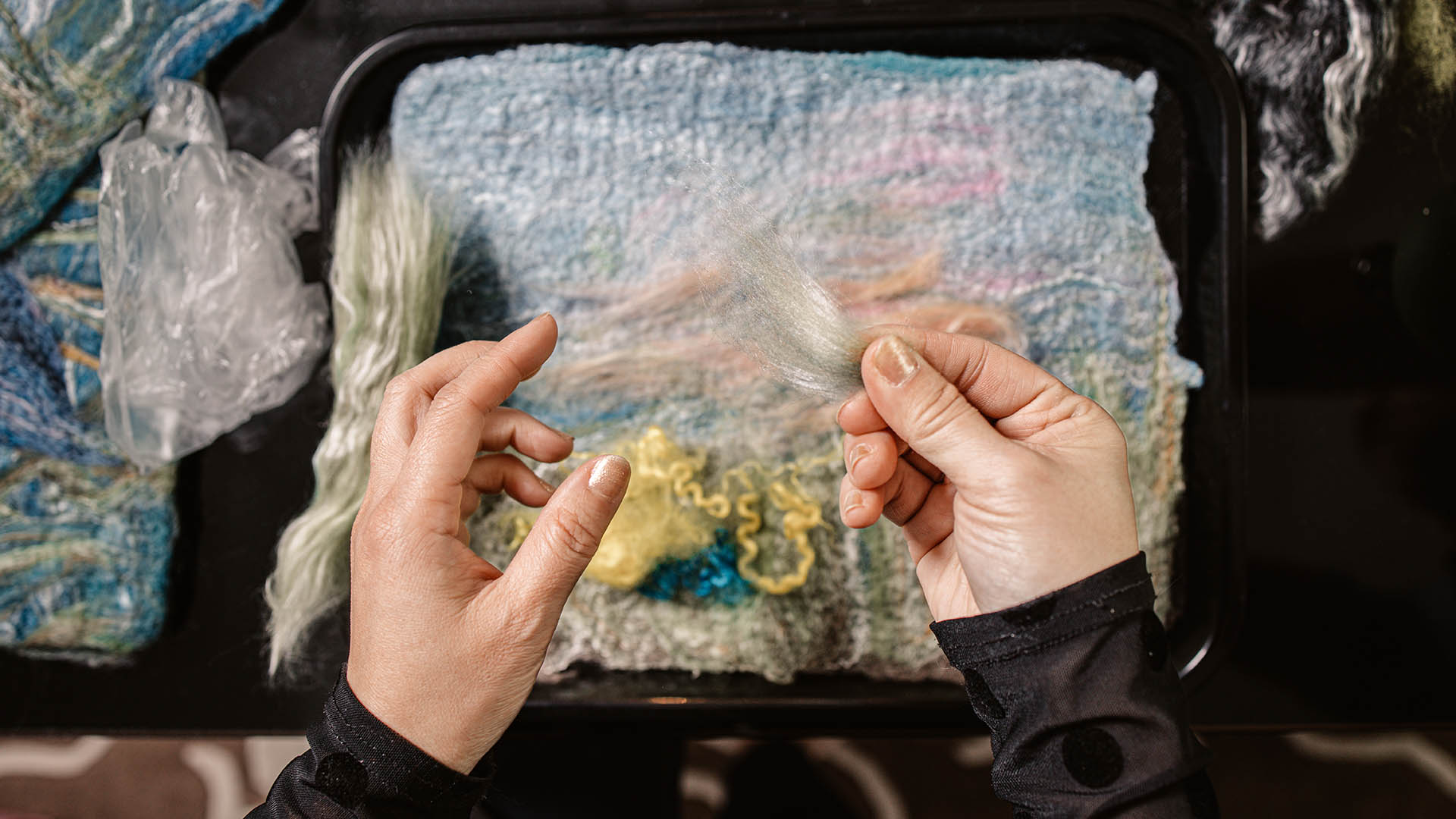
“I grew up in my mom’s studio. She made wedding dresses in Hong Kong,” reflects Ho, who started felting when living in Nova Scotia and began teaching once she moved to Greenville 10 years ago. “My technique is kind of like painting, but it’s fiber art. I started out making fun, practical items, like toys for my kids, but [eventually] focused more on the fine arts as well as wearable art like the scarves. Right now, I am more focused on teaching, so [people] can learn about this natural, organic way to make fabric.”
As an instructor in the SmartARTS program through the Metropolitan Arts Council, Ho is passionate about teaching children and adults, and she travels often to do residencies at schools in other cities. Her local workshops are often full—partly due to how fun and approachable she makes this versatile art form. “I work with silk and wool, [sometimes] using needles. But [all you need] is a pan, water, and soap. The [end result] looks delicate, but felted pieces are actually very durable and long-lasting, and wool is naturally antimicrobial. You don’t really need to clean it. It’s a very sustainable product. Plus, it keeps you warm, it’s moisture-wicking, it won’t burn, and it’s waterproof.”
For Ho, two things bring her as much joy as getting lost in the hours-long process of felting: seeing what her students make, and seeing how her own creations delight their new owners. “My students inspire me and give me new ideas by sharing their own perspective or way of seeing things,” Ho smiles. “And when I sell artwork, I don’t always know how it’s going to be displayed in a home. When I see that someone beautifully framed my work or [made it] stand out like in a museum, that is so special and exciting to me—to see how they treasure the work I do and enjoy the story behind it. It’s wonderful.”
Behind the Scenes with Cecilia Ho
Pop up Shops
Find Ho at Westside Market Booth #522, the Travelers Rest Browse & Stroll Art Market Series, the Artist Next Door Spring and Fall Shows, and the annual Kringle Village Holiday Market.


