
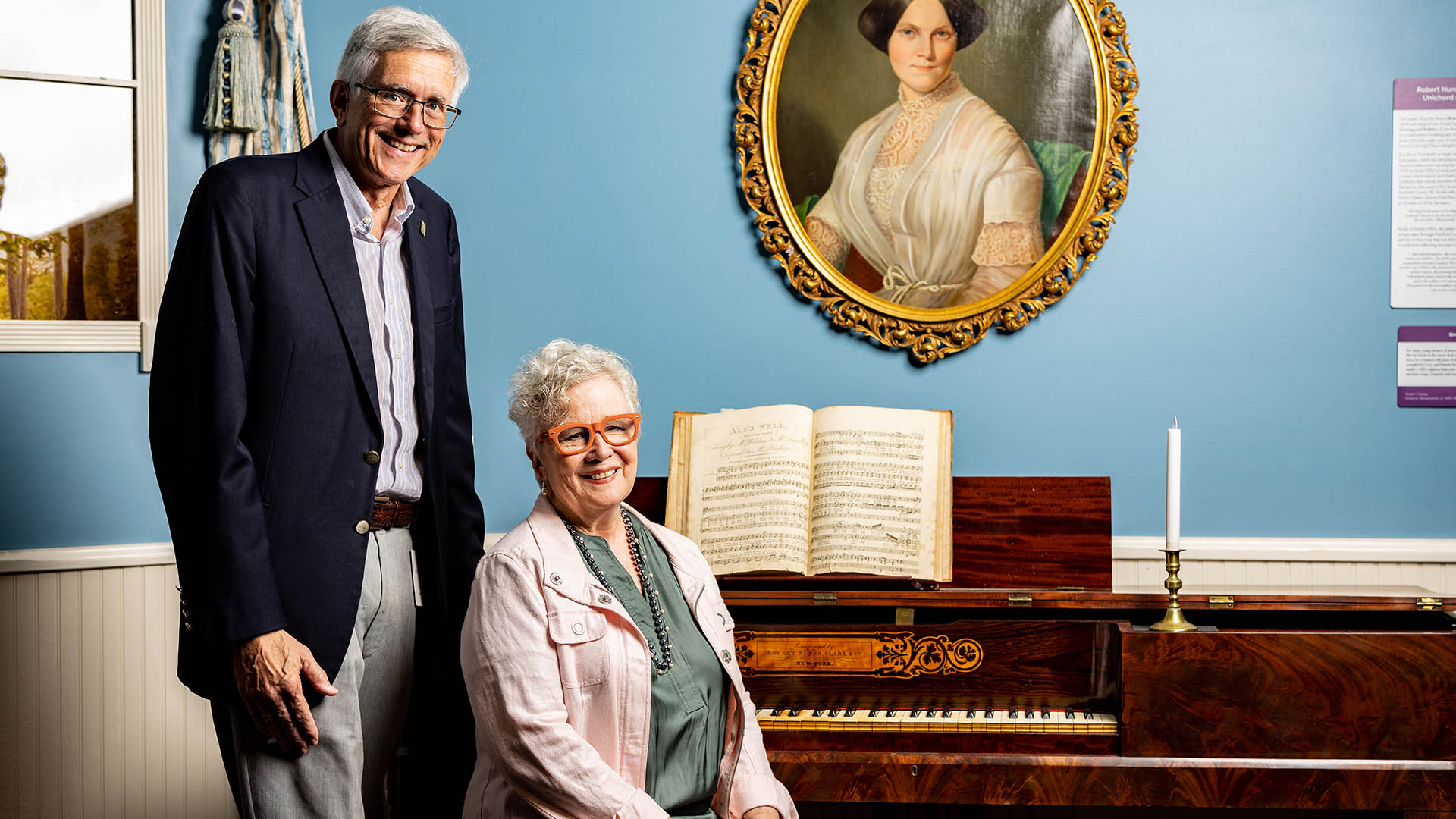
Curator Thomas Strange wants visitors to the Sigal Music Museum to feel centuries’ worth of melodic vibrations.
“All collecting is a form of madness,” says Thomas Strange.
For Strange, the cofounder, curator, and artistic director of the Sigal Music Museum on Heritage Green in downtown Greenville, his particular brand of madness sparked while he was working toward his physics Ph.D. at the University of South Carolina. Fascinated by a professor’s hand-built clavichord, Strange built his first harpsichord in 1980.
He began collecting instruments in earnest in the 1990s through online auctions, during time off from his day job as director of research and development at St. Jude Medical in Liberty, South Carolina, and a world-renowned expert in materials science.
“I started collecting because I really enjoy education and showing people the historical significance and how it’s different than what you’ve been hearing all of your life,” he says. “Here’s a way for them to see and touch and feel and really get it in their systems.”
By 2015, he had 36 pianos and harpsichords scattered throughout his house in Easley, South Carolina, restored to playable quality. To bring the sounds to life, Strange—a fine pianist himself, albeit one who calls himself “the engineer, not the artist”—invited world-class players and students into his home to view, touch, play, and hear the instruments.
For some, it was transformative. Gabriel Smallwood, an internationally acclaimed composer and harpsichord virtuoso, and Sage Fogle, a sought-after vocal and instrumental collaborator in Boston, both got inspiration from putting their hands on the keys while students at the South Carolina Governor’s School for the Arts and Humanities.
Then somebody asked Strange, “‘What happens to all this when you’re gone, Tom?’ And I thought it was a really good question.”
In 2017, Strange and three fellow arts advocates—his wife, Deborah Strange, Steven Bichel, and Beth Marr Lee—opened the Carolina Music Museum in a former Coca-Cola bottling plant, recently vacated by the Bob Jones University Museum and Gallery. The collection got a big boost a few years later, thanks to another collector, Strange’s friend—and frequent auction adversary—Marlowe A. Sigal of Newton, Massachusetts.
When Sigal died in 2018, the museum was able to take in his entire private collection of almost 700 instruments, including period keyboards, flutes and whistles, woodwinds, strings, percussion, and world instruments, spanning more than 400 years and valued at nearly $3.1 million. The Sigal family also provided a $2 million endowment, and the museum had a new name. Most of the collections’ instruments are now carefully stored off-site, with a few being rotated in for each new exhibition on the second floor.
Digitization Program at Sigal Music Museum
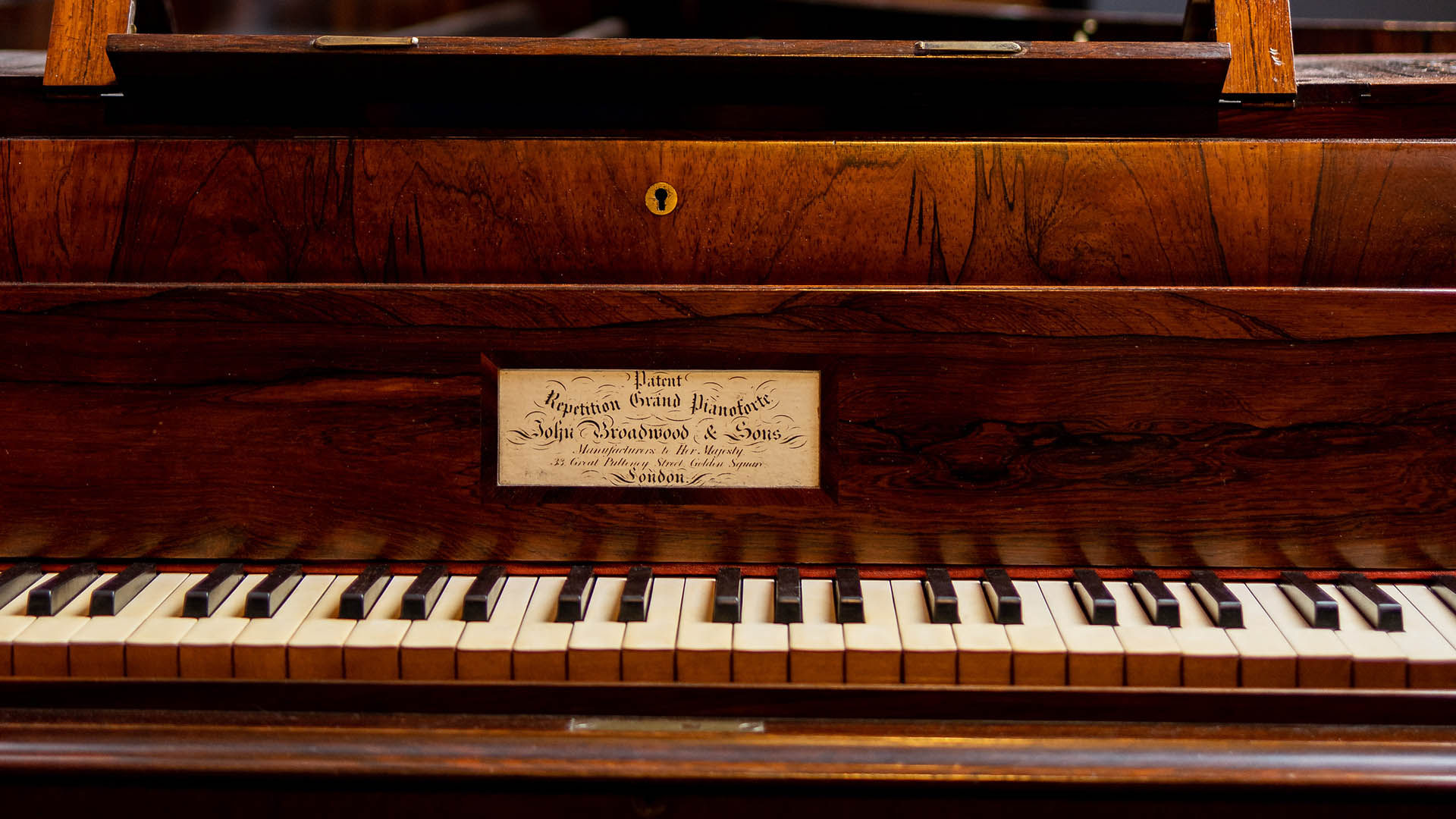 The current exhibit showcases the Sigal’s new instrument digitization program, with a keyboard station allowing visitors to virtually play several of the antique pianos and harpsichords from the collection. The painstaking process involves capturing several samples of each key, including modifications such as dampers and variations in velocity levels, and mapping that information to a digital keyboard.
With that library of sound, a keyboardist far away from downtown Greenville can fully experience playing an instrument in the Sigal collection, such as the one built by Johan Stein, the father of the Viennese piano. “You can release this instrument to the world, so that even though they can’t be here, they can get an idea of what it was,” Strange says. “Recording an artist playing it is not the same thing as capturing its critical elements of sound.” A recent grant will allow the museum to put the system in 10 Greenville County schools.
Pride of place on the main floor is held by the first piano commercially made and sold in the Americas, built in 1775 by John Berent in Pennsylvania. Collectors had sought it for years with no luck before Strange laid eyes on it in 2020. At first skeptical, Strange and his colleagues were convinced of the instrument’s provenance upon examining some of the original materials: tulip poplar and Southern white pine, wood species found only in America and unlikely to be exported to Europe.
Strange still has a few items on his want list. Somewhere out there, for instance, are the three surviving instruments made in the 1700s by Italy’s Bartolomeo Cristofori, the inventor of the piano. Room to grow is also near the top of the Sigal’s wish list.
“I long for the day when anybody could walk in and have access to every instrument,” says Strange, “to take it to bits, to do the research that it takes to really have some scholarship around things.”
Sigal Music Museum, 516 Buncombe St., Greenville, sigalmusicmuseum.org
Now Playing
The current exhibition, “A Measure of Music: STEAM and the Musical Mind,” brings the principles of science, technology, engineering, and mathematics to life through music. An “exploded” piano gives easily understandable visualization of the inner workings, and visitors can conjure up the soundtracks of early sci-fi movies with a wave of their hands around a theremin.
For more information, visit sigalmusicmuseum.org/exhibits.
Instrumental Prizes
Among the many noteworthy instruments on display at the Sigal Music Museum are:
- Queen Charlotte’s 1761 Jacob Kirkman Double-Manual Harpsichord, once played by a young Mozart
- A small square piano made in 1787 by John Broadwood
- An 1845 John Broadwood Grand Piano played by Frédéric Chopin
- An 1860 hand-cranked Vielle à Roue (Hurdy Gurdy)
- An Art Deco-style Storytone Upright Piano, with phonograph and radio built into the bench, displayed at the 1939 World’s Fair in New York


