
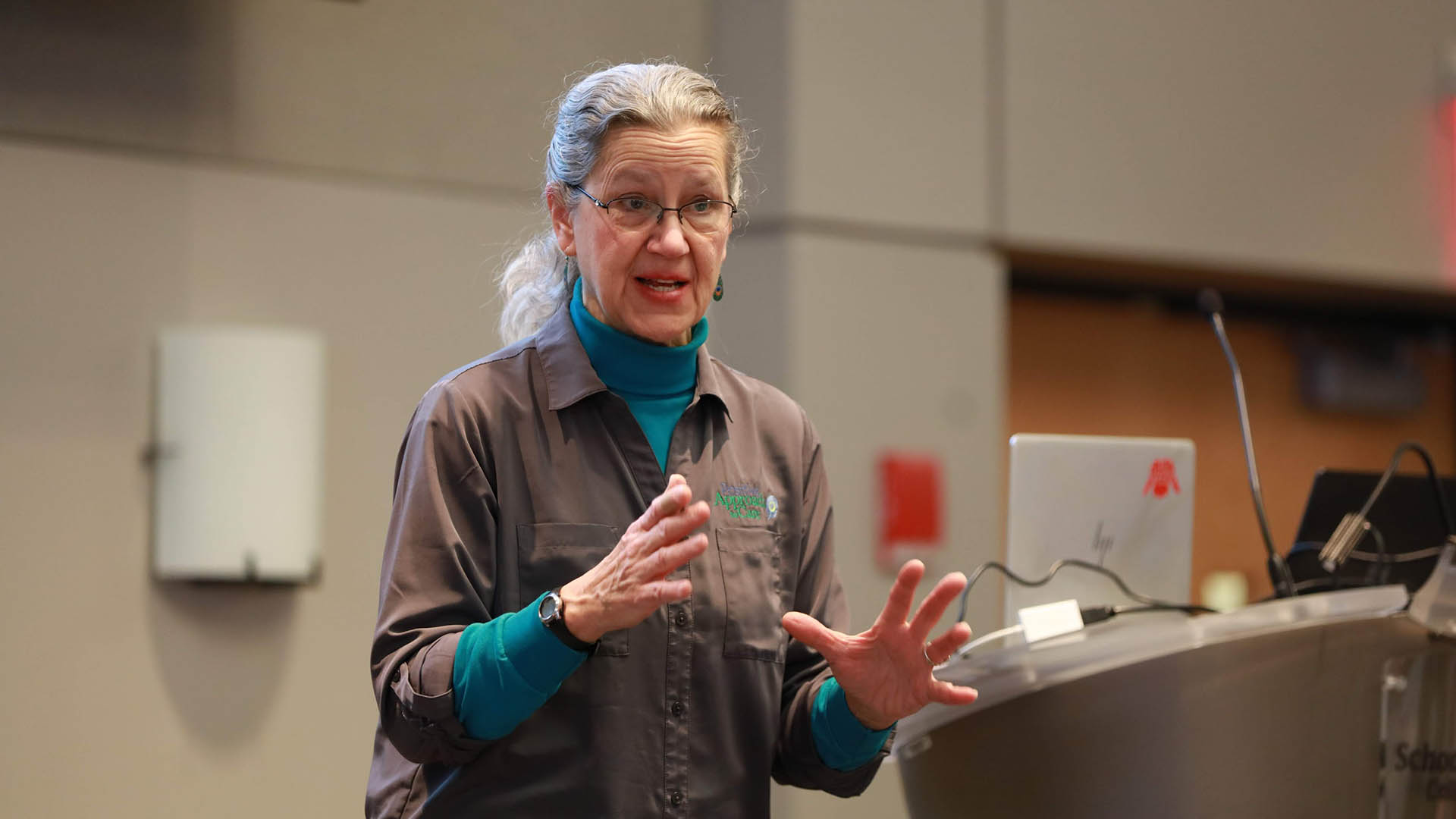
Unlikely TikTok star Teepa Snow aims to enhance the lives of those living with brain change
The 2023 Annual Report of the South Carolina Alzheimer’s Disease Registry reports that more than 122,699 South Carolinians are living with Alzheimer’s disease or related dementia. Almost 9,000 are in Greenville County as of 2024, according to the University of South Carolina Office for the Study of Aging.
For each one of them, there are several more—family, friends, caregivers, and others—touched by the effects of what Teepa Snow, one of the world’s leading experts on dementia care (and recent TikTok sensation), calls “brain change.”
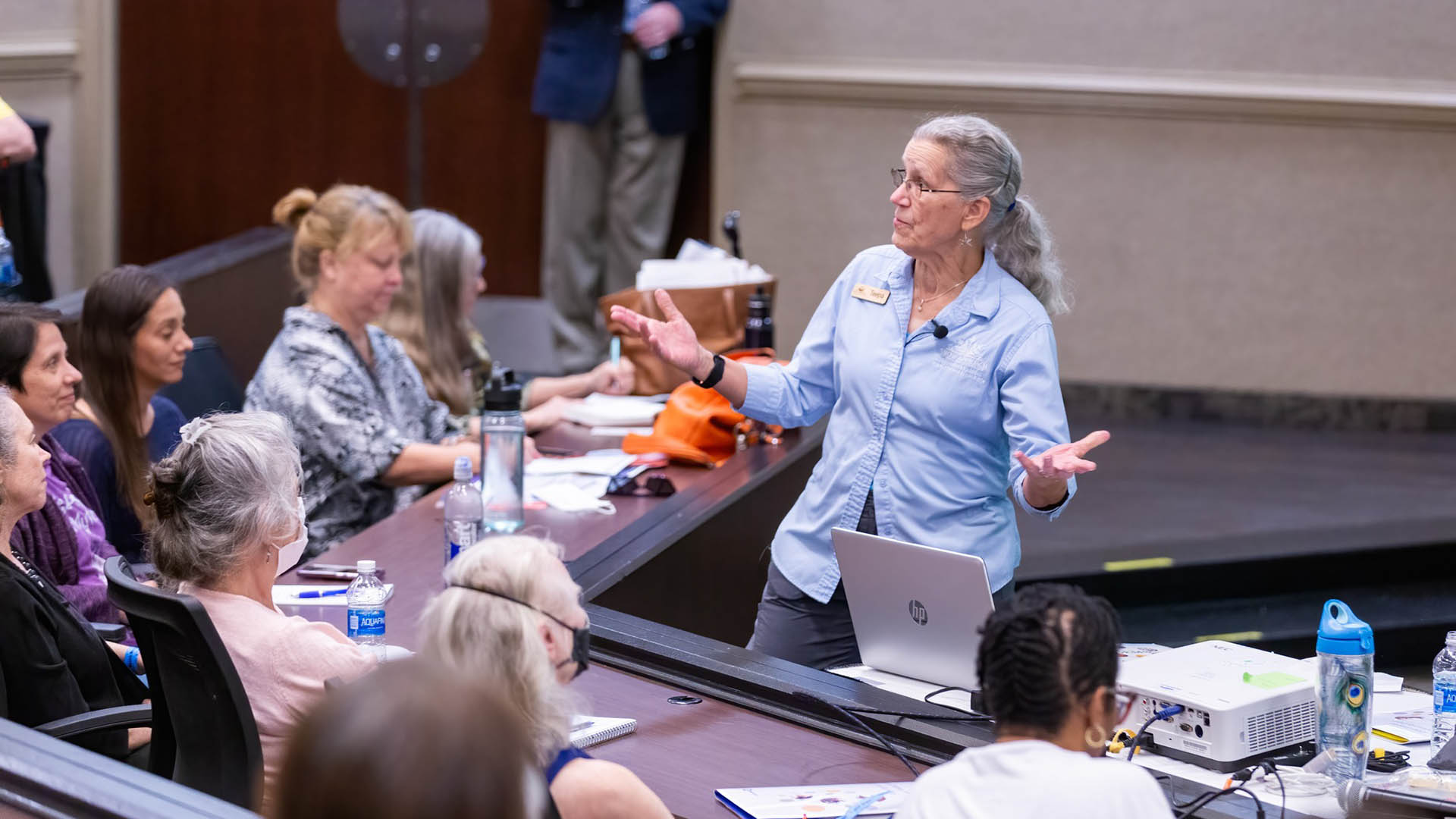
“Dementia doesn’t happen in isolation,” says Snow, who presented her latest local public workshop in September 2024 to a capacity crowd at Greenville’s Buncombe Street Methodist Church. “You are required to form relationships, whether you like it or not.”
Snow’s company, Positive Approach to Care (PAC), based in Hillsborough, North Carolina, is modeled on the idea that “when we know better, we do better.” She teaches the “Snow Approach” to thousands of members of the PAC Certified Community with the help of a core team of more than fifty volunteers and advocates living with dementia, independent contractors, and part-time and full-time staff across more than 10 states and three countries. Her work has been highlighted by NBC’s Today, People magazine, and NPR, among others.
“Positive Approach to Care techniques talk about the ways we can be more effective when we’re trying to support or help someone,” Snow says. “Our main message is doing things with someone, not for them or to them, so that they’re a participant in their care.”
Take an example from one of Snow’s videos on TikTok, which has gotten more than 3 million views. First comes the ineffective approach: Snow notices a problem—a patient’s fly is unbuttoned—and calls an assistant over to help. They both immediately reach in and start grabbing at the garment as the distressed patient flails to shoo them away. Soon, the patient is screaming and resisting.
Teepa Snow Approach
Next comes the Snow Approach: Snow introduces herself and greets the patient by name and they notice the problem together after she points out the unbuttoned fly. Snow offers help and touch only with permission, and she lets the patient set the pace and participate in the solution. The video ends with pants fully buttoned and everybody—Snow, the assistant, and the patient—celebrating their mutual work and success.
The workshops Snow and the PAC team lead in Greenville and other places around the world are full of examples of positive interactions like this. Buncombe Street United Methodist has been blessed to host Snow over the years, says Anna Britton Madden, director of communications for the church.
“Teepa’s expertise and compassionate approach provided invaluable insights, allowing families, caregivers, and professionals to better understand and support those affected by dementia,” Madden says. “Attendees were able to learn from Teepa and make connections to build a network with organizations and caregivers across Greenville. Hosting this event deepened the Buncombe Street mission to empower and equip followers of Jesus, allowing us to serve others and care for those navigating the challenges of this complex neurological disease.”
For the most recent event, the South Carolina chapter of the Alzheimer’s Association offered a free sitter service for family caregivers who wanted to attend. Many other local organizations joined with Buncombe Street Methodist Church to present the event.
“They’re a great group of people who really, truly believe in the power of cooperation and collaboration and the importance of community and service,” Snow says. “Because without coming together, people fall apart.”
Senior Gems
Unlike traditional dementia classifications, Teepa Snow’s Gems States Model helps visualize different stages of dementia as well as emphasize the abilities patients still have.
- Sapphire: Normal aging.
- Diamond: Still clear and sharp, but very rigid.
- Emerald: No longer clear and sharp. Green means “go,” so patients, while active, may get lost in time or place.
- Amber: With a color that advises “slow down,” Ambers tend to get caught in a moment of time.
- Ruby: Red signifies “stop,” and in this state, fine-motor skills begin to fade.
- Pearl: The person may be trapped in a forbidding shell at the end, but care partners can still find a beautiful gem inside if they know where and how to look.
Teepa Snow Online
In the post-pandemic years, Teepa Snow has been increasing her outreach through social media, sharing her Positive Approach to Care with hundreds of thousands of followers. She made national news in 2023 as she helped the family of actor Bruce Willis, who has frontotemporal dementia. Here are a few places to find her.
- TikTok: @teepasnow
- YouTube: @teepasnowvideos
- Facebook: @teepasnowspac
- LinkedIn: linkedin.com/company/positive-approach-llc
- Official website: teepasnow.com
Reach Out Locally
Local resources for Alzheimer’s disease and related dementia include:
- South Carolina Chapter of the Alzheimer’s Association: alz.org/sc
- South Carolina Access: getcaresc.com
- Family Caregiver Support from the S.C. Department on Aging: aging.sc.gov/programs-initiatives/family-caregiver-support
- Senior Action: senioraction.org


