
The Upstate’s vast and varied houses of worship reflect the diversity of its population. The faithful in the 864 gather in churches, temples, shrines, mosques, and fellowship halls—sometimes even high school gymnasiums while new congregations are planted. While the Bible Belt nickname is well-earned, in addition to many varieties of Christian church—traditional as well as contemporary—the community is blessed with Baha’i, Buddhist, Hindu, Jewish, and Muslim houses of worship, too.
The origins of Greenville’s first churches can be traced to the “Father of Greenville,” Vardry McBee (1775-1864). In 1815, McBee bought 11,028 acres of land and from that, he gifted parcels to four religious denominations—Episcopalian, Methodist, Baptist, and Presbyterian—to build the city’s first churches. McBee is buried at Christ Church Episcopal, the first church he helped form in 1825.
Four Original Downtown Greenville Churches
- Buncombe Street United Methodist
200 Buncombe St. BuncombeStreetUMC.org
Founded in 1854 as Greenville Methodist Episcopal Church, the congregation first met in a frame building on Coffee Street. The church moved to its Buncombe Street location in 1873. There is a satellite campus at the former Trinity United Methodist Church on Augusta Street. - Christ Church Episcopal
10 N. Church St. CCGSC.org
Vardry McBee donated four acres to establish the church in 1825. In 1854, the church building was consecrated. Expansions and updates have happened through the years to accommodate the growing congregation. Most recently, in 2017, St. Luke’s Chapel was built. - First Baptist Greenville
847 Cleveland St. FirstBaptistGreenville.com
The first church building was constructed in 1826 on E. McBee Avenue. In 1858, a larger church was built on W. McBee Avenue. The church’s mission and congregation grew steadily through the 1900s, culminating in the construction of the current facilities on Cleveland Street. - First Presbyterian
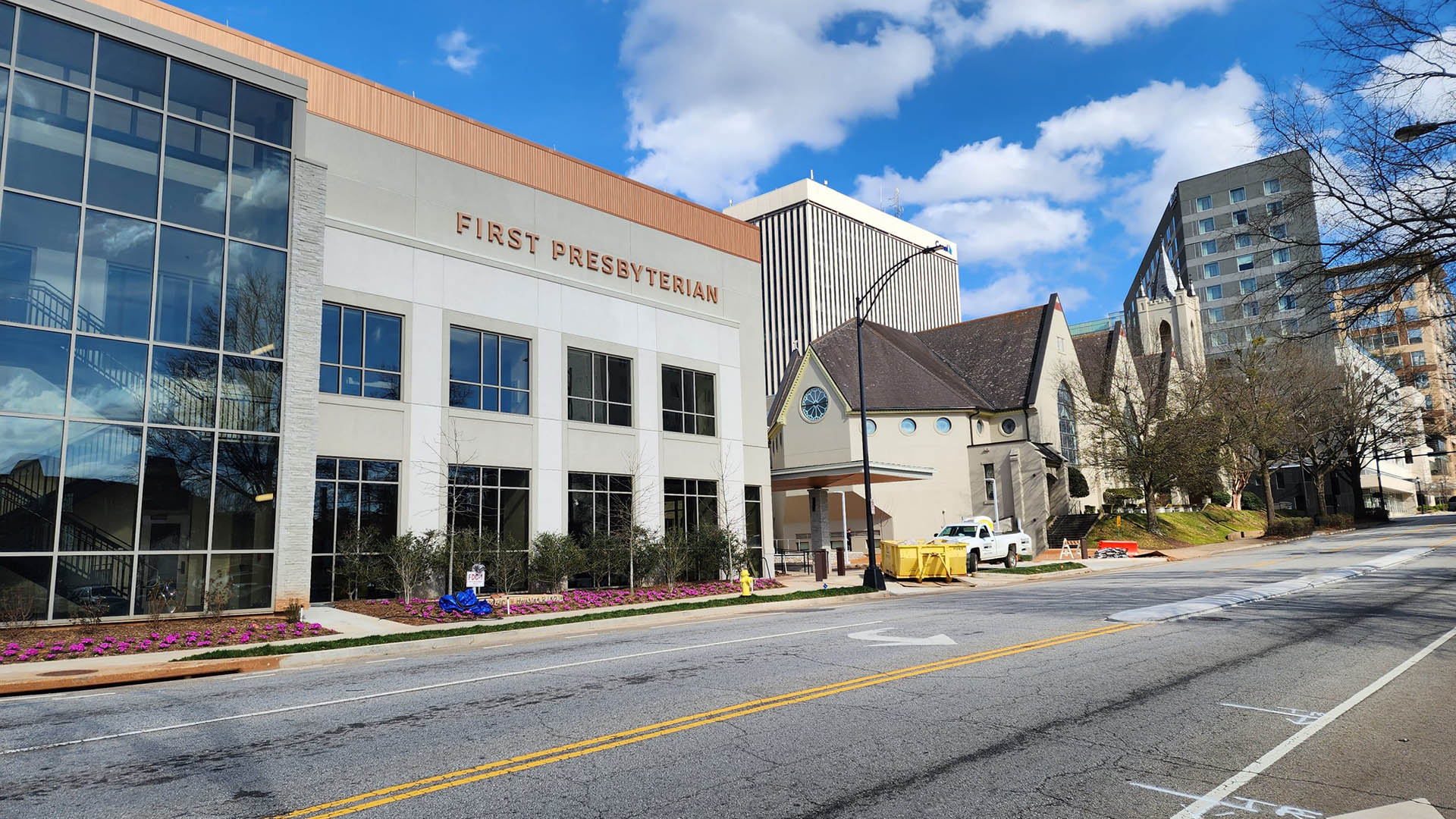
200 W. Washington St. FirstPresGreenville.org
The first sanctuary was built in 1851. While the church has never moved from its Washington Street location, it has undergone various demolitions and construction projects through the years. Vardry McBee joined the church in 1861, and his wife, Jane, was a founding member.


