
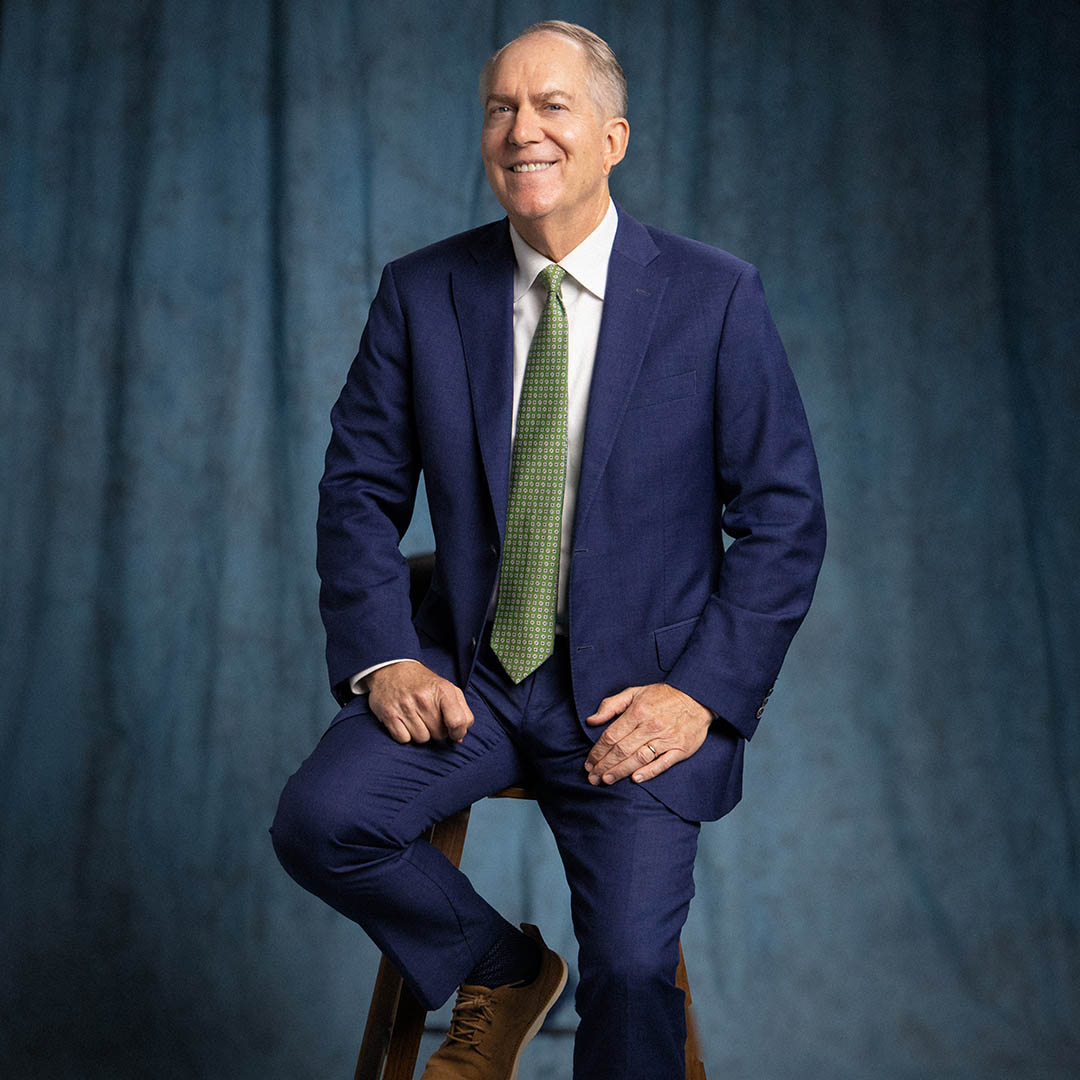
Serving his eighth and final term as Greenville’s mayor, Knox White leads the city into a new era of growth
When Knox White was first elected mayor of Greenville in 1995, the city was starkly different than the vibrant place it is today. Young people moved away and didn’t come back, tourists were nonexistent, and all the residential growth was happening on the East Side of Greenville County.
But Mayor White took office with a lofty goal: “to make Greenville the most beautiful and livable city in America. I would say that in my first term, and people’s eyes would roll,” recalls the Greenville native with a smile.
People are no longer dismissive of his plan. Over the past 30 years, White’s vision has transformed Greenville into a true destination—a place that ranks on myriad Top 10 lists for livability and where officials from other cities come for inspiration.
White’s interest in politics drew him to a legislative job on Capitol Hill in Washington, DC, after law school, where he found he had “a great love for urban planning and how you can shape a community in a way you frankly can’t do in a legislative body.” He ended up back in Greenville practicing immigration law and eventually joined City Council, where he served from 1983 to 1993.
While White’s first 10 to 15 years as mayor were laser-focused on creating residential building downtown, he was challenged in 1997 to think about what makes Greenville unique—“we called it the personality of the city,” he says. “In the ’90s, when we had outside planners come here, they just flat out said, ‘Greenville’s very nice, but it has no distinctive personality.’ That was like a sucker punch.”
In response, city officials added public art, such as the statues of Vardry McBee and Shoeless Joe Jackson, to help tell Greenville’s story. They strung lights in the trees along Main Street and worked on preserving historic buildings like the Poinsett Hotel.
Transformative Knox White Projects
Perhaps White’s most transformative project was taking down the Camperdown Bridge that hid Reedy River Falls. It was 1998 when he initially met with Harriet Wyche and the Foothills Garden Club to discuss the possibility of unveiling the falls and creating a park around it. Once a Greenville landmark, the waterfall had been covered up by the bridge in 1960 and the river polluted by industry. By the late 1990s, most Greenvillians had never seen the falls.
In 2002, the decision was made to take down the bridge, and Falls Park opened in 2004. “That made a big splash,” the mayor says. “When you talk about people coming here, it all seemed to happen after 2004.”
Twenty years later, White spirited the creation of Unity Park on the other end of the river, turning a blighted area into 60 acres of green space, ball fields, and playgrounds. “One of the most important things that has happened is that Greenville has a personality now, and it centers on the trees, the green [space], and the river. That’s who we are,” he shares.
In much of Greenville’s development throughout Mayor White’s 30 years in office, partnerships between private business developers, philanthropic organizations, and the city are part of the culture of Greenville. “Public-private partnerships are definitely one of our secret sauces,” White says.
As he looks back on a tenure defined by neighborhood revitalization, economic development, and transformational projects downtown, White’s overarching vision has not changed. “Today, people feel an ownership toward Greenville; they feel like city government listens, and that we have created a city that’s uncommonly beautiful—which is exactly what I wanted to accomplish.”
See other 2025 Charitable Giving Awards recipients
Key Accomplishments
- Falls Park
- Liberty Bridge
- Unity Park
- Mixed-use development downtown
- Swamp Rabbit Trail
- Fluor Field in the West End


