
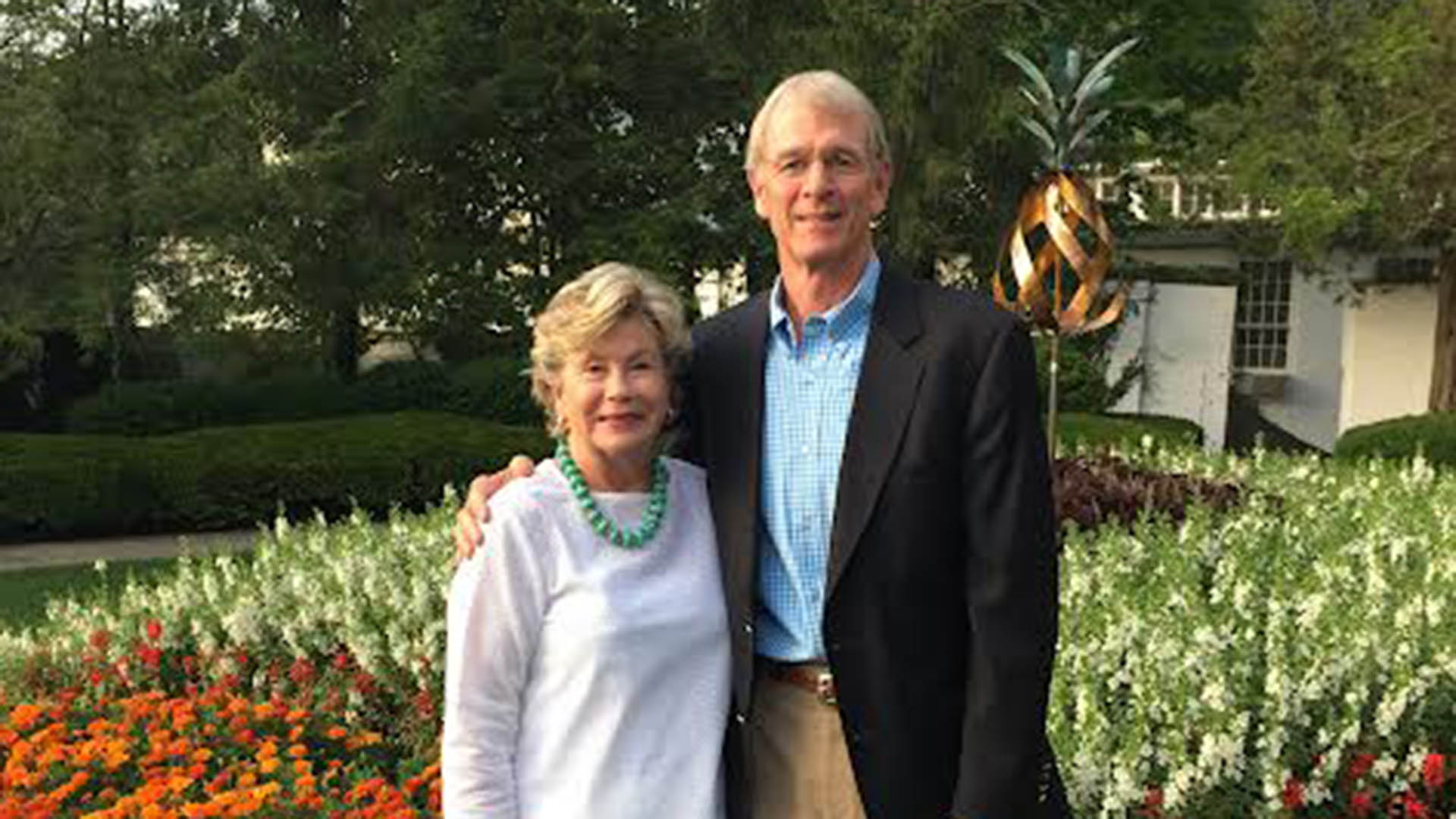
When Sherry Hooper was in her early 30s, she found a lump in her breast that turned out to be cancer. Two years later, more cancer was found.
Happily, she beat the cancer both times. But 30 years later, the Greenville woman developed ovarian cancer as well.
Turns out both cancers were genetically linked, which she learned after her grown daughter tested positive for the BRCA1 breast cancer gene. “Her doctor recommended that I do the test as well,” said Hooper, 74. “We both had the same mutation.”
Thanks to that test, Hooper underwent surgery to remove her ovaries and fallopian tubes — surgery that revealed the ovarian cancer.
“I had no symptoms whatsoever,” she told the Greenville Journal. “I wish I had tested for this gene earlier.”

Ovarian cancer is an umbrella term for cancers of the ovaries, fallopian tubes and lining of the abdominal cavity, said Dr. Larry Puls, medical director for the Division of Gynecologic Oncology at Prisma Health Cancer Institute. This year, about 20,000 women in the U.S. will be diagnosed with ovarian cancer and nearly 13,000 will die from it, according to the American Cancer Society.
A woman’s lifetime risk of getting ovarian cancer is about 1 in 78, the society reports, and it’s more common in white women and with age.
Unfortunately, Puls said, ovarian cancer is often caught in late stages when it’s most difficult to treat. That’s because symptoms (for example, bloating) are vague and, unlike smoking and lung cancer, the risk factors are hard to identify. And, there are no reliable screening tests, he said.
“The cold, hard reality is that in four of five women, it’s advanced by the time we find it,” he said. “It’s the eighth most common solid tumor in women … but the fifth leading cause of cancer death.”
But the BRCA1 and BRCA2 genes are known to greatly increase the risk for ovarian cancer, Puls said, so physicians recommend women with these mutations have their ovaries and fallopian tubes removed once they’re finished having children, dramatically reducing their risk.

Among the women who’ve had this surgery is tennis great Chris Evert, who divulged her diagnosis of ovarian cancer last month. Evert, 67, told ESPN that her younger sister had died of ovarian cancer in 2020, and when it was discovered they both had the mutation, Evert had surgery which revealed Stage 1 cancer, Puls said.
“I feel very lucky that they caught it early and expect positive results from my chemo plan,” Evert said in a tweet. “And thanks to all of you for respecting my need to focus on my health and treatment plan.”
Cancers associated with these mutations are typically aggressive, Puls said.
But there is hope. Surgeons remove as much of the cancer as they can, improving the odds, he said.
And besides chemotherapy, there are drugs that prevent the cancer from recurring and help the body’s own immune system fight the disease, he said. “The length of survival is much better than it was 15 years ago,” Puls said. “We have a lot more to throw at it now. Some are treated for decades.”
In addition, he said, these days more women are having their fallopian tubes removed after their last pregnancies, which also reduces the risk. This is expected to lower overall incidence of the disease in the coming years, he said, noting he and his partner do up to 30 such surgeries a year and always find one or two women with early-stage cancer.

Meanwhile, Puls says women should know the symptoms and listen to their bodies. And patients who are BRCA positive should make sure their children, boys included, are genetically screened because they’re at increased risk for other cancers and could carry the gene, he said.
Because her husband, Tee, was an avid tennis player, Hooper said they’d followed Evert’s career and were aware of her diagnosis. “I felt like there was some similarity (with me),” she said. “I hope she is doing well.”
 Tee Hooper said that since Evert was a mentally tough tennis player, she has an edge in the fight. “She has the right kind of mind set,” he said. “Sherry has hung tough the whole way, too.”
The Hoopers hope that by the time their six grandchildren grow up, there will be a cure or a way to prevent these cancers. In the meantime, Sherry Hooper says women and men need to know about the gene and ovarian cancer.
“I hope this story will help others know how important it is to know your family history and get genetic testing,” she said. “You need to know.”


