Knowledge can help women avoid fractures and age successfully
The silent disease: That’s the label often given to osteoporosis. Since it doesn’t come with any aches or symptoms prompting an early evaluation, you may not know you have it until you experience a fracture.
The bone disease develops when your body “will make too little bone, it will lose too much bone, or it will do a combination of both,” says Alyson Indenbaum, a physical therapist at Bon Secours St. Francis Therapy Center in Simpsonville. Because bones become weak and brittle, even a minor trauma or stress can cause a fracture.
Women are more likely than men to develop osteoporosis. The reason is the hormone changes, mainly in estrogen, that come with menopause. “Estrogen helps regulate bone formation and absorption. After menopause, it changes, and we don’t have this protective hormone that helps us make more bone or absorb bone as efficiently,” Indenbaum says, adding that estrogen replacement therapy can be a prevention tool.
 Thyroid disease, long-term use of steroids, and a family history of low bone mineral density also can put women at a higher osteoporosis risk. While those aren’t modifiable, you can lower your chances of developing the disease through smart lifestyle choices: minimizing alcohol use, not smoking, and eating a healthy diet that avoids ultra-processed foods and includes adequate amounts of calcium, protein, and vitamin D.
Exercising is also key, Indenbaum says, because having low muscle mass or a sedentary lifestyle increases the likelihood of having osteoporosis. Three types of exercise, done with a physical therapist or trained professional,
can mitigate issues associated with a diagnosis. “These things have been shown to reverse that loss of bone,” she adds.
Strength training with dumbbells, barbells, or weight-resistance machines and impact training such as plyometrics, jumping, or marching that “stimulates vibration in the bone,” Indenbaum says, “can improve bone mineral density over a long time when it’s continued throughout life.” Balance training will help avoid falls, she adds.
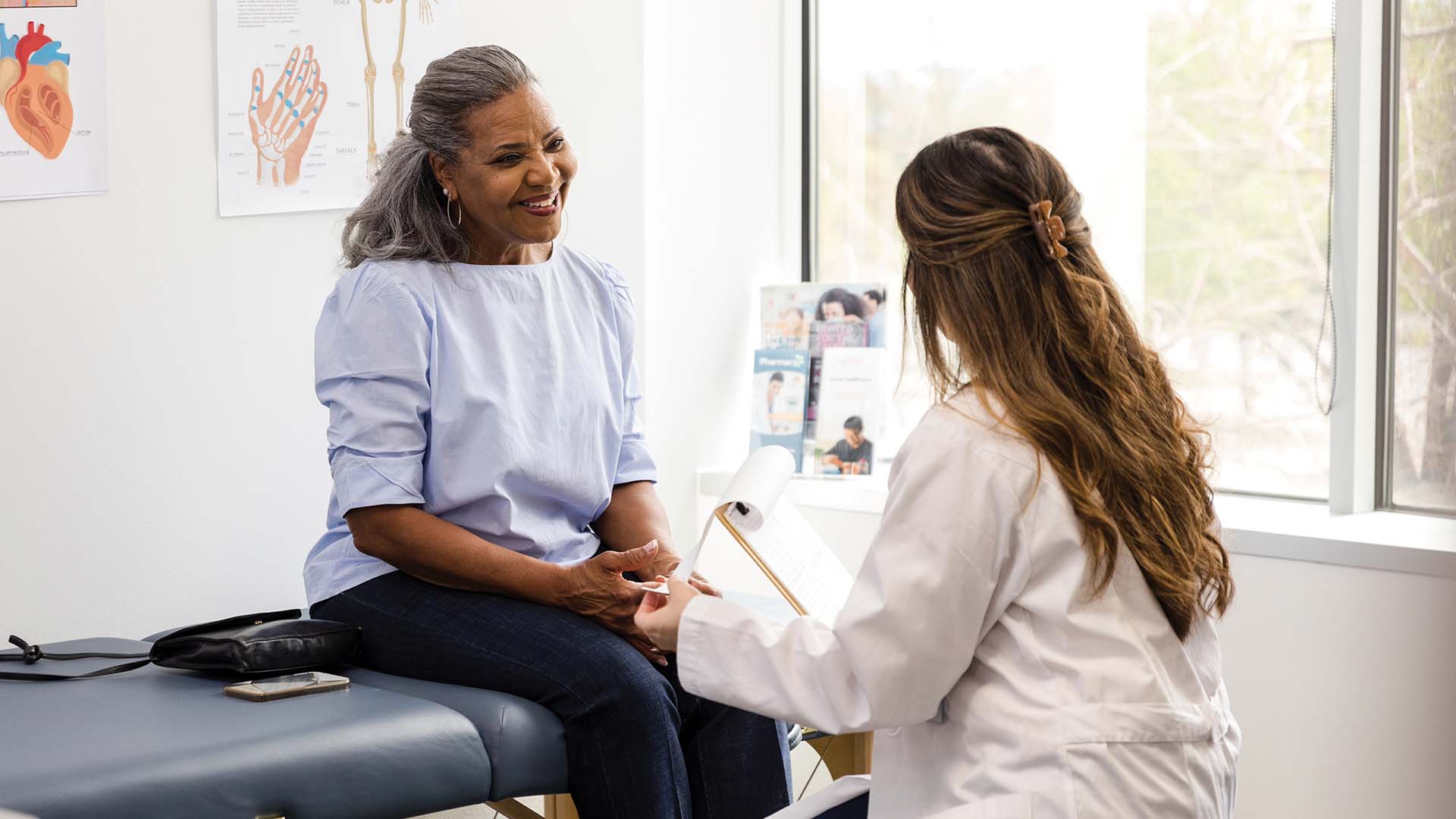
Knowing whether osteoporosis is in your future starts with discussing risks with your doctor and, if needed, getting a DEXA scan. Doctors use the special X-ray to look at your bone quality and assign what’s called a T-Score to three different spots: the lumbar spine, hips, and wrists. Low bone mineral density and osteopenia are stages of deteriorating bone quality that can occur before an actual osteoporosis diagnosis, Indenbaum says.
“You don’t have to fear a diagnosis: Your bones can get stronger,” she adds. “It’s concerning, but you have the power to change it. There’s so much you can do in therapy, and there are all these modifiable risk factors.”
Talk to your primary care provider if you have osteoporosis-related questions or concerns. To find a PCP, visit Bon Secours’ Find a Doctor website: bonsecours.com/find-a-doctor. You can narrow your search by zip code, accepted insurance plans, conditions treated, and more.