
Pay attention to pain brought on by spring activities
Spring’s arrival this month usually comes with warmer temperatures and more yard work, decluttering, and vigorous outdoor exercise. If these activities are part of your plans this season, pay attention to your back and any pain you experience there.
Back pain can occur anywhere along the spine or in the adjoining muscles and can vary significantly in intensity and frequency. That makes it one of “the most common complaints in all of America and all of medicine,” says Ben Ramsey, MD, an orthopaedic surgeon with Bon Secours Piedmont Orthopaedics.
“The vast majority of people, if not everybody, will have a bad episode of back pain at some point in their lives. But the nice thing is that, for most people, it’s pretty transient,” he adds.
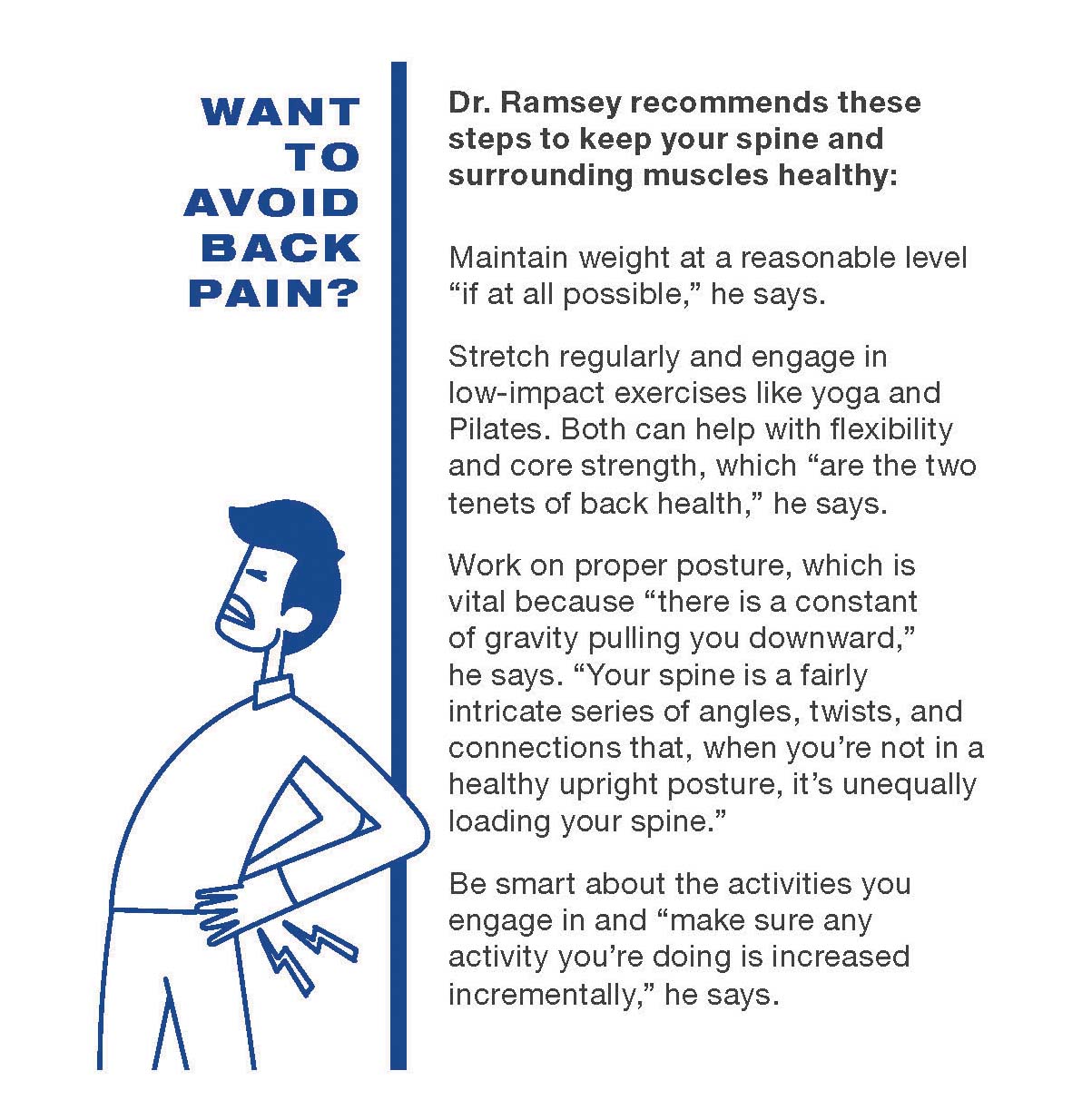
Treating pain depends on the underlying cause and symptoms. Some people may experience chronic pain from arthritis, herniated discs, or pinched nerves, while others could have acute pain caused by muscle strains or injuries.
Ramsey says you should “always start with conservative treatments like physical therapy for core strengthening and stretching, weight loss, and oral anti-inflammatories.” He also tries to help people understand what’s causing their pain to help them better tolerate it.
“We only operate on an extremely small subset of the population,” he adds. “Part of our job is figuring out who needs surgery and what type of surgery, because there may be several ways to treat the problem.”
The key to avoiding pain or managing existing issues during spring activities is “being smart about not overdoing it, listening to your body, and not pushing through pain,” Ramsey says.

“I see a lot of patients who say, ‘I worked in the yard for six hours, and my back has been killing me ever since’. So, limiting your bending, twisting, and lifting activities is best,” he adds.
If you are experiencing back pain, see your primary care doctor if it goes “beyond a couple of weeks” or is so “severe that you can’t do activities of daily living,” Ramsey says.
“Nagging discomfort is okay; severe pain that prevents you from walking around your house, doing the dishes, or doing the laundry is not,” he adds. “Also, any pain associated with weakness in the legs or arms, difficulty walking, or bowel or bladder problems needs to be seen by a doctor pretty quickly.”
Your doctor can refer you to one of Bon Secours’ orthopaedic specialists if needed. For more information on Bon Secours’ orthopaedic services, visit www.bonsecours.com/health-care-services/orthopedics-sports-medicine/foot-ankle.