
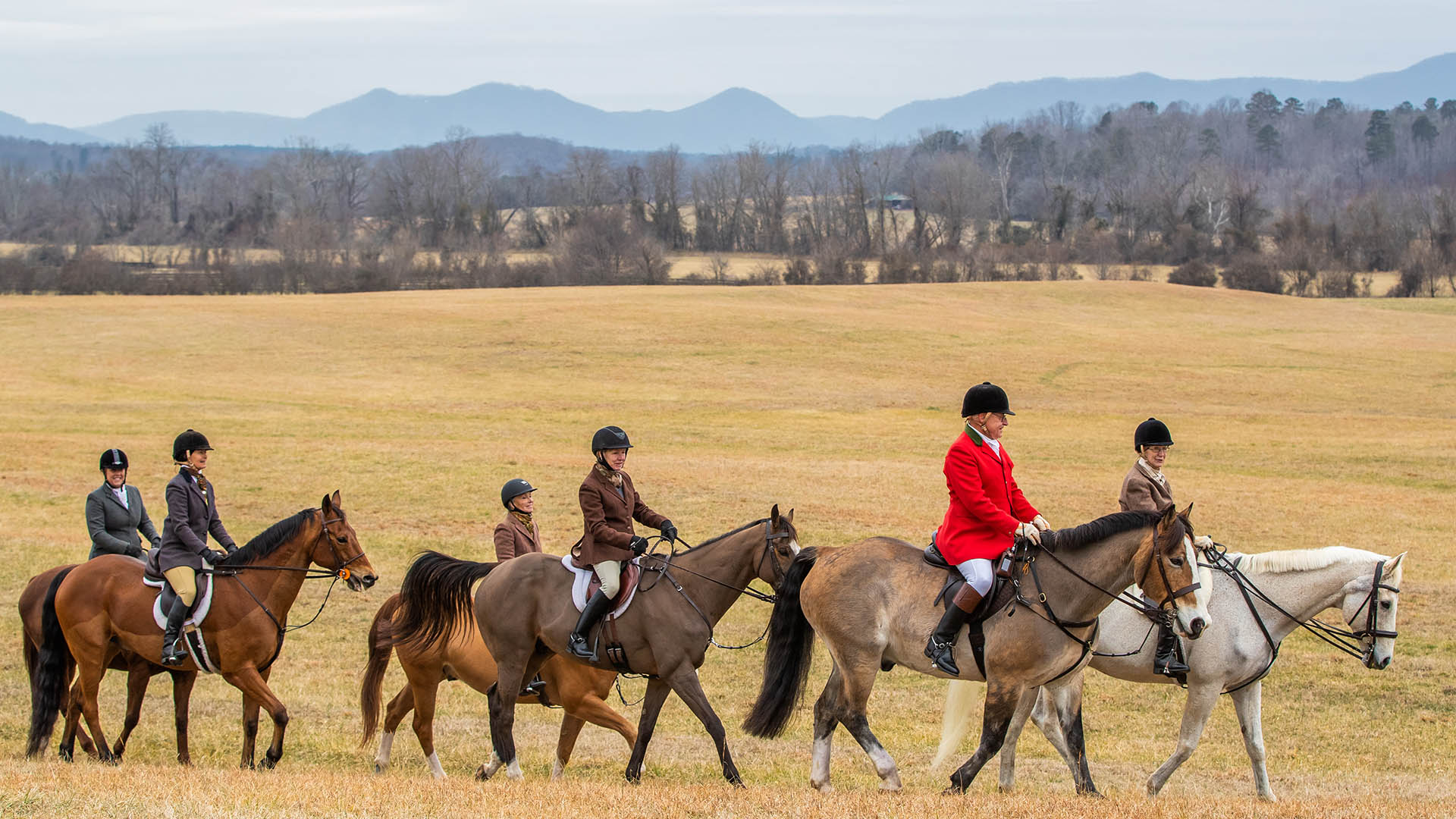
Tryon Hounds keeps an ancient equestrian tradition alive in the Upstate.
by Katrina Daniel
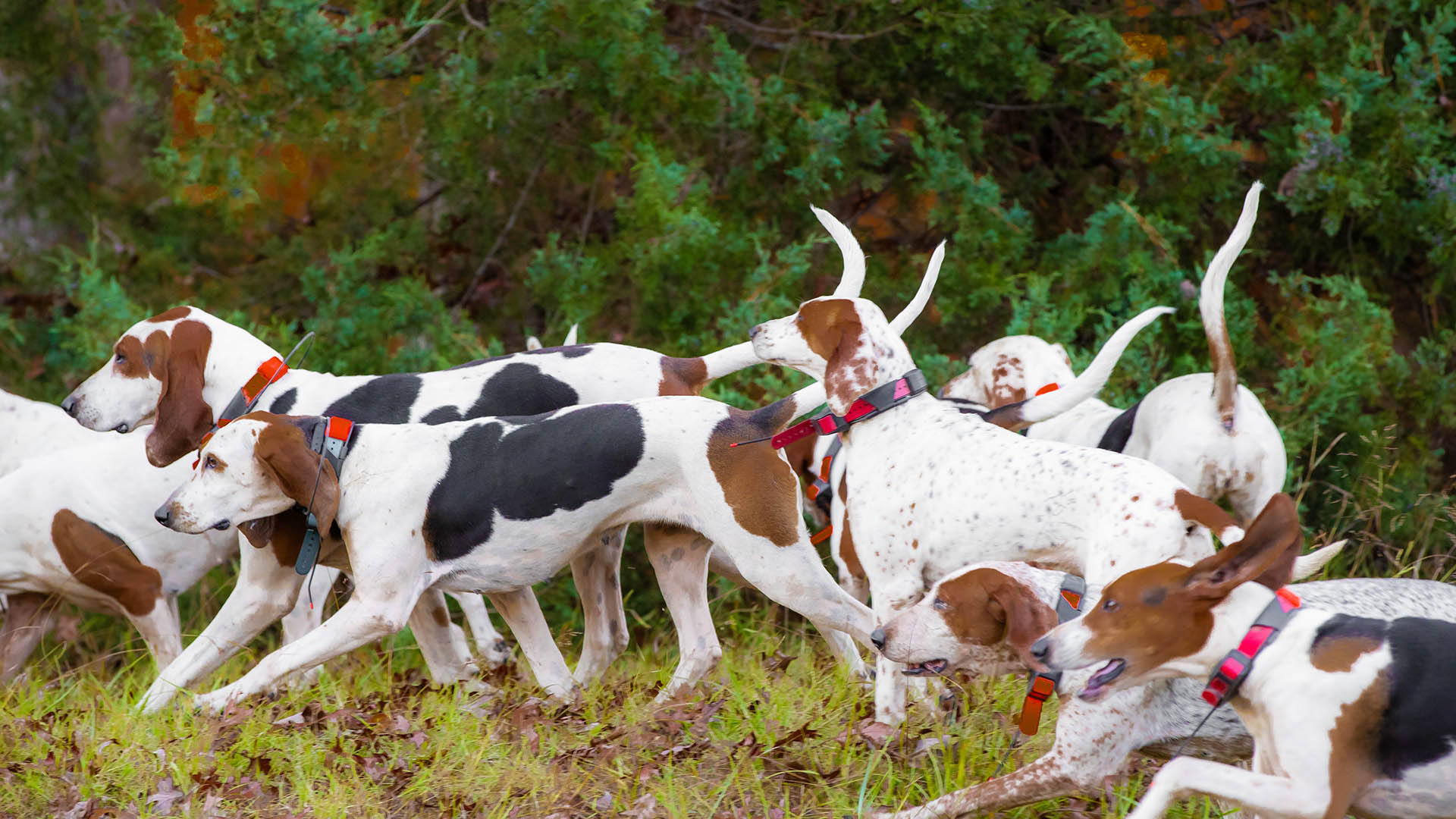
On a crisp fall Saturday morning, some 50 mounted riders from Tryon Hounds, men clad in black or red jackets (depending on their role in the hunt) and women wearing black jackets with bone buttons bearing the club’s monogram, assemble at a local farm in the Tryon area. A dozen or so long-legged, tricolored American foxhounds gathers around the horse ridden by the Huntsman. Bred for scenting, they are all anxious for the hunt, but trained to stay calm until the fun begins.
Founded in 1926, Tryon Hounds is one of the oldest, continuously active fox-hunting clubs in the country. And if you’re a fan of riding and tradition, this is as good as it gets in America. Formal fox hunting dates back to 1753 in England, though some 200 years earlier, farmers used their dogs to dispatch foxes that were threatening their livestock. English colonists brought hunting hounds to America in 1650; today there are 140 registered fox-hunting packs in the US and Canada.
“Fox hunting is growing in many areas, and despite the loss of habitat, interest in this sport is flourishing due to the growth of equestrian sports in our area,” says Master of the Hunt Bonnie Lingerfelt, who has been riding with Tryon Hounds for almost 50 years. “Tryon Hounds is a fun and dedicated group of fox-hunting enthusiasts [whose] preferred game are foxes and coyotes. We are blessed to hunt in the beautiful foothills of the Blue Ridge.”
Tryon Hounds and the Huntsman
 As the party assembles on horseback, a volunteer staff member walks through the group of riders, offering each of them a small glass of port from a silver tray. A gesture of camaraderie and liquid courage for riders whose feet are already in the stirrups, the stirrup cup is a traditional parting drink before the hunt.
To begin the action, the Huntsman (man or woman) leads the hounds to the hunting grounds to allow them to pick up a scent. Once they find it, the Huntsman blows a horn to signal to hounds and humans that the group is moving off, and the first flight of riders gallops after the baying hounds in search of their quarry.
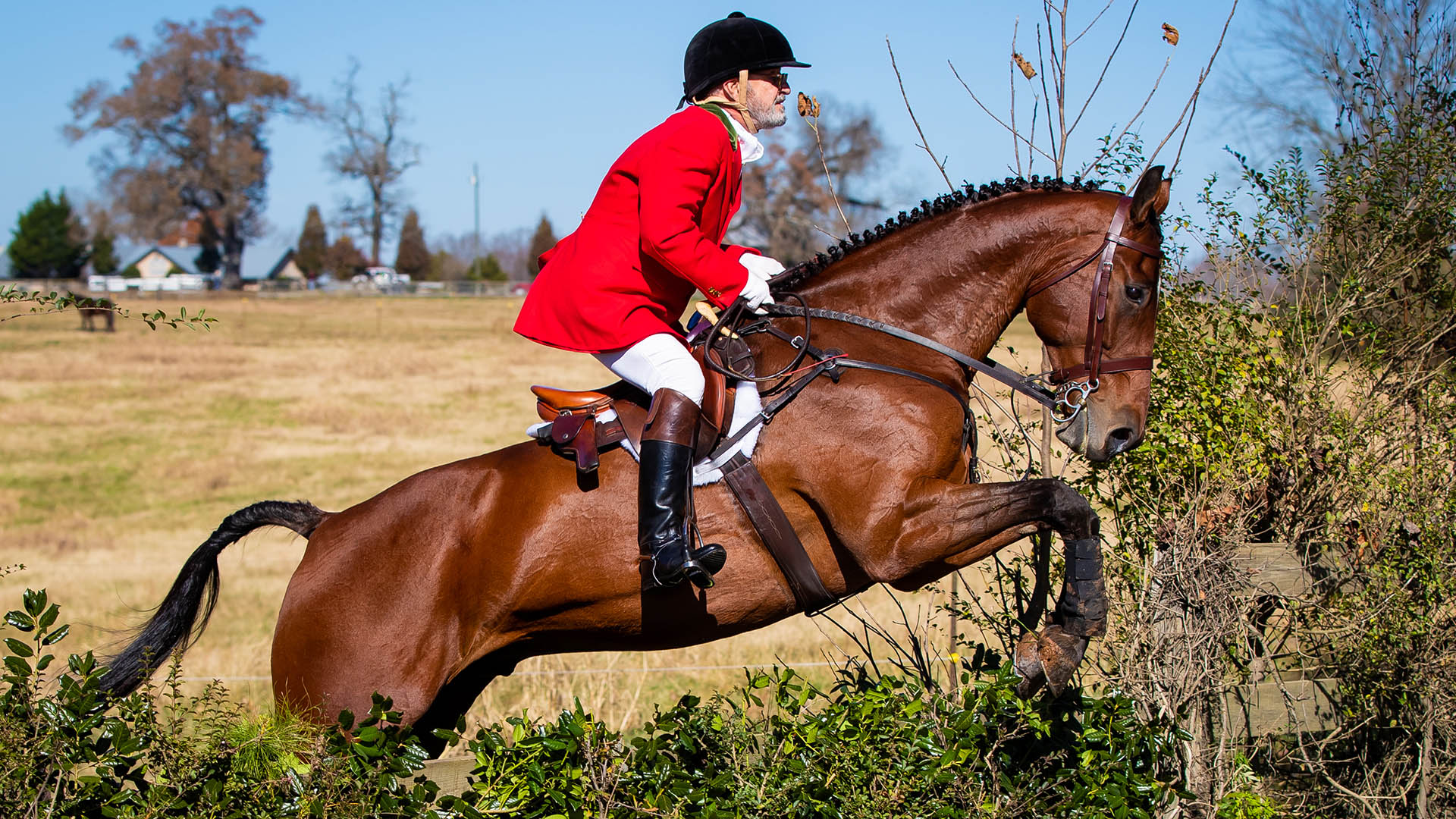
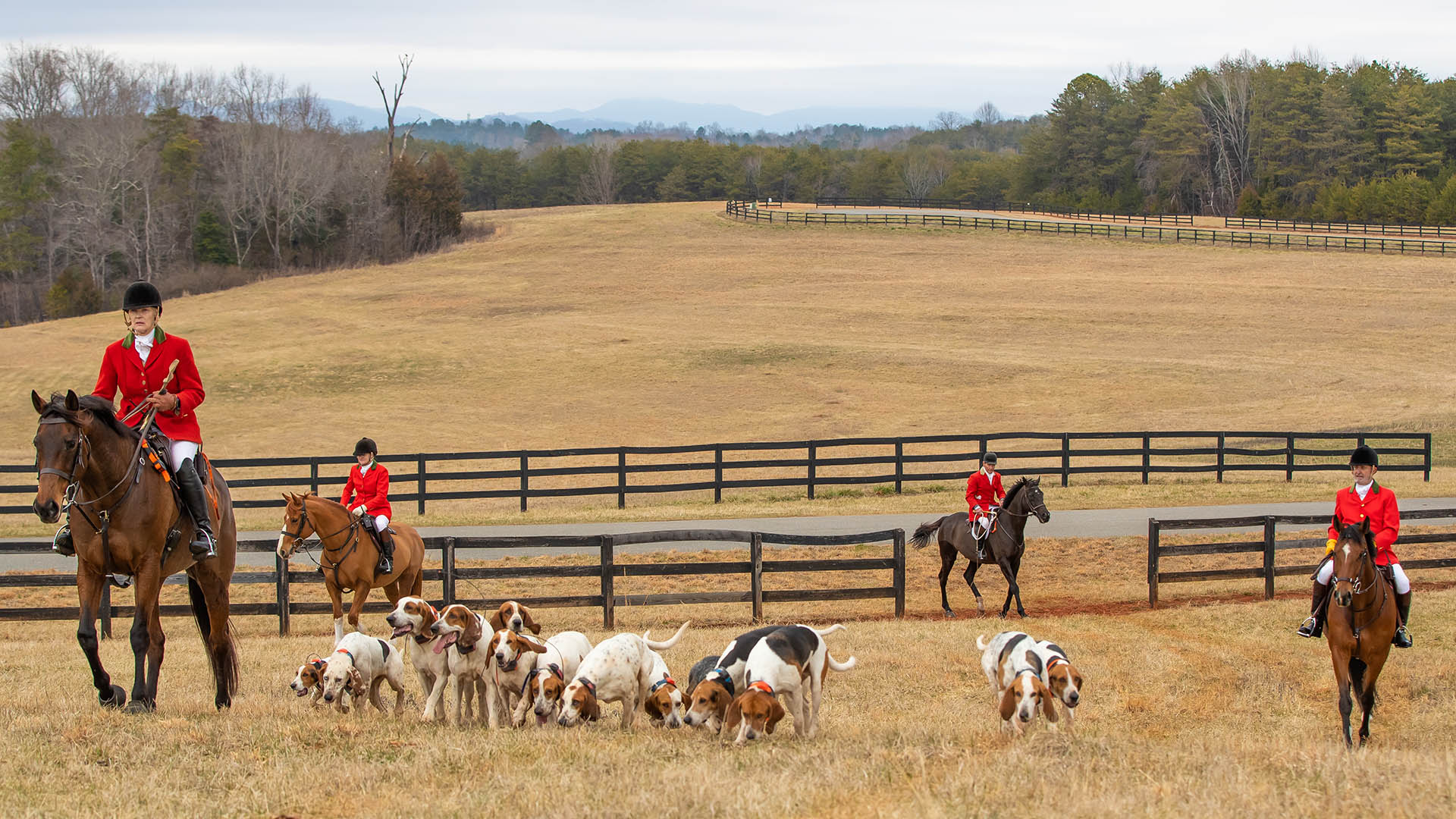
There are usually two to three groups, or flights, of riders, each led by its own Hunt Master, who sports the traditional scarlet coat—distinguishing experienced riders who have the right of way on a hunt. The first flight is the faster group, galloping through forests and fields and taking jumps over fences, logs, hedges, and gulleys. The second group follows the first flight in a slower, more orchestrated way, sometimes watching the action from the crest of a nearby hill, hence the sobriquet, “hilltoppers.”
Contrary to popular belief, foxes are not caught during the hunt, nor are they killed (and nobody ever catches coyotes). Instead, it’s all about chasing the scent. “Our goal is to chase the fox, we don’t want to decimate the fox population,” says Debra Owensby Minnick, a Greenville Realtor who has ridden with the hunt for almost 20 years.
A hunter earns the honor to wear his or her hunt club’s colors by being a good rider who embodies the tradition of the sport and respects the intricate rules and manners of the hunt. After male riders are given their colors, they are allowed to wear the red coats. Unless they are hunt staff, women do not wear the pinks, as they’re called. Accomplished female riders are awarded a collar—dark green in the case of Tryon Hounds—which they sew onto their hunt coat.
“For me, [fox hunting] is the biggest adrenaline rush,” says Minnick. “I love being with the horses in the woods, and it’s nice to find a community of people who are like-minded, holding onto traditions.”
Hunt Season
 For members of Tryon Hounds, the hunting season runs from September to mid-March. The first formal hunt is always on Thanksgiving morning, kicking off with the Blessing of the Hounds, in which a member of the local clergy bestows a benediction on hounds, horses, and riders.
After every Saturday morning hunt, participants traditionally gather for a hunt breakfast, given by different members of the club to add a convivial note to the occasion. The season winds up with its grandest event, the black-tie (Masters wear white tie) Hunt Ball, held the weekend following the last hunt.
Language of the Hunt
 Coming off – A rider who falls off his or her horse is said to come off. This embarassing event comes at a price: the rider who came off must buy the Hunt Master a bottle of wine or scotch.
Hounds – The pack of dogs at a hunt are never called dogs; they are hounds. The hounds don’t bark, they “speak” or “call” or “sound.” During a hunt, the hounds are controlled by a strict series of special voice and horn calls.
Pinks – Inspired by British military garb and easy to spot in the field, the traditional scarlet coats worn by Hunt Masters, officials, and staff members—usually men, depending on the individual club rules—who have received their colors.
Tally-ho – The traditional cry sounded by the Huntsman to tell others the quarry has been sighted.
Whipper-in – A whipper-in is responsible for managing and controlling the pack of hounds during a hunt and ensuring they stay focused on tracking the fox.


