
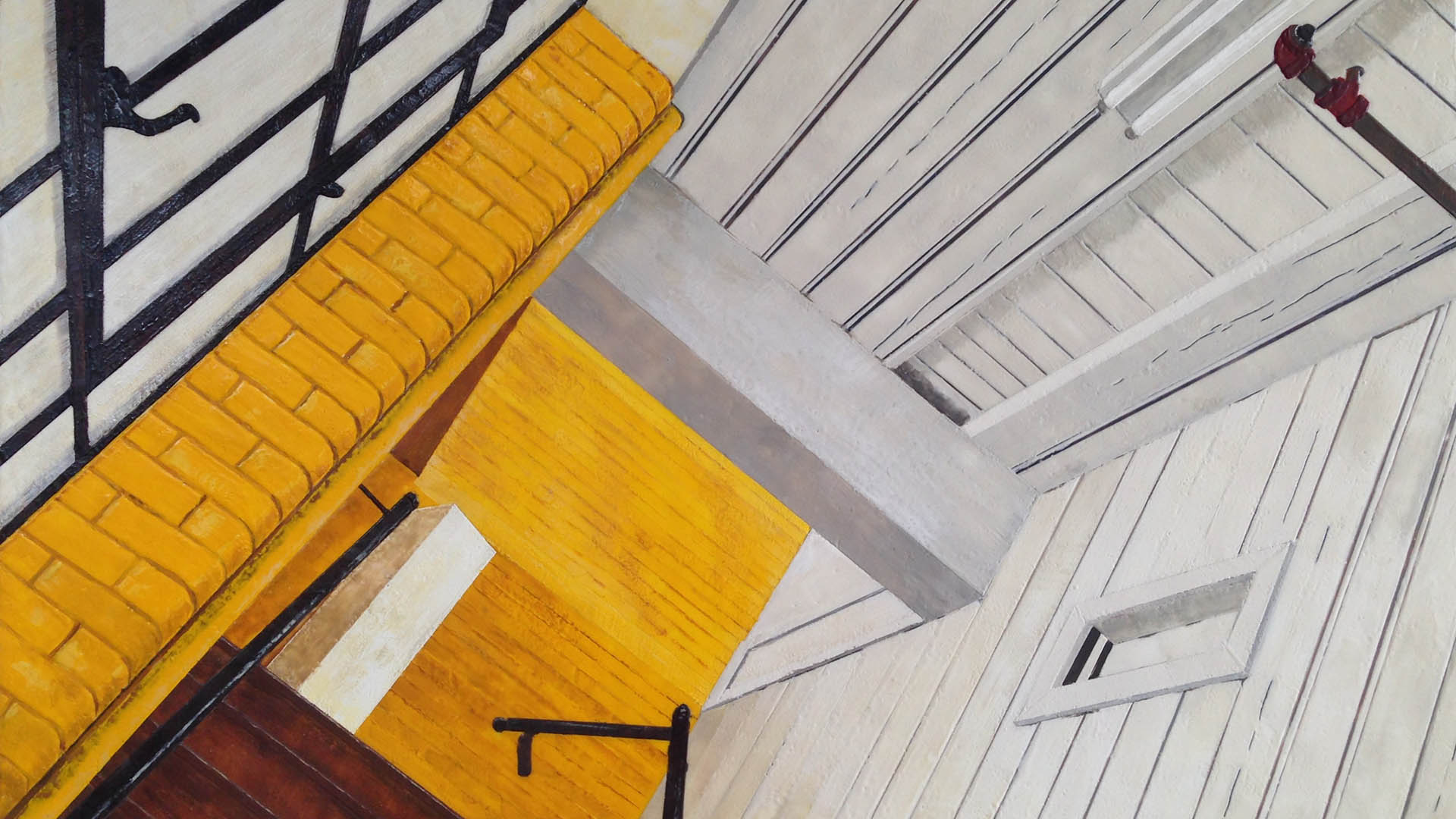
Writer and encaustic painter Danielle Fontaine creates and advocates from her new Abney House studio.
Just outside the gates of the Greenville Center for Creative Arts sits a white two-story mill house. Its freshly painted facade is a welcoming sight, and when I ring, the door is opened by longtime Greenville artist and advocate Danielle Fontaine, who warmly invites me inside.
Fontaine leads me through a thoughtfully renovated interior (which serves as her studio, gallery space, and, eventually, an artist-in-residence program) to the kitchen table, where we sit down for a chat. “The love of art has always been there in various ways,” Fontaine begins. “When I was a kid, my art form was sewing.”
As she unfolds her story, it’s clear that art for Fontaine is not limited to canvas and brush. After architecture school, a Rhodes scholarship shipped the Montreal native to the University of Oxford, where she fell in love with a young U.S. Air Force officer, Bill McLendon. While the demands of raising four children sidelined a full-fledged creative career, Fontaine’s passion for art oozed into other avenues. When the family settled in Greenville, she helped establish The Wooden O, a Warehouse Theatre education program for local classrooms, and she also served eight years on the city’s Design Review Board.
Rejection and Acceptance at The Abney House
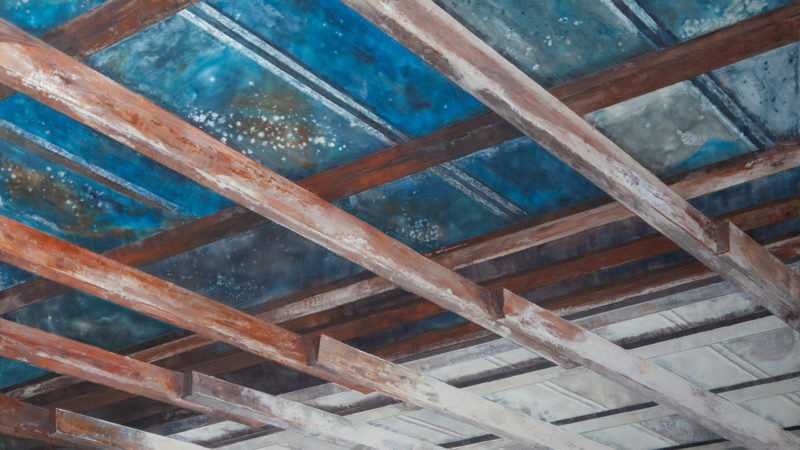 Once her children left home, Fontaine returned to school for an MFA in creative writing. “I am a writer before I am a painter,” she says. “I still consider my art to be very much storytelling.” Her writing background explains why her signature work, a collection of encaustic paintings and photography depicting her father-in-law’s farm in South Georgia, is presented in book form—Still Time on Pye Pond, published by Clemson University Press in 2021.
“I had been taking photos there ever since my daughter’s wedding,” Fontaine explains. “The reason was one of my daughters married a Black man, and she was no longer welcome at Pye Pond.”
Still Time on Pye Pond mirrors Fontaine’s coming to terms with familial rejection through snapshots of decaying and discarded objects scattered across the farm. The encaustic nature of the pieces, a process Fontaine discovered via local artist Pat Kilburg, adds texture and vibrancy, which highlights the emotion of the work. Resurrected in the mid-twentieth century by Jasper Johns, the ancient process of layering heated pigmented wax on canvas is now a widely used medium, one Fontaine quickly mastered as a studio artist at the GCCA.
Though she moved studios when she and McLendon purchased and renovated the Abney House (allowing more room for larger architectural work and space to blast her French Canadian music), her time at the art center is forever memorialized by the Brandon Fellow program, which she and McLendon established in 2015 with the goal of bringing a diversity of artistic voices into the local limelight.
“Art tells the story of the community,” Fontaine says. “If you only have works of art from that one section of the community, we’re only thinking about what that section is trying to say. Bringing various voices that represent the whole community is one way to help people think from different points of view.”
Visit Danielle Fontaine at The Abney House (201 Abney St) on First Fridays, or view her work online at daniellefontaineartist.com
Photography courtesy of Danielle Fontaine.


