
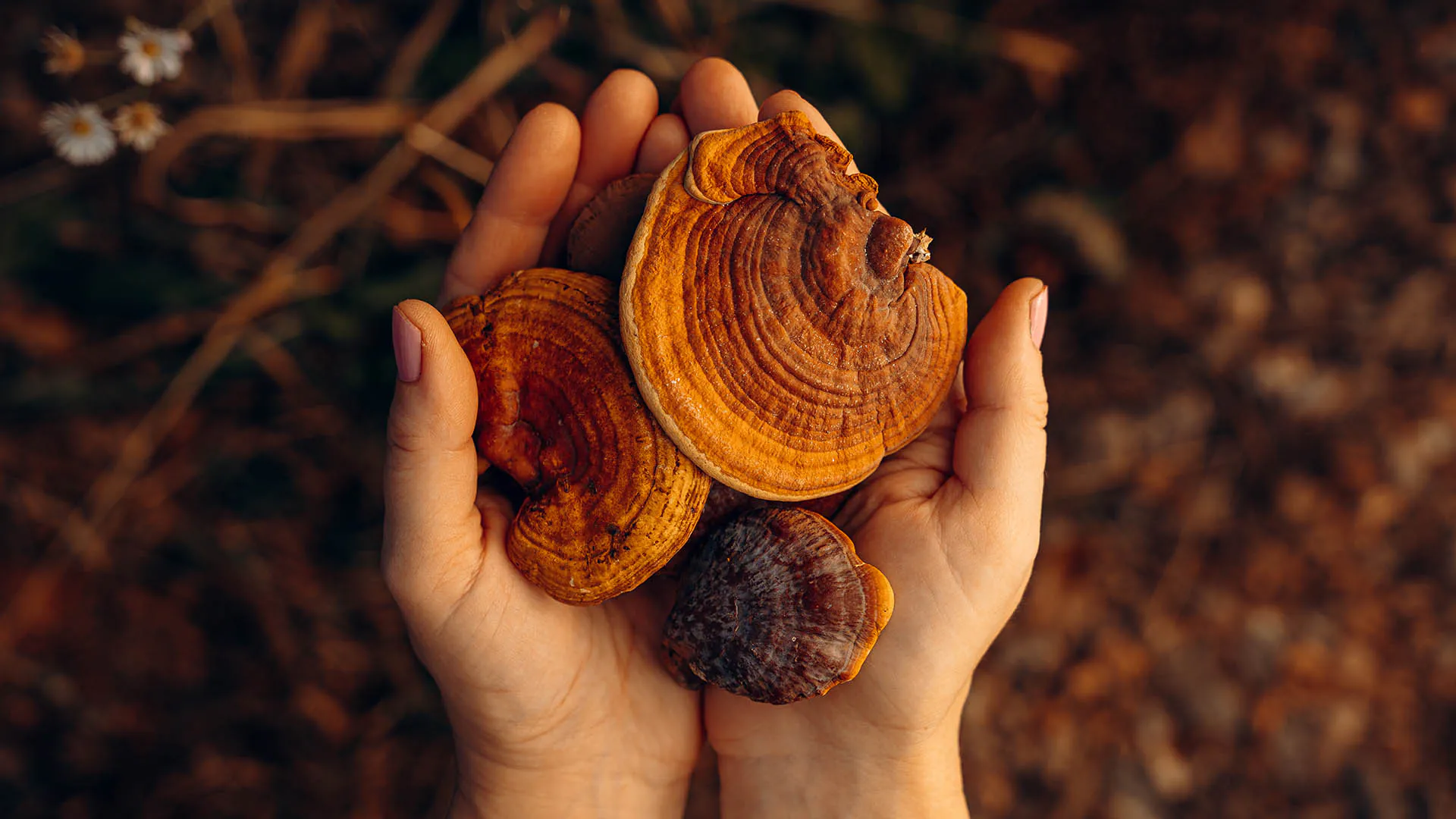
The ancient practice of gathering wild food is regaining modern notoriety
If it were officially written, the oral tradition of the Honorable Harvest would read something like this:
Ask permission.
Never take the first or the last.
Harvest in a way that minimizes harm.
Take only what you need and use everything you take.
Share it as the Earth has shared with you.
Sustain the Earth as it sustains you.
Be grateful.
More a reminder and less a set of rules, the indigenous legacies referenced in the Honorable Harvest provide an ancient framework that guides many modern foragers searching for native herbs, greens, berries, mushrooms, and all manner of plants, often mislabeled by the general public as mere weeds.
The term for these forageables is “wild food,” which refers to edible plants that grow without cultivation by humans. These include mushrooms, wild strawberries, the honeysuckle blossoms children slurp each summer, clover, wild violets, and crabapples, to name a handful of the thousands of edible plant species in the Carolinas existing outside of tilled garden rows.
Those who hunt and gather wild food are part botanist, meteorologist, biologist, and conservationist, identifying plant species as they go, noting the dew point and humidity, deciphering animal and insect indicators, and protecting the land for future harvesting.
Aside from finding their way into home pantries, wild foods provide restaurants with solutions to supply chain disruptions and fill gaps between conventional farm harvests. Even the act of foraging provides a necessary, therapeutic practice. And with social media foraging groups fruiting nearly as quickly as the mushrooms they’re hunting, a resurgence of sustainable and respectful foraging may be the oldest dining practice in the world to gain modern notoriety.
“Wild foods have always intrigued me,” says Anthony Gray, certified forager and executive chef of Simpsonville’s Stella’s Southern Bistro and Stella’s Southern Brasserie in Hollingsworth Park.
Certified through Mushroom Mountain in Easley to serve his foraged mushrooms on restaurant menus, Gray’s interest began in childhood, ranging around on 150 acres of family land in Georgia. Finding tasty field mushrooms—and learning their difference from nearly identical but deadly button mushrooms—was one of many early lessons he now carries into his weekly forays that include much more than mushrooms.
Olga Katic, co-founder of Mushroom Mountain, also began foraging as a young child growing up in Bosnia and Herzegovina and Croatia in Southeastern Europe.
“Back then it was really safe to go out as kids,” she says. “The wild was our playground. We didn’t have a TV to watch. We spent our time trudging through the woods looking for things to entertain us.”
The Balkans provided plenty of mushrooms and wild strawberries to collect, and her grandfather, a seasoned farmer, would guide their consumption of the day’s haul.
“They didn’t go to stores to buy food. It was what they grew and foraged,” she says.
Rediscovering lost traditions
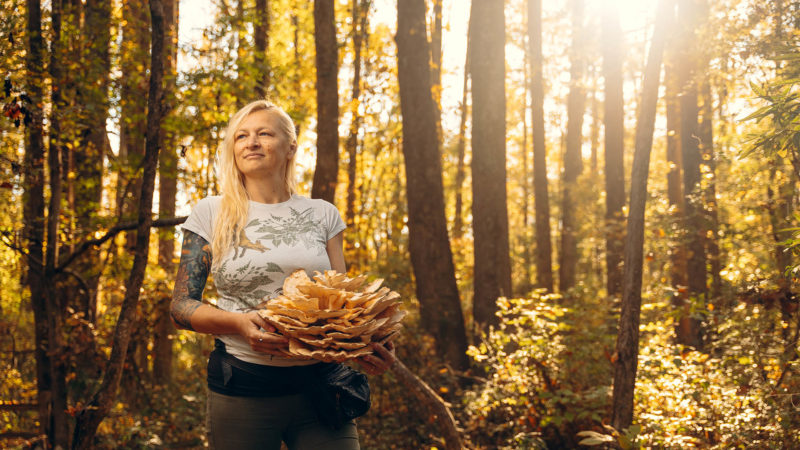 Imagine Katic’s surprise upon moving from Florida to Easley, opening Mushroom Mountain in 2007, and discovering that very few people she encountered at farmers markets knew anything about mushrooms or foraging. This was even more surprising given that Southern Appalachia is home to more species of mushrooms than any other region in the United States, she says.
Katic and her partner, Tradd Cotter, recognized the fear of poisonous wild food was a main culprit and set out to educate all who were eager to learn. They’ve since expanded their weekly workshops and food safety certifications to include the Department of Health requirements for seven states and are looking to add more. Upon completing the course and receiving a 100 percent on the final test, students are certified for five years to identify the 32 mushrooms on the current approved list, which ultimately allows them to sell and use what they forage in restaurants.
Foraging for inner peace
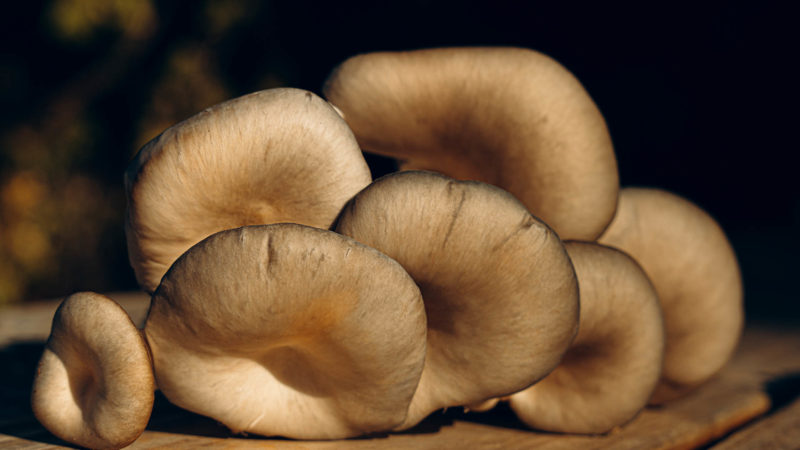 “After I started hunting mushrooms, I saw edible food everywhere,” says Claire Smith, a Mushroom Mountain-certified forager based in the Charleston area.
The former general manager of Charleston’s high-volume Mellow Mushroom pizza restaurant location, Smith made a complete career change in 2015 that took her from being in the weeds during dinner rush to walking through fields and woods, collecting plants she learned weren’t weeds at all.
“I felt like foraging gave me the gifts of slowing down and being more motherly and being more in tune with my feminine side,” she says.
The slower pace is as important to foragers as the treasure they hunt.
“It started as that place of solitude, and if I’m having a bad day, hit the woods,” Gray says. “If there’s stress, hit the trails.”
Gray often heads to the North Carolina mountains when he’s planning to spend more than a few hours hunting. “It turned into both exercise and a positive way to relieve the stress of the world,” he says. “You get dirty and don’t see another person for hours and hours.”
Katic, whose eight-acre yard is a haven for wild foods, is passing on her natural awareness to her eight-year-old daughter, Heidi. “I cook mushrooms at least twice a week,” Katic says. “I teach Heidi also about mushrooms and different plants. Whenever I get a chance, I’m out there. It’s about relaxation. It’s about stress relief. The woods have so much to offer. I make sure Heidi sees that, too.”
For bartender and restaurant owner Shannon McGaughey, the quietness of the woods offers the recharge necessary to do it all over again tomorrow. “Because I’m talking to five million people all the time, my tendency on a day off is to hole up,” says the co-owner of popular restaurant Vivian in Asheville. “When we have nice weather, interacting with nature only and not having to have a big social scene means I can be more introverted.”
Connecting land to plate
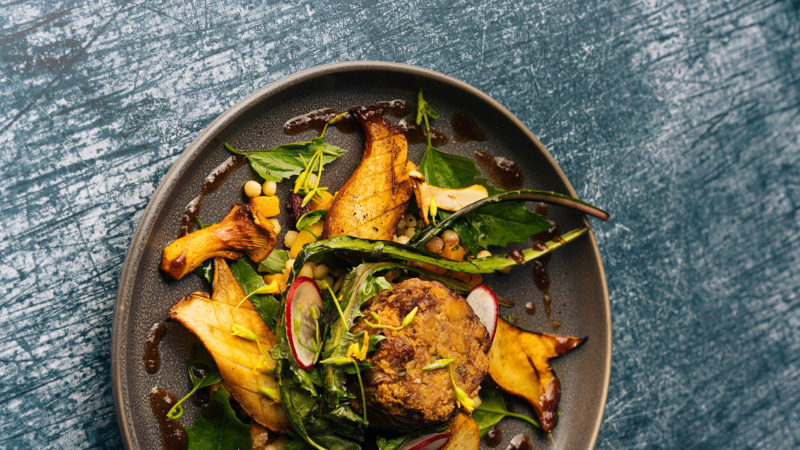
Greens used lambs quarters. Chickweed, dandelion greens and wood sorrel. A black garlic-huckleberry gastrique and preserved ramps.
McGaughey predominantly forages for herbs, flowers, berries, and other wild fruits to use in Vivian’s cocktail program, though she often finds items for Josiah, her chef and husband, to use in his dishes, too. Dandelions and clover become salad ingredients while wild violets garnish plates. Nettles, sumac, and chickweed steep to infuse syrups and liquors, while hawthorn berries, elderberries, and rowan berries become cordials, jams, and jellies.
She hopes to score persimmons next year to attempt a drying and fermenting method that turns the fruit to something like candy, a yet unrealized desire that underscores a reality of foraging that makes it both exciting and inconsistent.
“You start to value food more,” Smith says of the amount of work it takes to both locate and process uncultivated crops. “You learn pretty fast how valuable food is.”
She says she also realized after spending years bringing her foraged items into restaurant kitchens and meeting with chefs how easily they could lose touch with seasons and where their produce would come from. “It blows my mind how disconnected we all are,” she says.
Oak Hill Café and Farm’s bar manager, Ian McPherson, is working to change that. A Furman University environmental and conservation biology major with a focus on food sustainability and agroecological practices, McPherson has learned through his classes to forage for dozens of items used on the cafe’s cocktail menu.
“There’s something so special and unique about researching, finding, and showcasing these ingredients that creates an unparalleled connectedness with cooking,” he says. “In a conventional system, the consumer is often so many steps removed from the producer that food tends to be little more than a remedy to hunger. Foraging removes that disconnect and instills such an appreciation and respect for the ingredients that it really changes the way we approach eating.”
A calendar alert and dropped pin in Google maps helps Anthony Gray plan his weekly specials, reminding him it’s time to find mushrooms in the same location he found them last year. There are times he’s able to create a dish that includes a majority of items gathered by hand, like a lion’s mane cake with a warm salad of fregola pasta with lobster, matsutake, chanterelle, and maitake mushrooms. His service staff loves to tell guests that the chef gathered what they see on their plates—greens like lamb’s quarters, chickweed, dandelion greens, wood sorrel, and even the black garlic-huckleberry gastrique and preserved ramps from a spring haul.
“It’s this connection to nature and to your food that has made it so much more than just the hip thing to do,” Gray says.
Foraging Dos & Don’ts
- Know your environment and potential hazards
- Forage only with permission
- Know the local, state, and federal laws about foraging on public land
- Take only what you know—when in doubt, leave it
- Be aware of plants that cause irritation
- Avoid invasive plants and the insects they carry
- Take only what you need without damaging the environment
Foraging Classes
Learn to safely gather wild food at these locations:
- Hagood Mill Historic Site, Pickens
- Mushroom Mountain, Easley
- South Carolina Upstate Mycological Society, Clemson
Foraging Restaurants
These Greenville restaurants often include foraged items:
- The Anchorage
- CAMP
- Golden Brown & Delicious
- Mr. Crisp
- Oak Hill Café & Farm
- Restaurant 17
- Soby’s New South Cuisine
- Stella’s Southern Brasserie
- Stella’s Southern Bistro
- Topsoil Kitchen & Market
Many Greenville area restaurants may have foraged ingredients on the menu in the form of salads, reductions, jellies, garnishes, and main vegetarian proteins. Cocktail menus could also include shrubs, infusions, and bitters made from foraged greens, herbs, and nuts. Ask your server for details on any menu items that may have been foraged; most restaurants will use wild foods only when gathered by an experienced or certified forager, depending on state regulations. Your dining safety is important to them.
Photography by Will Crooks


