

The focal point of the hearth and home over the centuries, mantels take on even more importance this time of year. Beginning as early as Thanksgiving weekend, folks drape their mantels with greenery, ribbons, and other glittering accouterments to celebrate the season. For many, decorating a mantel can be a daunting task. Between the bows, faux flowers, Santa figurines, ornaments, and countless other trimmings, it can be difficult to know just where to start.
For some professional advice, we asked Carey Taylor, an Allied member of American Society of Interior Designers (ASID) and owner of C. Taylor Interiors, to offer some suggestions. A self-proclaimed traditionalist, the designer holds fast to symmetry, whether she’s decorating a mantel for herself or for a client. The important thing, she says, is to stay true to your personal style.
Decorating Tips for Mantels
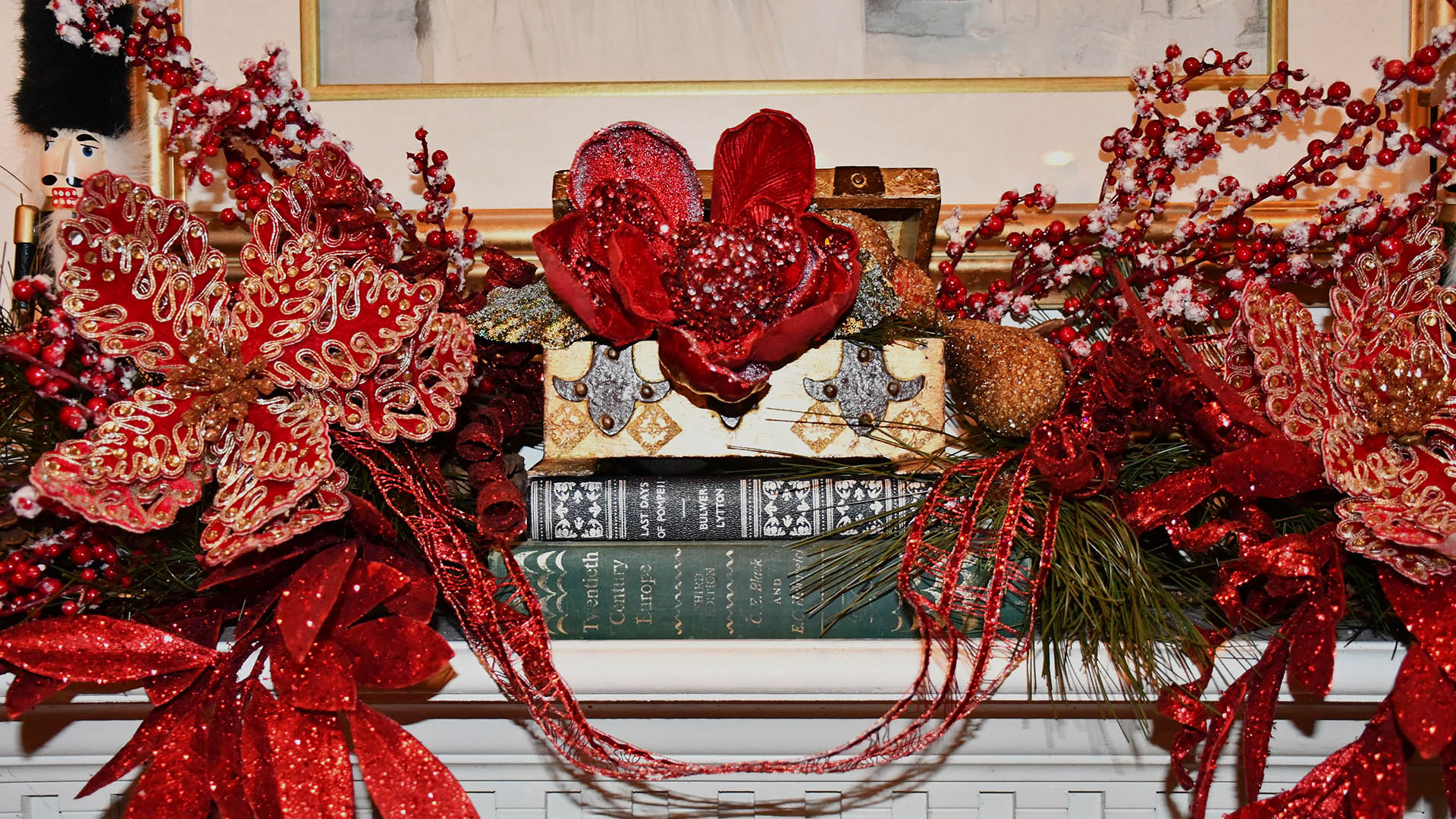 Follow the Formula
Start with your centerpiece—i.e., the painting over the mantel—and move to a pair of tall pieces on either end to create height. (Height should be proportional to the height of your mantel.) If you have vases with open tops, they need to have something in them. Then create a center, which is more visually interesting than merely running greenery straight across.
Create a Focal Point
The piece in the middle of the mantel should be chunky, long, and ideally a different material than complementary decor (i.e., a wooden box to play off ceramic vases on each end). Look around your house for pretty planters, crystal bowls, and antique candy dishes, and dress them up by adding sparkly embellishments. If there’s a TV over your mantel, remember to keep the centerpiece low, so it doesn’t obstruct the screen.
Real vs. Faux
Natural greenery looks great, but it doesn’t last long, is harder to manipulate, and you have to deal with pine sap. Taylor favors faux greens and garlands, but if you prefer the real thing, she recommends Leland cypress—“fabulous because they flop”—juniper, and hollies. If you’re having a party, you can start with real greens, and afterwards, you can substitute faux greenery as the natural pieces fade.
Be Orderly
Put greenery on the mantel first, and bend it the way you want it. Be sure to drape the garland over the ends of the mantel; it should come down a third of way on either side, at least 1–2 feet (if you have high ceilings, it needs to be longer). Then add everything else: heirloom items or pieces from a personal collection (anything from nutcrackers to ceramic birds and china angels) look great tucked into the greenery.
Color Me Christmas
Christmas colors need to be expressive, but they don’t have to be red and green, Taylor believes. Take your cues from the hues in your house, and feel free to use softer colors like blue or pink; simply adding a little silver or gold will make it feel festive.
Tricks of the Trade
- Keep garlands in place with painter’s tape or fix Command strips to the mantel and wire the greenery onto the strip’s hook.
- Don’t forget light. Lanterns, candles, and lit garlands all add a warm glow after dark.
- Wrap greenery behind vases or other pieces on the ends of a mantel, then place faux magnolias, bows, and other decorations in front.
- Think outside the box; frosted berries, gilded fruit, and small family heirlooms can all be good additions to your holiday mantel.
- Keep costs down by adding a little greenery and sparkle to what you have on the mantel throughout the year. Pine cones—either natural or spray-painted silver or gold—will add bulk to your design.


