No matter their injury or ailment, every patient who sees Stacy Kuzmick, a physical therapist with Bon Secours St. Francis Therapy Center at Five Forks, gets a lesson on posture.
That’s because posture “impacts our overall health and wellbeing,” she says. “You can look at it from an image side of things, but it goes a lot deeper.”
Posture is “how you’re able to hold yourself upright against gravity pushing down on you,” Kuzmick says, and there are two types.
Static posture is how you’re positioned when you stand, sit, and sleep. Dynamic posture is how you keep your body stable while you move or lift objects. Both involve your musculoskeletal system.

“You want this nice ability for everything to stack over each other. It’s almost like thinking of building blocks,” Kuzmick says of key postural body parts that include your feet, knees, pelvis, spine, neck, and head.
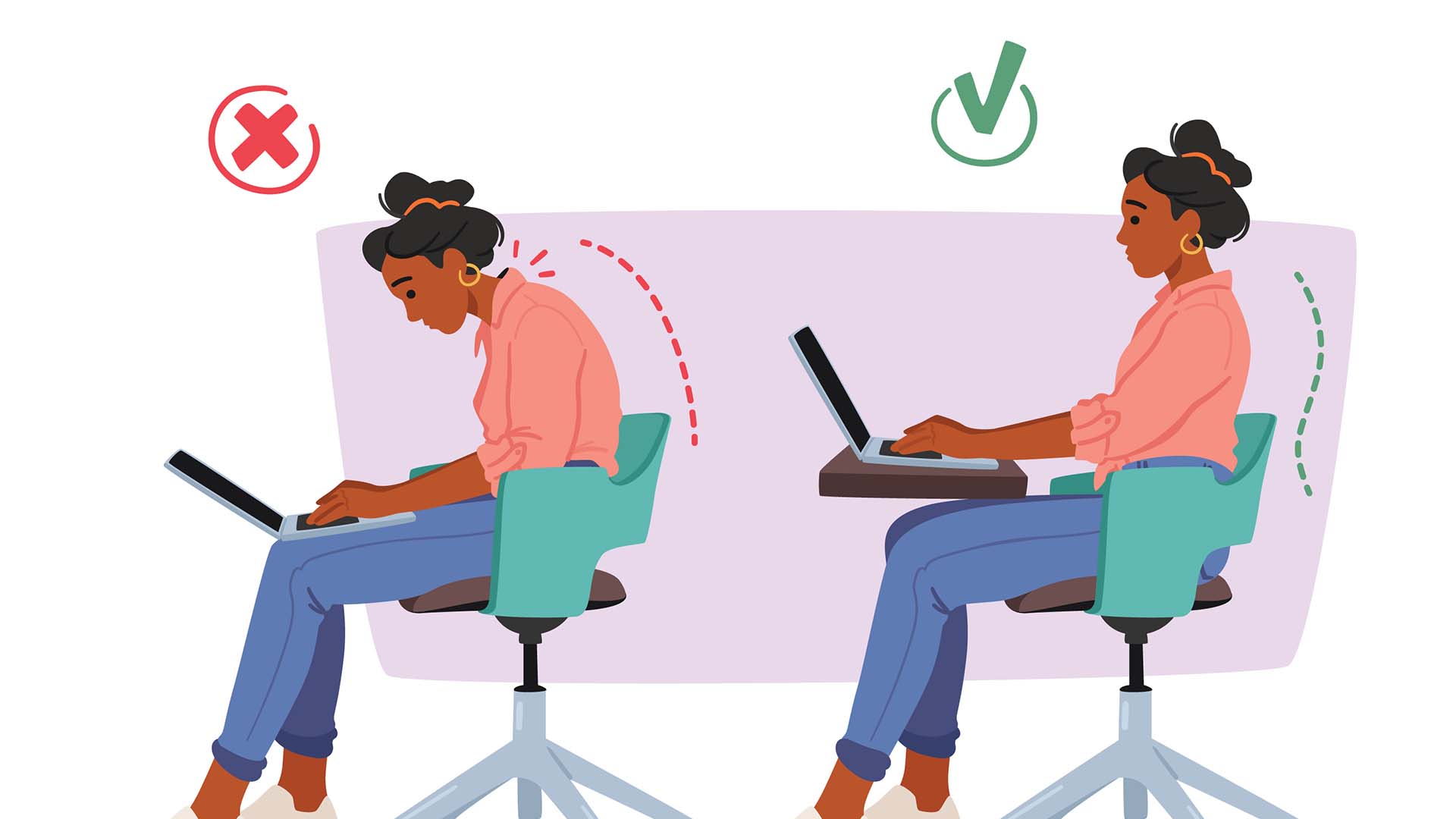
Beyond impacting your self-image, poor posture can result in back and neck pain, as well as tightness in the head, neck, and shoulders. It can throw off your balance and create blood flow issues. It also can affect your digestive, breathing, and nervous systems.
When you are in a slumped position, “you’ve shut off your diaphragm from being able to work efficiently, and you’ve condensed and crammed your digestive system. That
can lead to digestive issues and constipation,” Kuzmick says.
You can improve your posture if you find yourself frequently slouching. Yoga and core muscle-strengthening exercises can help, as can deep breathing and maintaining a good sleep routine. “Sleeping is just as important of a posture as sitting and standing,” Kuzmick says.
But if you still have a lot of back or neck pain, frequently feel off-balance, or have problems with your feet or ankles, you should see a doctor (you can find one via Bon Secours’ Find a Doctor tool on their website: bonsecours.com/find-a-doctor.
Seeing one of Bon Secours’ physical therapists can give you “prescriptive postural correction specific to your body,” Kuzmick says.
“The tricky thing is, posture is habitual, and we may go back to what we’re comfortable with,” she adds. “A lot of working on your posture is being aware of it and learning new habits. Making changes over time will make a huge difference.”
The building blocks of good posture
To improve your posture, Kuzmick suggests doing a check to make sure these body parts are in alignment:
- When standing up, keep feet shoulder-width apart.
- Find a neutral position through both feet: Your weight should not be completely on your heels or your toes nor the inside or outside of each foot.
- Keep your knees unlocked: That allows your quadriceps to engage and help you stand.
- Move your pelvis into a neutral position, not tilted too far forward (that can put a strain on your spine) or backward.
- Your thoracic spine–the middle part of your back–and your rib cage should stack over your pelvis.
- Your head and neck should have a “little chin nod that allows the head not to go forward,” Kuzmick says.