

Going against the grain is de rigueur for Marianne Eaves. As the maker of her own brand of bourbon, called Forbidden, she is shaking up the industry, one neat pour at a time.
Being a distiller was never her intention. She figured she’d use her degree in chemical engineering from the University of Louisville to go into the renewable energy field. That plan was derailed during college once she was hired as an intern at Brown-Forman, the makers of Old Forester, Jack Daniel’s, and Woodford Reserve bourbons. “I didn’t even drink bourbon at the time,” she recalls, “but I fell in love with the science [of distilling].”
After six years learning the distilling process and honing her palate for tasting bourbon at Brown-Forman, she took a job at craft distillery Castle & Key in Frankfort, Kentucky. Her title? Master distiller—the first female in that role since Prohibition.
During her tenure at Castle & Key, a group of partners from South Carolina approached Eaves to produce a spirit for them. Forbidden Bourbon, the name they chose, nods to the fact that woman were legally forbidden to work in the distilling industry in Kentucky until the law was repealed in 1974.
In 2016, Eaves began formulating the recipe for Forbidden. The mashbill, consisting of 75 percent white corn, 12 percent food-grade white wheat, and 13 percent malted barley, is distinct to the Forbidden brand. The white corn, she points out, honors culinary traditions in South Carolina.
Innovating distilling process of Forbidden Bourbon
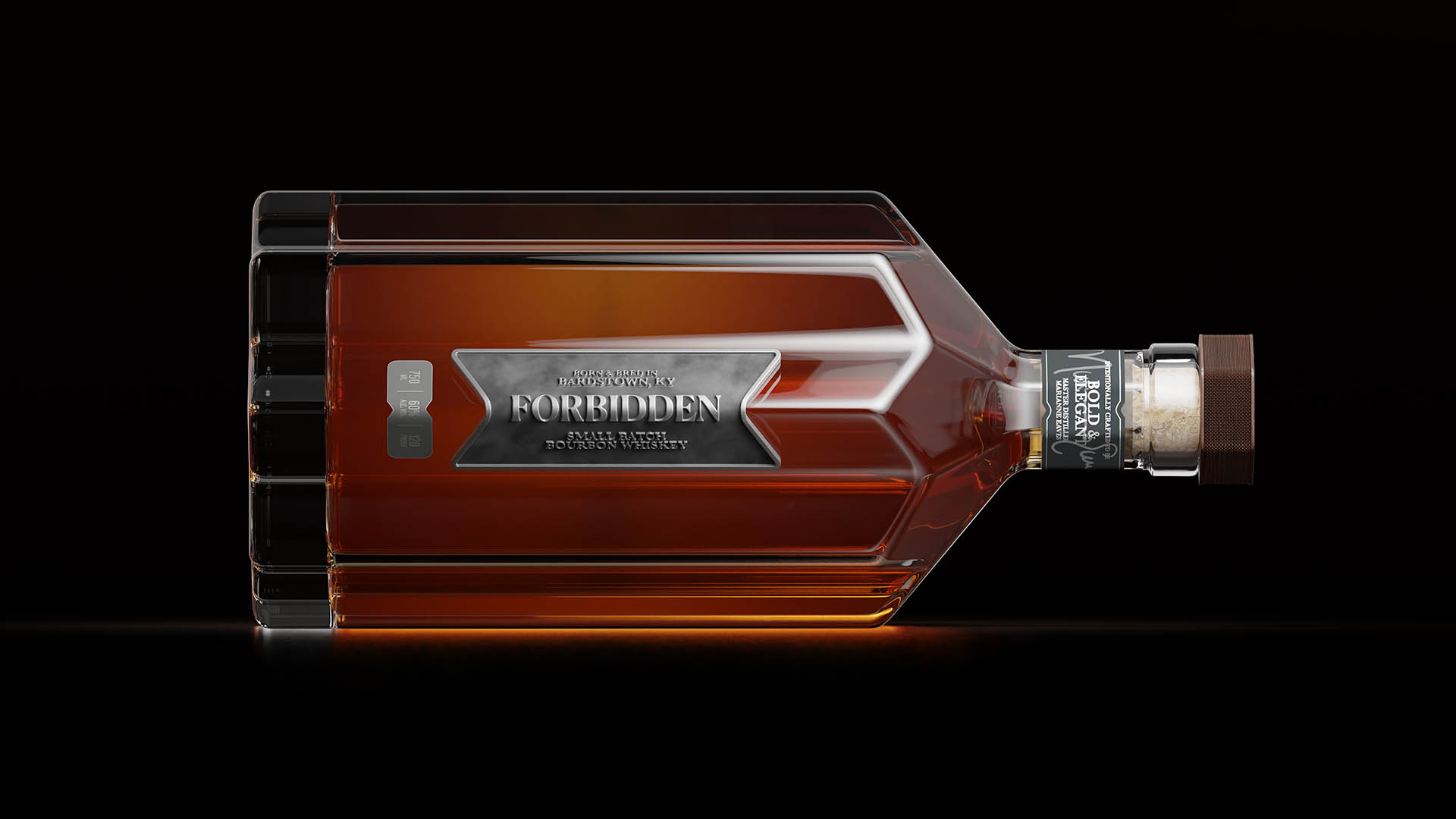 Another aspect that distinguishes Forbidden Bourbon is its low-fermentation method of distilling, which allows the yeasts more time to develop flavor before they start forming alcohol. “On my path in this career, [I would propose things and] people would say, ‘Oh, we tried that 30 years ago and it didn’t work.’ When I got out of that corporate structure and was head of my own distillery, I went back to the drawing board,” she says. “I thought there was a way to structure these experiments that we might get a different answer than they did years ago.”
There are copious rules makers must follow in order to call a spirit bourbon (it has to be made in the US; it has to be at least 51% corn; it has to be aged in new charred-oak barrels; among other regulations). As a pioneer in her field, Eaves believes there’s more room for innovation in bourbon if folks can look beyond what’s already been done in the US and get out of their comfort zones.
With three prestigious awards under her belt for Forbidden, Eaves is currently working on new small-batch expressions of her spirit. “There will be some differences in the tasting profile, but not significant ones,” notes the distiller. “You can always count on that complex, smooth, creamy quality and a nice warm, lingering, robust finish.”
As her current blends age in the barrel, Eaves is excited to experiment outside the box of Kentucky’s traditional methods of making bourbon. “I’ve been really inspired traveling to states outside of Kentucky, learning from distillers that didn’t come up the same way as I did,” she says. “What I’ve been humbled to find is there are infinite ways to make incredible bourbon.”
Find Forbidden Bourbon at Bottles, Total Wine & More, and other local liquor stores; learn more at drinkforbidden.com.
What are the qualities of an innovator?
“I would say curiosity and grit. Something that has set me apart is I look at things a little differently than others and I ask a lot of questions. Also not being put off when somebody tells you ‘no,’ or that something isn’t possible—so it takes a little bit of grit.”
– Marianne Eaves
“Marianne Eaves is one of the brightest stars in bourbon . . . . She has an unmatched ability to blend and taste hundreds of different bourbon barrels to create a product that consistently surpasses flavor and quality expectations. That’s why so many people in the industry call her a ‘unicorn.’”
– Michael Fawcett, one of the founding partners of Forbidden Bourbon
What is the key to creating an environment that fosters innovation?
“With Forbidden, we have surrounded ourselves with some of the best talent in the spirits industry. Their honesty, transparency and willingness to seek perfection has fostered an environment of trust where we encourage and support innovation.”
– Michael Fawcett
It’s A Fact
- Kentucky produces 95% of the world’s bourbon.
- Bourbon whiskey was declared by Congress in 1964 as “a distinctive product of the United States.”
- By law, to be called bourbon, a spirit must be made in the US and include at least 51% corn.


