
By Dr. Courtney Tollison and Bryant Garrison
For almost a century, motorists on Geer Highway (Rte. 276) have pulled off to admire Bald Rock’s sweeping views. Locals know the crumbling asphalt lot and recall the fixture of the man selling jam, honey, and ammunition from his truck. However, this spring, that lot closed permanently, and a short half-mile walk now leads to the beloved overlook perched above the Upstate.
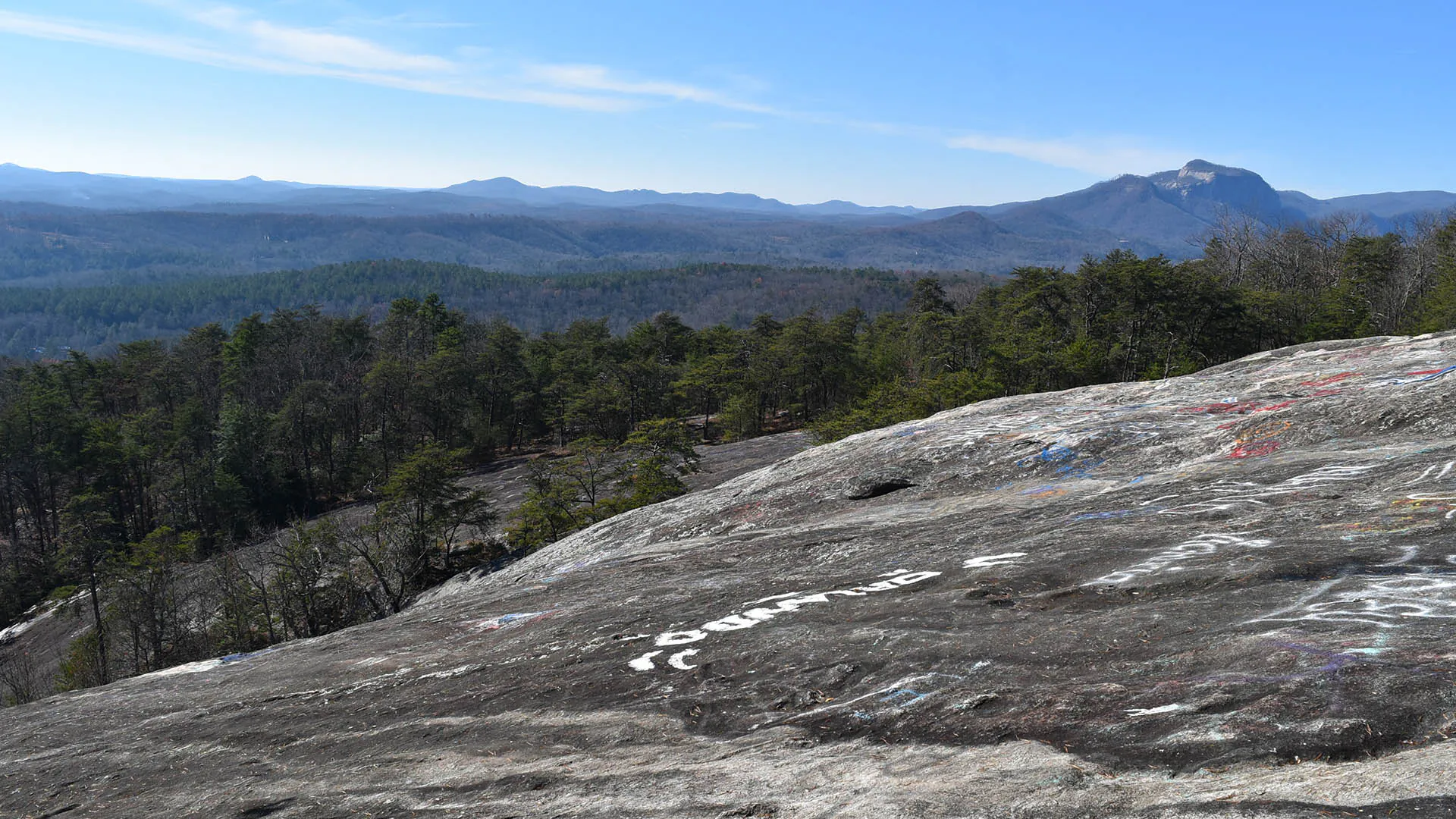
Most locals can picture Bald Rock: a broad expanse of sun-warmed granite stretching out towards the horizon, dotted with spray-painted manifestations of love and rebellion. Thousands have paused to picnic, watch the sunset, or hike up and down these slopes. Beneath their feet, though, lies a story far deeper than the layers of graffiti.
Historically, Bald Rock was undesirable land. Long ago, it belonged to Native Americans. In more recent centuries, its steep, rocky face could not be farmed, so early landholders showed little interest. Most deed records listed it as “vacant” or having no owner at all. In 1869, though, Joseph McJunkin, who had been emancipated during the Civil War years earlier, purchased land below the rock and built a life for his family there. His descendants continued to live and own property in the area for generations, part of the often-overlooked history of Black land ownership in the hills of the Upstate.
In the 1920s, Bald Rock became a popular stop on the new Geer Highway, named for Greenville industrialist and former Furman president Bennette E. Geer, who owned land near the Caesar’s Head Hotel and was instrumental in the creation of the highway. In 1928, Greenville’s Junior Chamber of Commerce placed the first tourism marker to direct visitors to the overlook. Soon after, J.M. Fortner moved his family from Greenville to property around Bald Rock. He built eleven cabins to rent to visitors, ran a small country store, dammed a spring for swimming, and built a 15-foot observation tower on the rock face, where one could pay a dime to climb its ladder for an even better view.
Damage to Bald Rock
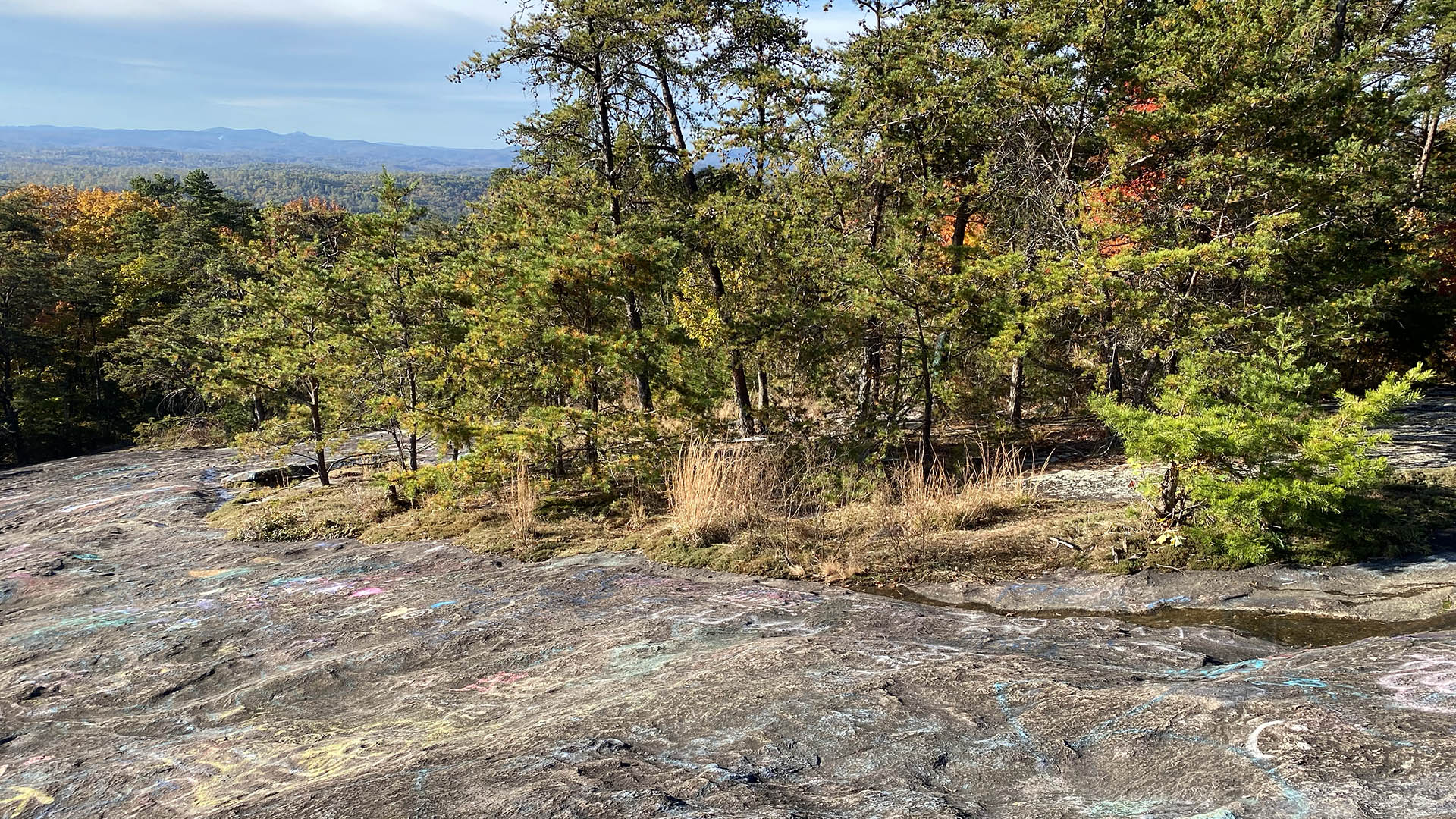
As the years passed, Bald Rock remained popular but was often misused and mistreated. Locals drove cars across it, off-roading and sending old vehicles hurtling down its slopes. Fires, litter, and graffiti took their toll. Though some saw these activities as youthful traditions, others began to recognize the damage being done to a beautiful natural landmark.
Conservation efforts gained momentum in the 1990s, when Greenville attorney and environmental champion Tommy Wyche spearheaded land acquisitions to protect the area’s fragile ecosystem. In 2001, Bald Rock and its surrounding acreage were purchased by the South Carolina Department of Natural Resources (SCDNR), officially creating the Bald Rock Heritage Preserve.
Today, the Friends of Bald Rock volunteer group, formed in 2021, partners with SCDNR to restore, preserve, and cherish Bald Rock by removing litter, cleaning graffiti, restoring beds of soil and plants, and educating visitors on stewardship. They seek to balance public use with efforts to preserve the rare plants and wildlife that call Bald Rock home.
The recent closure of the old parking lot, replaced by a new lot built off Persimmon Ridge Road, aims to protect the Preserve by limiting vehicle traffic and encouraging intentional and nondestructive visitation.
The next time you visit, take a moment to appreciate more than the view. You are standing on a place that has inspired awe for generations. It holds stories worth remembering and is a place worth preserving.
Dr. Courtney Tollison is the Distinguished University Public Historian and Scholar at Furman University. Bryant Garrison graduated from Furman in May and will soon begin a master’s in accountancy program at Wake Forest University. In 2023, with support from the South Carolina Humanities Council, Tollison and Garrison partnered with the Friends of Bald Rock to conduct research and contextualize the site.


