

How the Museum of the Cherokee People is spearheading new perspectives on a modern culture
If you’re an Upstate native, you’re probably aware that much of Greenville County was once Cherokee territory and a lush hunting ground for Native American people. You might’ve also taken a grade school field trip to the Museum of the Cherokee Indian (MCI) in Cherokee, North Carolina. The more familiar this rich history is to you, the better—because there is no better moment in time to rediscover the thriving culture that has always called the Carolinas home.
This October, the Museum of the Cherokee Indian is changing its name to The Museum of the Cherokee People (MCP), just in time for Indigenous Peoples’ Day on the 9th—and just ahead of Native American Heritage Month in November. We’re not talking about filing paperwork. We’re talking about a bold and significant spectacle: new signage, new stories, and new artwork surrounding an event that acts as a culmination of months of museum staff working with tribal citizens to bring this iconic institution into the future.
As the MCP dusts off its soul, prepare to revisit a place and people as exciting as it is unexpected.
Disputing Timelines
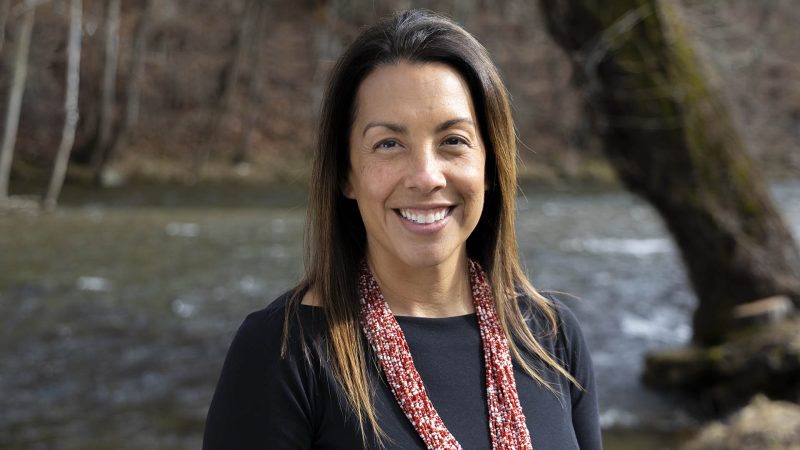
“I think the average American still thinks of us in the 1800s, in the West riding horses. When visitors come in, they often say with surprise, ‘Oh—you’re all still here.’ Yes, we are. And one day, I won’t have to say that out loud,” laughs Shana Bushyhead Condill, executive director of the MCP. “It’s hard to categorize us as a museum. For a long time, we were leaning into that natural history element, but we’re also an art museum, a cultural incubator. We’re multifaceted because we’re telling the story of a living culture.”
Condill is a member of Eastern Band of Cherokee Indians (EBCI) and left the National Gallery of Art to “return home” and helm a new direction for the museum in 2021. Part of her charge was to update the 25-year-old permanent exhibit—including removing now-problematic funerary and ceremonial objects—and she had to move quickly.
“That’s where the idea for the Disruption exhibit came in: an intervention on top of that flawed permanent exhibit without an entire overhaul. We took 120 objects off of view, and then brought contemporary Cherokee artists in to “alter” the now-empty cases. They could do anything they wanted, and it’s incredible now—the space is totally transformed. This is a new way to engage with the most authentic parts of our story, community, and region.”
The Power in Powwow
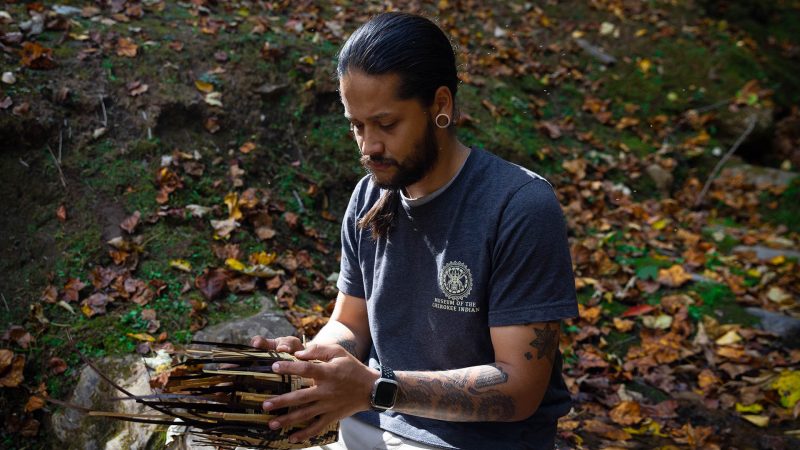
Part of the museum’s fresh vision involves 360-degree involvement from other citizens of the Eastern Band of Cherokee Indians, and the staff has launched new programming and community listening sessions to source feedback from locals and tribal elders. “From the beginning, I asked, ‘How do we tell our story today?’ What if you had Native people at the table when you wrote that narrative, made creative decisions, and planned exhibits? We all felt a real responsibility to our community, which is going through a renaissance,” reflects Condill. “No more pink headdresses at gift shops downtown, right? We need to help folks understand what is so special about this place.”
To make good on that promise, the team brought in celebrated Native artist Luke Swimmer to design the museum’s new sign. Swimmer is a citizen of the EBCI and the owner/designer behind Buffalotown Clothing Co., whose iconic designs have earned a cult following at the MCP gift shop, in REI stores, and online.
“I’m excited to be working on the new branding and open the door to more people asking questions about the Cherokee and our existence,” says Swimmer, who comes from a long line of artists—some of whom are in the Disruption exhibit. “[Through my work], I want to represent my people. I feel like I’m helping with the revitalization of some of our older designs and baskets, and throwing our native language out there . . . while at the same time owning up to what got our people started in tourism, paying homage to that.”
“Growing up, I’d see my grandma make pottery, and go sell it to make some money to feed the family. My dad did the same thing. For the Cherokee people, I’d say it’s just in us to be entrepreneurs, go-getters, do whatever it takes,” adds Swimmer. “We almost starved, almost froze to stay in these mountains. We’re determined, and I’m glad that more attention is being brought to Native people. We’re here, and we’re trying to exist the best way we know how.”
See you in the Smokies
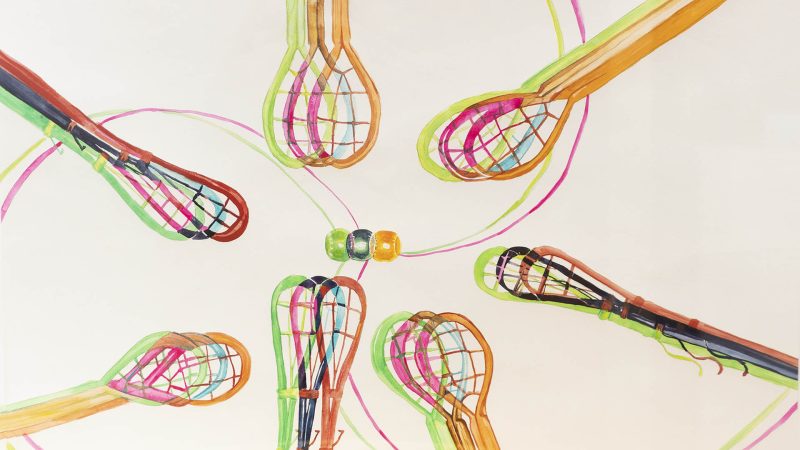 This is a historic year for the MCP and Cherokee, North Carolina, community—and until December 29, your last chance to see the Disruption exhibit and feel the energy surrounding it. “One of the concepts in the Cherokee worldview is this idea of ‘seven generations before,’” says Condill. “Of building upon the work our ancestors did seven generations before, for seven generations ahead to benefit from—meaning, we’re not doing any of this for us today. There’s a lot of power in that.”
PLAN YOUR TRIP with recommendations from Shana Bushyhead Condill, the Museum’s executive director:
“We are incredibly honored to be based on our Cherokee ancestral homelands here on the Qualla Boundary. Here are some places we love to go that really showcase the beauty and diversity of the mountains, rivers, and the EBCI.”
Qualla Arts and Crafts Mutual: “At this co-op of over 300 Eastern Band artists, you can purchase authentic Eastern Band art including baskets, pottery, jewelry, paintings, and more. They also have an exhibit detailing their 77-year history.”
Bike the Fire Mountain Trail: “Unique in a hundred ways, it’s an exciting way to see and experience the mountains, and it is the first mountain bike-optimized single track on tribal lands. Bryson City Outdoors now has an outpost here where they can do bike repair, rent bikes, and they’ve got craft beer on tap for after your ride!”
Hiking and Sightseeing: “This is an incredible way to connect with these gorgeous mountains and rivers. We have two spots that feature waterfalls—Soco Falls and Mingo Falls—that are must-sees when you are here. There is also a great trail that starts at Saunooke Village at the entrance to the Great Smoky Mountains and goes about a mile and half along the river to the Oconaluftee Visitor Center, where there is the Mountain Farm Museum, and you can almost always see elk. There’s really great signage along the trail in both syllabary and English that gives you great cultural context. It’s relatively flat so you can walk or run it easily.”
The Museum of the Cherokee People, 589 Tsali Blvd., Cherokee, NC, 828.497.3481, motcp.org


