
GCMA’s American Stories exhibition reflects the complexity of the nation’s 250-year history
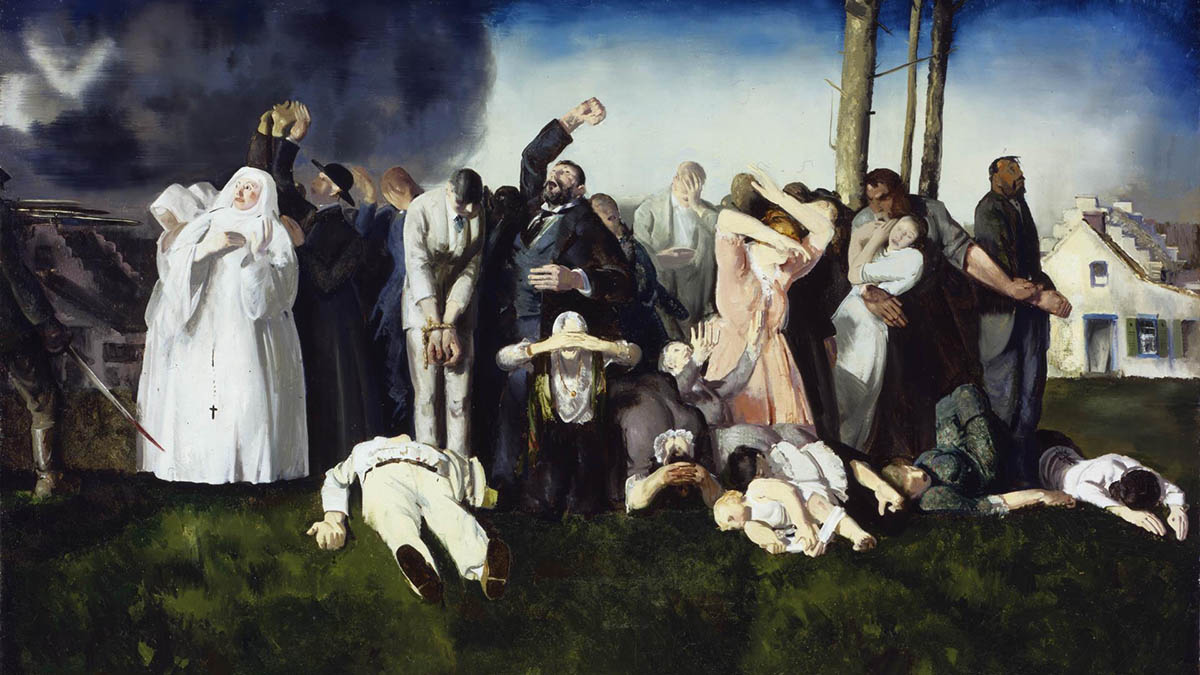
With its title and powerful images of an anguished, shirtless man contrasted against brilliant color, artist Sigmund Ables’ Who Can Forget How Blue the Sky Was Beforehand? instantly evokes memories of the 9/11 attacks.
“It’s one of the things I remember the most about 9/11–the sky was perfectly blue,” says Ellen Westkaemper, the Greenville County Museum of Art’s head of education.
Like the other pieces in American Stories, GCMA’s exhibition marking America’s 250th birthday, Ables’ 2001 oil-on-panel diptych is “an interpretation of our times,” says Polly Gaillard, GCMA’s head of communications.
On display until Sept. 27, the exhibition features 51 pieces from the museum’s permanent collection that were thoughtfully curated by its executive director Thomas Styron. “It’s an exciting exhibition as we reflect on the 250th,” Westkaemper says. “But it’s not about just the Revolution, it’s about the whole 250 years.”
American Stories’ mix of multi-medium, two- and three-dimensional pieces addresses pivotal moments in the nation’s complex history, including both triumphs and challenges.
“We talk a lot about a ‘more perfect union’–we are always going to be a work in progress,” Westkaemper says. “This exhibition highlights not just some chronological, historical events or periods, but it also makes an effort to look at it from the perspective of the diverse constituency that makes up America.
“We wanted to make sure we included everything–from as light as pop culture to something as heavy as slavery,” she adds.
The American Stories exhibition
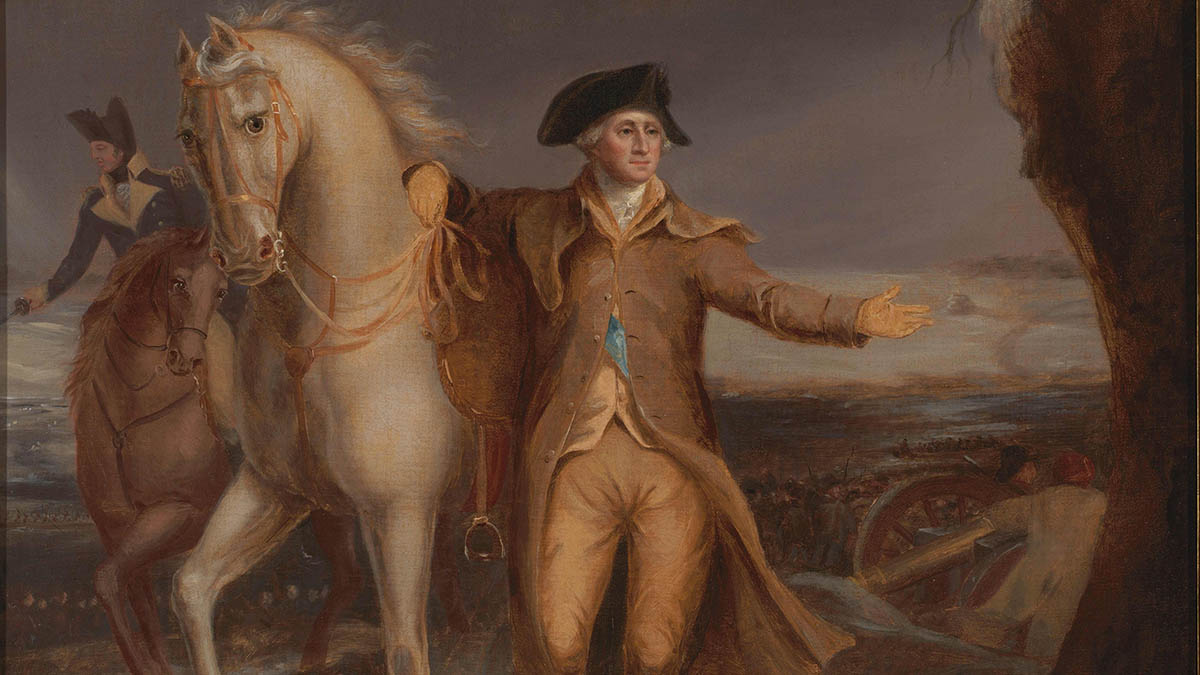
 Hung chronologically and in thematic groupings–from the Revolution and constitutional rights to the Civil War, public education, immigration, and more–the exhibition starts with Thomas Sulley’s 1818 oil-on-canvas painting George Washington and the Passage of the Delaware.
“You can’t start the story without him,” Gaillard says, adding that the piece is one of the 13 new artworks in American Stories from GCMA’s 2026 Art for Greenville campaign. The annual fundraising effort is one of the ways the admission-free museum–it receives county funds for operational expenses–acquires American-focused art.
“We have an extensive permanent collection, but not a permanent exhibition. We rotate our exhibitions on a regular basis,” Westkaemper says. “Even if you come here often, you can see a new work you’ve never seen before. Or, you can see something in a totally new context, and it deepens your relationship with that art.”
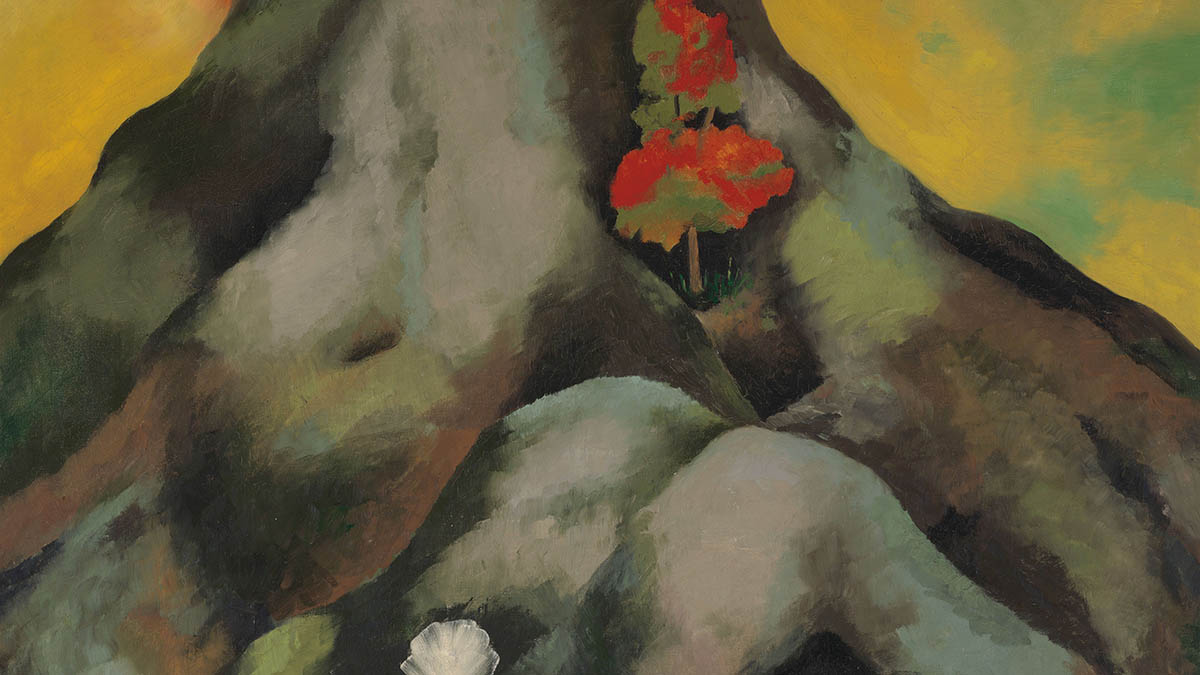
New and repeat visitors will see juxtaposing pieces in American Stories that range from Johnny Appleseed, Carroll Barnes’ 1939 wood-carved sculpture, and Amer Kobaslija’s 2020 oil-on-canvas Street Musicians to William R. Christopher’s 1963 painting, Basin (No. 5—In Honor of Martin Luther King) and A Coffle on the Natchez Trace, Carl Hirschburg’s 1900 painting about slavery.
It “also has a pastel by the first woman professional artist in the colonies,” Gaillard says of the oldest piece, a 1726 pastel portrait by Henrietta de Beaulieu Dering Johnston entitled Man in Armor.
The hope is visitors will gain “an acknowledgment of the complexity of our history,” Gaillard says. “Just because things have happened in this country that have been controversial and sad in ways, it doesn’t mean we don’t have the other. It’s balance of both. I think this exhibition is very honest in the fact that it presents both unapologetically.”
Extend your visit
 While at the museum, visitors can see Our Town, an eye-catching exhibition of Greenville’s changing urban landscape through large-scale paintings by visiting artists Stephen Scott Young, John Moore, and Andy Lenaghan, along with large batik pieces by local artist Mark Mulfinger.
The exhibition is part of an effort to commission and acquire artwork depicting Greenville, building on a 40-year-old landmark project inspired by research into the city’s first portrait painter, Thomas Stephen Powell. It is on display until Sept. 20.
Greenville County Museum of Art, located at 420 College St. in downtown Greenville, is open Wednesdays to Saturdays from 10a.m. to 5p.m. and Sundays from 1 to 5p.m. Admission is free. For more information, visit gcma.org or follow @gcma_sc.


